
 Čeština
 Deutsch
 Română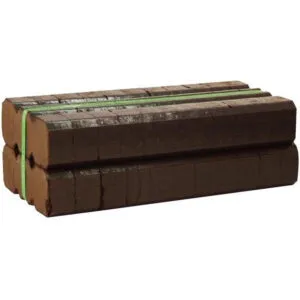
Buy wood briquettes online
Peat Briquettes for sale
How to Burn Lignite Briquettes Properly | Wood Břežany Guide
Transform your heating experience with premium lignite briquettes. Long-burning, high heat output, and cleaner than traditional coal. Perfect for multi-fuel stoves, open fires, and overnight heating with lasting embers.
How to Burn Lignite Briquettes
When winter arrives and temperatures drop across Europe, finding the right fuel source becomes crucial for maintaining warmth and comfort in your home. Lignite briquettes offer an intelligent solution, combining the long burning characteristics of coal with the convenience of modern fuel technology. At Wood Břežany, we specialise in providing quality heating solutions, and understanding how to properly burn lignite briquettes can transform your heating experience.## What Are Lignite Briquettes and Why Should You Use Them?
Lignite briquettes represent a fascinating intersection of geology and practical heating technology. According to Wikipedia, lignite (brown coal) is a soft, brown combustible sedimentary rock formed from naturally compressed peat, with a carbon content around 25 to 35%. When processed into briquettes, this ancient fuel source transforms into convenient, consistent blocks perfect for modern heating needs.
The production process involves crushing, drying, and compressing raw lignite under high pressure, creating uniform blocks without chemical binding agents, as explained by Mole Valley Farmers. This process reduces moisture content from around 55% in raw form to below 15%, producing a clean-burning fuel with a sulphur content of just 0.7% and ash content of 4.5%.
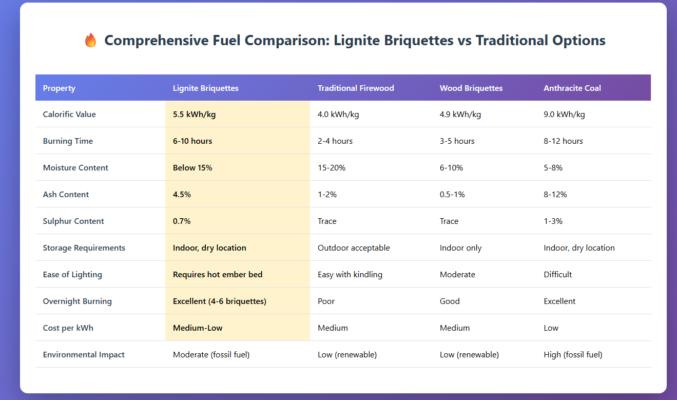
🔥 Comprehensive Fuel Comparison: Lignite Briquettes vs Traditional Options
| Property | Lignite Briquettes | Traditional Firewood | Wood Briquettes | Anthracite Coal |
|---|---|---|---|---|
| Calorific Value | 5.5 kWh/kg | 4.0 kWh/kg | 4.9 kWh/kg | 9.0 kWh/kg |
| Burning Time | 6-10 hours | 2-4 hours | 3-5 hours | 8-12 hours |
| Moisture Content | Below 15% | 15-20% | 6-10% | 5-8% |
| Ash Content | 4.5% | 1-2% | 0.5-1% | 8-12% |
| Sulphur Content | 0.7% | Trace | Trace | 1-3% |
| Storage Requirements | Indoor, dry location | Outdoor acceptable | Indoor only | Indoor, dry location |
| Ease of Lighting | Requires hot ember bed | Easy with kindling | Moderate | Difficult |
| Overnight Burning | Excellent (4-6 briquettes) | Poor | Good | Excellent |
| Cost per kWh | Medium-Low | Medium | Medium | Low |
| Environmental Impact | Moderate (fossil fuel) | Low (renewable) | Low (renewable) | High (fossil fuel) |
Key Advantages of Burning Lignite Briquettes
Long burning duration: A single charge of 4 to 6 briquettes can maintain embers for 6 to 10 hours, making them perfect for overnight heating.
Higher calorific value: With approximately 5.5 kWh/kg, lignite briquettes outperform traditional firewood and provide consistent heat output.
Cleaner storage: Packaged in weatherproof plastic wrapping, these compact bales create no dust and can be stored indoors near your fireplace.
Steady heat production: The even combustion rate produces a gentle, sustained flame without the sudden bursts typical of wood logs.
Where Can I Buy Quality Lignite Briquettes?
While lignite briquettes have gained popularity across Europe, sourcing quality products requires attention to several factors. At Wood Břežany, we prioritise delivering premium heating solutions to our customers. For those seeking alternatives or complementary products, we offer extensive ranges including:
- Buy Wood Briquettes Online
- Buy RUF Wood Briquettes Online
- Buy NESTRO Wood Briquettes Online
- Buy EN Plus A1 Wood Pellets
Our shop provides comprehensive options for all your heating needs, with products that meet stringent quality standards.
How to Properly Light Lignite Briquettes
The lighting process for lignite briquettes differs fundamentally from traditional firewood, as highlighted by REKORD Briquettes. The key lies in establishing a proper foundation before introducing the briquettes themselves.
Step-by-Step Lighting Guide
Prepare the combustion chamber: Ensure your fireplace or stove features a bottom grate and ash pan, as lignite requires more air circulation from below compared to wood.
Build a robust wood fire: Place 2 to 3 wood logs on the grate. Research from Coal Hut confirms that briquettes ignite best on an established, hot ember bed.
Add kindling layers: Stack approximately 2 layers of kindling and firelighters on top of your logs.
Maximise air supply: Set your air control to “ignite” or “max” position to promote rapid combustion.
Light and monitor: Ignite the firelighters and close the firebox door. Wait until all kindling and logs are burning vigorously.
Introduce briquettes strategically: Once a substantial bed of glowing embers has formed, place 3 to 4 briquettes approximately one finger-width apart on the embers. This spacing allows proper air circulation.
Adjust air supply: After the briquettes catch fire (typically 10 to 15 minutes), reduce air supply to your desired heat level.
The critical mistake many users make involves attempting to light lignite briquettes without sufficient starting heat. The briquettes’ high solid matter content demands a hot foundation for optimal ignition, according to combustion research published by Springer.
Best Practices for Burning Lignite Briquettes Overnight
One of the most compelling advantages of lignite briquettes emerges during overnight burning, transforming them from mere fuel into a heating solution that works while you sleep. French heating specialists recommend placing 4 to 6 briquettes in your fireplace before retiring, ensuring glowing embers greet you in the morning.
Optimising Overnight Performance
Bank your fire properly: Arrange briquettes in a compact configuration rather than spread out, promoting sustained ember production.
Reduce air supply significantly: Lower settings encourage slow, steady combustion rather than rapid burning.
Mix with wood strategically: Combining dried firewood with lignite creates an ideal balance between initial heat and sustained burning.
Morning revival technique: Upon waking, simply shake off surface ash, add fresh briquettes or pine firewood, and your fire will spring back to life within minutes.
This overnight capability proves particularly valuable for households using solid fuel as their primary heating source. The ability to maintain warmth throughout the night reduces both morning discomfort and the labour of rebuilding fires from scratch.
Which Appliances Work Best with Lignite Briquettes?
Not all heating appliances suit lignite briquette combustion equally. Understanding compatibility prevents damage and ensures optimal performance. According to ATMOS boiler specifications, lignite briquettes require specific design features.
Compatible Appliances
Multi-fuel stoves with bottom grates: Essential for proper air circulation beneath briquettes.
Traditional open fireplaces: Work well, though efficiency decreases compared to enclosed systems.
Gasification boilers: Purpose-built systems designed specifically for lignite combustion offer maximum efficiency.
Enclosed wood-burning stoves: Most models with adjustable air controls accommodate lignite successfully.
Incompatible Systems
Appliances without bottom grates: Cannot provide sufficient under-fire air supply.*
Some modern clean-burn stoves: May not be certified for coal-based products.*
Appliances with manufacturer restrictions: Always consult your user manual, as Pellet Stove Advantage notes that certain stoves aren’t suitable due to temperature or residue considerations.*
We recommend contacting us if you’re uncertain about compatibility. Our experience with diverse heating systems helps customers make informed decisions about fuel choices.
How to Store Lignite Briquettes Safely
Proper storage dramatically affects briquette performance and longevity. Unlike traditional firewood, which benefits from air circulation, lignite briquettes demand protection from moisture above all else.
Essential Storage Guidelines
Indoor storage preferred: Keep briquettes in dry, covered environments such as conservatories, porches, garages, or sheds.
Maintain original packaging: The weatherproof plastic wrapping provides excellent moisture protection when storage conditions are suitable.
Elevate from ground contact: Place bags on pallets or bricks to prevent moisture wicking from concrete floors.
Monitor humidity levels: Areas with consistently high humidity (above 60%) can affect briquette quality over time.
Stack neatly and securely: Proper stacking prevents toppling and potential exposure to ground moisture or damage.
Research from The Survival Mom emphasises that moisture represents the primary enemy of compressed fuel products. Damp or wet briquettes become difficult or impossible to ignite, as the absorbed water interferes with combustion chemistry.
Long-Term Storage Considerations
When stored in optimal conditions (dry, low-humidity environments), lignite briquettes have an indefinite shelf life. However, we recommend purchasing quantities sufficient for one heating season to balance storage convenience with fuel availability.
Additional storage options from our range include:
Why Mix Lignite Briquettes with Wood?
Combining lignite briquettes with traditional firewood creates a synergistic heating approach that many experienced users consider optimal. This mixed-fuel strategy, recommended by French combustion experts, offers several distinct advantages.
Benefits of Mixed Burning
Easier ignition: Wood establishes the initial fire quickly, providing the ember bed lignite requires.*
Balanced heat output: Wood delivers immediate warmth while briquettes sustain long-term heat.*
Extended burning cycles: Mixing fuels significantly prolongs time between refuelling.*
Cost optimisation: Strategic combination reduces overall fuel consumption and costs.*
Reduced emissions: Proper mixing can improve overall combustion efficiency, lowering particulate emissions.*
Optimal Mixing Ratios
Morning and daytime use: 70% wood, 30% lignite for responsive heat control.
Evening and overnight: 30% wood, 70% lignite for sustained burning.
Extreme cold conditions: Equal proportions for maximum heat output.
Complementary products perfect for mixed burning include:
What Are the Environmental Considerations?
The environmental profile of lignite briquettes presents a nuanced picture. As a fossil fuel formed over millions of years, lignite falls outside renewable resource categories, unlike sustainable wood pellets with certification.
Environmental Analysis
Carbon emissions: Lignite combustion releases approximately 274 g CO₂ per kilogram during complete combustion cycles, according to UK Department for Environment research.
Sulphur content: At 0.7%, lignite briquettes produce significantly lower SO₂ emissions compared to traditional coal varieties.
Particulate matter: Modern lignite briquettes generate moderate particulate emissions, comparable to peat but lower than bituminous coal.
Phase-out plans: Germany announced plans to phase out lignite by 2038, reflecting broader European energy transition policies.
Sustainable Alternatives
For environmentally conscious consumers seeking renewable options, we offer:
The choice between lignite and renewable biomass often depends on individual circumstances, heating system compatibility, and regional availability. Neither option is categorically superior; rather, informed selection based on specific needs produces optimal outcomes.
How Do Lignite Briquettes Compare to Other Solid Fuels?
Understanding relative performance helps consumers make educated fuel choices. The comprehensive comparison table above illustrates key differences, but deeper analysis reveals important nuances.
Performance Metrics
Heat output: Lignite briquettes provide superior calorific value compared to wood (5.5 kWh/kg vs 4.0 kWh/kg) but fall short of anthracite coal’s 9.0 kWh/kg.
Burning characteristics: The extended burn time of 6 to 10 hours positions lignite between wood’s 2 to 4 hours and anthracite’s 8 to 12 hours.
Ease of use: Wood wins for simplicity, while lignite offers better consistency than logs but requires more careful lighting than processed wood products.
Maintenance: Lower ash production (4.5%) compared to anthracite (8 to 12%) reduces cleaning frequency.
Cost Effectiveness
Purchase price per kilogram typically runs higher for briquettes than bulk wood, but the superior energy density often results in comparable or lower cost per kilowatt-hour delivered. Analysis from IW Machines confirms that briquettes’ efficiency can offset initial price differences.
Consider exploring our heating fuel options:
Troubleshooting Common Lignite Briquette Issues
Even experienced users occasionally encounter challenges when burning lignite briquettes. Understanding common problems and solutions enhances performance and satisfaction.
Problem: Briquettes Won’t Ignite
Cause: Insufficient ember bed temperature or premature briquette addition.
Solution: Ensure wood fire burns vigorously for at least 20 minutes before adding briquettes. Build a more substantial initial fire using additional kindling and logs.
Problem: Excessive Smoke Production
Cause: Inadequate air supply or damp briquettes.
Solution: Fully open air controls during initial lighting phase. Check briquette storage conditions and discard any that show moisture damage (swelling, crumbling).
Problem: Short Burning Duration
Cause: Too much air supply or insufficient briquette quantity.
Solution: Reduce air intake after ignition establishes. Use 4 to 6 briquettes for overnight burning rather than 2 to 3.
Problem: Difficult Morning Relight
Cause: Complete ember extinction overnight.
Solution: Add one or two extra briquettes before bed. Ensure air supply isn’t completely closed, maintaining minimal oxygen flow.
For alternative fuel options that might better suit specific situations, explore:
Key Takeaways: Mastering Lignite Briquette Combustion
Successfully burning lignite briquettes requires understanding their unique characteristics and adapting burning techniques accordingly. These compressed fossil fuels offer genuine advantages for certain heating scenarios, particularly overnight burning and extended heat maintenance.
Critical success factors include:
Establishing proper ember beds before briquette introduction Ensuring adequate bottom-grate air circulation Storing briquettes in dry, protected environments Mixing strategically with wood for optimal results Using compatible appliances with appropriate air controls Monitoring and adjusting air supply throughout burning cycles
At Wood Břežany, we’re committed to helping customers navigate the complexities of solid fuel heating. Whether you choose lignite briquettes, wood pellets, traditional firewood, or mixed-fuel approaches, proper technique dramatically affects results.
The evolution of heating technology continues, with innovations in both biomass and traditional fuels offering improved efficiency and environmental performance. Staying informed about best practices, as outlined in our FAQ section, ensures you extract maximum value from your heating investments.
Frequently Asked Questions
How long do lignite briquettes burn compared to regular logs?
Lignite briquettes burn significantly longer than traditional firewood logs. A properly loaded fire using 4 to 6 lignite briquettes can maintain glowing embers for 6 to 10 hours, compared to wood logs which typically burn for 2 to 4 hours. The higher energy density and compressed nature of lignite briquettes (5.5 kWh/kg versus wood’s 4.0 kWh/kg) contributes to this extended burning time. For overnight heating, lignite briquettes prove particularly valuable, as they sustain warmth throughout the night without requiring reloading.
Can I use lignite briquettes in any wood-burning stove?
No, not all wood-burning stoves accommodate lignite briquettes properly. Your appliance must feature a bottom grate and ash pan to provide adequate under-fire air circulation, as lignite requires more combustion air from below compared to wood. Always consult your stove manufacturer’s manual before using lignite briquettes. Many modern clean-burn stoves are not certified for coal-based products. Multi-fuel stoves specifically designed for various fuel types work best with lignite briquettes. If uncertain about compatibility, contact our team for guidance.
What’s the best way to store lignite briquettes to prevent damage?
Store lignite briquettes indoors in a dry, low-humidity environment away from ground moisture. Keep them in their original weatherproof plastic packaging, which provides excellent protection when storage conditions are suitable. Place bags on wooden pallets or bricks to prevent moisture wicking from concrete floors. Avoid damp basements, outdoor sheds without dehumidification, or areas exposed to rain or snow. Properly stored briquettes have an indefinite shelf life, though purchasing quantities for one heating season balances storage convenience with fuel availability. Moisture represents the primary enemy; damp briquettes become difficult or impossible to ignite.
Are lignite briquettes more economical than wood or wood pellets?
The economics depend on multiple factors including local pricing, heating system efficiency, and usage patterns. While lignite briquettes typically cost more per kilogram than bulk firewood, their higher calorific value (5.5 kWh/kg) means you need less fuel to produce equivalent heat. The extended burn time also reduces reloading frequency, saving labour. Compared to premium wood pellets, lignite often proves more economical per kilowatt-hour, though pellet systems offer automation advantages. Mixed burning strategies combining lignite with firewood frequently provide the best overall value.
How do I know if my lignite briquettes have absorbed too much moisture?
Moisture-damaged lignite briquettes display several telltale signs. They may swell, expand, or show distortion from their original uniform shape. The briquettes might feel soft or crumbly to the touch rather than firm and solid. Severe moisture exposure causes briquettes to break apart easily when handled. If you attempt to burn compromised briquettes, they’ll be difficult or impossible to ignite and may produce excessive smoke. Prevention through proper storage proves far more effective than attempting to salvage wet briquettes. Store briquettes indoors in their original packaging within dry environments, checking occasionally for any signs of water damage or storage area leaks.
References
- REKORD Briquettes. (2021). The Right Handling of Lignite Briquettes. Retrieved 2026.
- Wikipedia. (2025). Lignite: Properties, Production and Environmental Impact. Updated December 2025.
- Test Vergleiche. (2025). Lignite Briquettes Test & Comparison 2025. Published September 2025.
- UK Department for Environment, Food & Rural Affairs. (2022). Future Fuels Report: Combustion Analysis of Alternative Solid Fuels. October 2022.
- Springer International Journal of Coal Science & Technology. (2025). Advancing Green Sustainability: Biomass Briquette Integration. April 2025.
- Pellet Stove Advantage. (2025). What is the Efficiency of Briquettes Compared to Wood?. May 2025.
- Duffield Timber. (2025). How to Store and Use Wood Briquettes Correctly. September 2025.