

 Čeština
 Deutsch
 Română
 Polski
 Italiano
How to Store Firewood the Right Way for a Perfect Burn Every Time
Proper firewood storage determines whether your logs burn hot and clean or smoke and smoulder. Store firewood elevated, fully aired on all sides, and covered only on the top to maintain dryness and prevent decay.
Knowing how to store firewood correctly is the single most important step between a cold, smoky fire and a long, roaring, heat-efficient burn. At Wood-Břežany, we have been supplying premium dried and seasoned firewood across Europe for years. The long answer involves managing airflow and moisture, but the core principles are simple.
According to research published by Cornell Cooperative Extension, firewood stored correctly can last indefinitely without any degradation in quality. That means a single, well-executed storage setup pays dividends for every season that follows.
Why Is Proper Firewood Storage So Important?
Firewood stored correctly stays dry, burns hotter, produces less smoke, and can last indefinitely without losing quality or heat output.
When logs absorb ground moisture or sit in stagnant air, they begin to decay, grow mold, and attract insects. According to Cornell Cooperative Extension, properly stored firewood can be kept long term without degrading, provided moisture is controlled.
Good storage protects three things:
- Heat efficiency
- Chimney safety
- Structural safety around your home
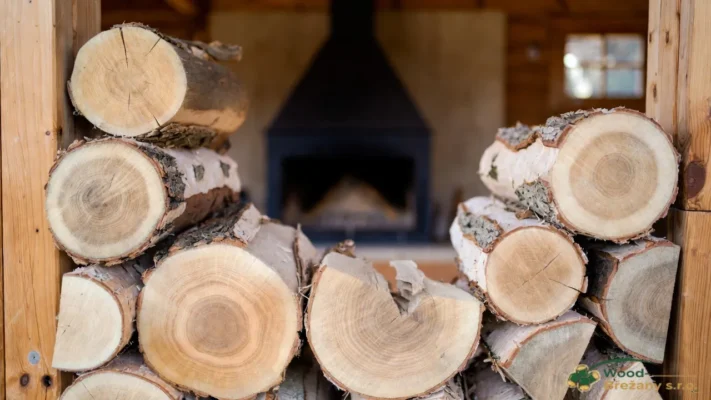
What Is the Right Way to Store Firewood Outdoors?
Store firewood outdoors elevated off the ground, 6 metres from buildings, with full airflow and only the top covered from rain.
Outdoor storage works extremely well if three non negotiable rules are followed:
1. Elevate the Stack
Keep wood at least 6 to 15 centimetres off the ground using:
- Pallets
- Bricks
- Concrete blocks
- A metal rack
Ground contact traps moisture and accelerates decay within weeks.
2. Keep Distance from Buildings
Pest control guidance consistently recommends storing firewood away from structures to prevent termites, beetles, and rodents migrating indoors.
3. Maximise Airflow
Air is the drying engine. Leave space behind and on both sides of the stack. Never press logs tightly against a wall or fence.
Where Should You Store Firewood for the Best Drying Results?
Store firewood in a sunny, open location on the south or west side of your property, away from shade, walls, and overhanging trees.
Sunlight accelerates evaporation. Shade slows seasoning dramatically. Ideal placement includes:
- Full or partial sun exposure
- Good cross ventilation
- No dense vegetation nearby
- No roof runoff dripping onto the stack
For garage storage:
- Only store already dried wood
- Keep stacks under 1.2 metres high
- Use a rack to keep wood off concrete floors
Never bring green or partially seasoned wood indoors. It carries excess moisture, fungal spores, and insects.
Why Does Moisture Ruin Firewood Performance?
Wet firewood wastes energy boiling water instead of producing heat, causes smoke and creosote buildup, and reduces heating efficiency.
Fresh cut wood can contain 50 percent to over 100 percent moisture content by dry weight, according to Cornell Cooperative Extension.
When burned wet, wood causes:
- Excess smoke
- Chimney creosote buildup
- Poor ignition
- Lower heat output
- Unpleasant odours
For clean combustion, firewood must be below 20 percent moisture content.
What Is the Best Way to Stack Firewood for Airflow?
Stack firewood in single rows with cut ends facing outward, bark side up, and gaps between rows to maximise airflow and moisture release.
Best Stacking Methods and Tools to Buy for Firewood Storage
| Storage Method | Best For | Key Advantage | Potential Drawback |
|---|---|---|---|
| Firewood rack (metal) | Most households | Elevated, stable, easy to fill | Limited capacity |
| Wooden pallet base + stack | Large volumes | Inexpensive, good airflow | Requires end-cap stability |
| Crisscross / log cabin pattern | Long-term seasoning | Excellent airflow through the pile | Space-intensive |
| Holz Hausen (round stack) | Circular garden areas | Self-supporting, great drainage | Requires skill to build |
| Firewood shed with open sides | Year-round storage | Full protection + ventilation | Higher upfront cost |
Source: compiled from Keter, The Gratehaus, and Freedom Firewood storage guides, 2025.
The Holz Hausen method, a circular European stacking system, creates a self supporting ring that sheds rain naturally while ventilating through the centre.
Always cover only the top of the stack. Leave sides completely open.
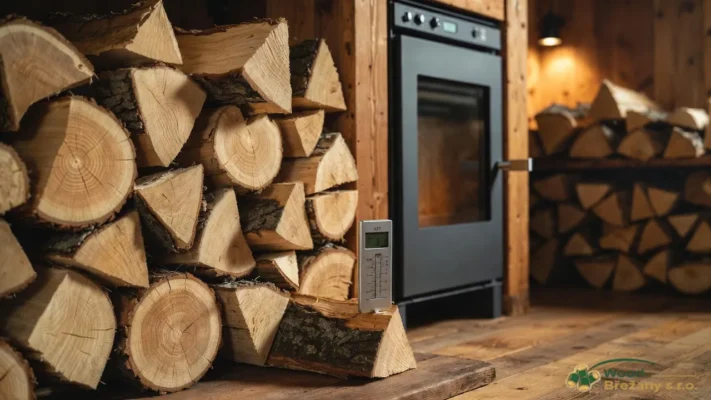
How Long Does It Take to Season Firewood Before Burning?
Firewood needs 6 months for softwoods and 12 to 24 months for dense hardwoods to reach below 20 percent moisture for clean burning.
Seasoning time depends on species and climate:
- Pine and spruce, minimum 6 months
- Beech and ash, 12 months
- Oak and hornbeam, 18 to 24 months
To accelerate drying:
- Stack in full sun
- Face cut ends outward
- Keep rows single stacked
- Rotate outer logs inward periodically
Proper storage drives the entire seasoning process.
Can Firewood Be Stored Indoors or in a Garage?
Only kiln dried or fully seasoned firewood can be stored indoors temporarily, and it must be kept elevated in a ventilated area.
Indoor storage rules:
- Limit quantity to a few weeks of supply
- Keep off floors
- Maintain airflow
- Never store green wood indoors
Improper indoor storage increases insect risk and mold growth.
Where Should You Store Firewood for the Best Results?
Location is everything. A sunny, open position on the south or west side of your property, away from overhanging trees and away from the shade of buildings, creates ideal drying conditions. Freedom Firewood’s 2025 storage guide confirms that direct sunlight accelerates moisture evaporation, which means your wood reaches that critical sub-20% moisture content faster.
For indoor or garage storage, the same principles apply. Use a small rack, keep the stack no higher than 1.2 metres (four feet) for safety, and never store unseasoned or green wood inside since green wood harbours insects, mold, and fungal spores. Only kiln-dried or properly seasoned firewood, like the range available in our online shop, is truly safe for indoor temporary storage.
Should You Cover Firewood with a Tarp?
Cover only the top of the stack to block rain, leaving sides open to allow airflow and prevent trapped moisture.
Wrapping the entire stack in plastic traps humidity and accelerates rot. A breathable tarp or metal sheet across the top is sufficient protection.
How Do You Know If Firewood Is Dry Enough to Burn?
Dry firewood sounds hollow when struck together, shows cracked ends, sheds bark easily, and measures below 20 percent moisture on a meter.
Visual and physical signs include:
- Radial cracks at cut ends
- Lightweight feel
- No visible surface moisture
- Clean ignition without heavy smoke
A basic moisture meter provides precise confirmation.
What Is the Best Wood Species for Long Lasting Heat?
Dense hardwoods like oak, hornbeam, and beech deliver the highest heat output per volume and produce steady, long lasting coals.
Softwoods ignite quickly and are ideal for kindling, but hardwoods provide sustained heating performance across European households.
Does Properly Stored Firewood Expire?
Properly stored firewood can last for years without losing burning quality, provided it stays dry, elevated, and well ventilated.
Unlike many fuels, firewood does not degrade if protected from moisture and pests. Storage quality determines longevity.
How Long Does It Take to Season Firewood, and How to Store Firewood While It Dries?
Green firewood needs at least six months of outdoor air-drying before it reaches a burnable moisture level, and for dense hardwoods like oak or hornbeam, 12 to 18 months is more realistic. According to Carbel’s 2025 firewood guide, the target is below 21% moisture content, with optimal seasoning taking 1.5 to 2 years for the best hardwoods.
During this seasoning period, the way you store firewood is what drives the process. Stack with the cut ends facing outward (the ends, not the bark, release the majority of moisture), position in full sun, and never cover the sides. Rotate logs from the outer edges inward periodically to ensure even drying.
Key Takeaways
- Elevate firewood at least 6 centimetres off the ground
- Store at least 6 metres from buildings
- Maintain airflow on all sides
- Cover the top only
- Face cut ends outward
- Burn below 20 percent moisture
- Season hardwoods up to 24 months
If you want to skip this process entirely, our best firewood to burn range and species-specific options like beech firewood, alder firewood, and mixed firewood are all supplied pre-dried. You can also read our guide on choosing quality firewood for heating to match wood species to your heating needs.
“Unlike most fuels, as long as it is done correctly, firewood can be stored indefinitely, safely, and without degrading.” — Cornell Cooperative Extension, updated January 2025
Order the Best Dried Firewood Online for Easier Storage
The single biggest storage advantage you can give yourself is starting with wood that is already properly dried. Green or partially seasoned wood demands months of careful management before it burns well. Our buy dried firewood online product arrives ready to stack and burn, with sub-20% moisture content guaranteed.
We stock a wide range, from dense, long-burning hornbeam firewood and oak firewood to lighter, fast-lighting alder and pine firewood. For those comparing options, our ash vs oak firewood comparison and birch vs ash vs oak guide are useful resources. You can also check our full firewood category and contact us if you need advice on quantities or delivery.