

 Čeština
 Deutsch
 Română
What are the best wood briquettes for heating | Wood-Břežany s.r.o
Discover the best wood briquettes 2025. Complete comparison of RUF, cylindrical & overnight briquettes with 4.8-5.0 kWh/kg heat output. Free UK delivery available! Looking for the highest quality wood briquettes for efficient home heating? We offer an extensive range of premium RUF, cylindrical, and overnight briquettes with heat outputs of 4.8-5.0 kWh/kg and moisture content below 10%. Our eco-friendly briquettes are manufactured from clean wood sawdust with no chemical additives, burn for 3-8 hours, and produce only 1% ash. We deliver across Europe, including the UK, Poland, Germany, and Austria. Store for up to 3 years without quality loss. Perfect for wood burners, fireplaces, and solid fuel boilers.
As winter approaches, every homeowner begins thinking about how to heat their property efficiently and economically. In recent years, wood briquettes have emerged as one of the most popular alternatives to traditional firewood and coal. But what are genuinely the best wood briquettes on the European market in 2025? Let’s explore a comprehensive comparison to help you make an informed decision.
Buy Wood Briquettes Online (The Modern Heating Solution)
Wood briquettes represent a modern form of biofuel created by compressing wood sawdust, shavings, and chips under extreme pressure (up to 2,500 kg/cm²). The calorific value of wood briquettes is around 4.9 kWh/kg, which is significantly higher than traditional logs.
Key advantages of premium briquettes:
- High calorific value (4.8-5.0 kWh/kg versus 4.1 kWh/kg for logs)
- Low moisture content (5-10% compared to 20-30% for fresh wood)
- Minimal ash production (only 1% versus 20% for coal)
- Extended burn time (3-8 hours depending on type)
- Compact storage (1 tonne of briquettes equals 4 m³ of wood)
- Clean combustion with no chemical additives
However, selecting the right type of briquette isn’t straightforward. Several categories exist on the market, each with specific properties and applications. Our wood briquettes online collection offers carefully curated options for every heating need.
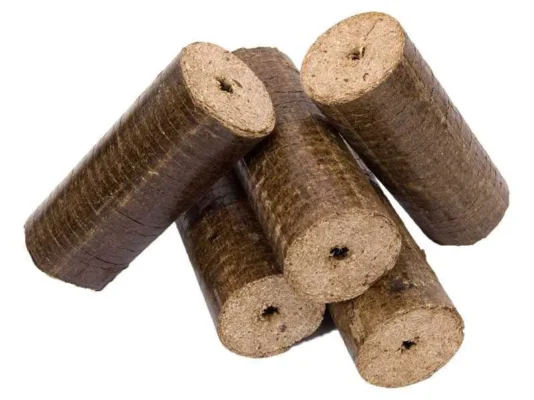
Which Wood Briquettes Have The Longest Burn Time?
Burn time is one of the most critical parameters when selecting briquettes. A 5kw to 8kw stove will run brilliantly on Woodlets Briquettes, Woodlets Heat Lo, gs or Pini-Kay briquettes, but different types offer vastly different performance characteristics.
RUF Briquettes (Brick-Shaped)
RUF briquettes, named after the German manufacturer of the pressing equipment, have a rectangular brick shape with rounded corners. They’re produced using hydraulic presses and are an ideal choice for smaller stoves.
Characteristic properties of RUF briquettes:
| Parameter | Value |
|---|---|
| Shape | Rectangular (brick) 9×15×10 cm |
| Production pressure | Hydraulic (pneumatic) |
| Calorific value | 4.8-4.9 kWh/kg |
| Burn time | 2-4 hours |
| Combustion style | Tends to smoulder |
| Storage capability | Good (suitable for 1-2 years) |
| Best for | Boilers, large stoves, fireplaces |
| Price per kg | £0.12-0.15 |
Their only weakness is a tendency to smoulder rather than flame when airflow is restricted. Therefore, RUF briquettes are an excellent choice for boilers or large fireplace stoves with heat exchangers, where you can utilize faster combustion in your heating system.
We offer premium hardwood RUF briquettes manufactured from beech and oak, ensuring stable thermal output throughout the heating season.
Cylindrical Briquettes (Premium Category)
Woodlets wood briquettes are dense, high-energy fuel blocks made from compressed wood residue, ideal for long, slow burns in wood burners and stoves. Cylindrical types consistently receive the best reviews from consumers.
Advantages of cylindrical briquettes:
- Extreme production pressure (up to 400 atm at 120°C)
- Maximum density (heavier than water, won’t float)
- Extended burn time (4-6 hours)
- Stable glowing without smouldering
- Sealed surface resistant to atmospheric moisture
- Storage capability of 2-3 years without quality loss
After initial ignition, you can simply close the air supplyy and they’ll glow beautifully for several hours. Cylindrical briquettes truly replicate hardwood performance.
The diameter of cylindrical briquettes ranges between 9-10 cm, with lengths of 25-30 cm. They can be manufactured with a central hole (for easier ignition and airflow) or without a hole (longer burn time). Our cylindrical RUF briquettes combine the best attributes of both designs.
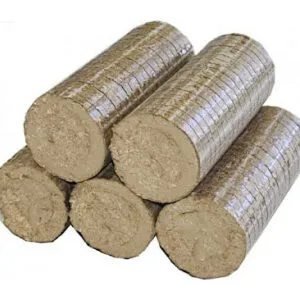
Overnight Bark Briquettes
For those who want to heat throughout the night without needing to refuel, overnight briquettes are the perfect solution. Night Briquettes made from 100% natural softwood bark are the longest-burning briquette fuel on the market, burning for up to 8 hours.
Overnight briquettes contain a minimum of 50% tree bark washed with water, with the remainder consisting of hardwood species. Due to extreme compression, they can:
- Burn for up to 16 hours
- Glow steadily for 6-8 hours
- Maintain temperature throughout the night
- Produce more ash (up to 10% due to bark content)
We supply quality bark overnight briquettes manufactured in accordance with environmental standards.
How To Identify Quality Wood Briquettes When Purchasing?
Selecting quality briquettes can dramatically impact heating efficiency and your satisfaction. A good benchmark is around 4.8kWh/kg with less than 10% moisture content, ensuring cleaner combustion and more usable heat from every briquette.
Quality Checklist:
1. Visual Inspection
- Colour: Beige to brown (light wood) or dark (hardwood, bark)
- Surface: Smooth, without cracks, well-sealed
- Cleanliness: No traces of stones, plant impurities, or adhesives
- Solidity: Briquette doesn’t crumble, remains compact
2. Physical Properties
The calorific value of wood briquettes is around 4.9 kWh/kg, with a reasonably linear relationship between moisture content and calorific value. Colour should be in shades of beige to brown. Natural wood scent indicates purity of original material and absence of chemicals.
3. Certification and Testing
Reputable manufacturers have their products tested in accredited laboratories. At Wood-Břežany s.r.o., we regularly publish test results for our EN Plus A1 wood pellets and briquettes.
Buy Hardwood or Softwood Briquettes?
A frequent question is whether to choose briquettes from beech, oak, or soft conifers. Wood briquettes offer numerous advantages over traditional firewood, with consistent shape and size making them undeniably more convenient.
Comparison by Wood Species:
| Wood Type | Calorific Value | Burn Time | Price | Best Use |
|---|---|---|---|---|
| Beech | 4.9-5.0 kWh/kg | 4-5 hours | Higher | Long-term heating |
| Oak | 4.9-5.0 kWh/kg | 4-6 hours | Highest | Stable heat output |
| Spruce | 4.8-4.9 kWh/kg | 3-4 hours | Lower | Quick ignition |
| Pine | 4.8-4.9 kWh/kg | 3-4 hours | Lower | Standard heating |
| Mixed (combined) | 4.8-5.0 kWh/kg | 4-5 hours | Medium | Universal use |
Key insight: Differences in raw wood diminish during briquetting. During compression, soft and hard sawdusts are pressed together under high pressure into briquettes of identical density.
Therefore, it’s worth focusing primarily on compression quality and moisture content, rather than solely on wood species. Our mixed briquettes combine the best properties of various wood types.
What Is The Annual Consumption Of Wood Briquettes?
When heating a smaller insulated house (80-100 m²) continuously, annual consumption is approximately 2-3 tonnes of wood briquettes. Larger or poorly insulated houses may require 4-5 tonnes annually.
Factors Affecting Consumption:
Building Heat Loss:
- Older uninsulated houses (1960s-80s): 5-6 tonnes/year
- Partially insulated houses: 3-4 tonnes/year
- New builds/passive houses: 1-2 tonnes/year
Heating Type:
- Primary heat source: 4-6 tonnes
- Supplementary heating: 1-2 tonnes
- Weekend cottages: 0.5-1 tonne
Briquette Quality: High-quality briquettes are dried and compacted to a moisture content of around 6 to 10%, with a typical calorific value in the region of 4.9kWh/kg. Briquettes manufactured from hardwood burn longer than soft varieties.
If you heat using a combination of briquettes and wood, you can optimize consumption. For example, use firewood for quick ignition and briquettes for long-term temperature maintenance.
How To Store Wood Briquettes Correctly?
Briquettes should be stored in a dry, ventilated space, ideally on pallets to prevent direct contact with the ground. It’s also important to protect them from direct sunlight and rain.
Correct Storage Rules:
Ideal Location:
- Garden shed, garage, dry cellar
- Airy environment (not sealed containers)
- Pallets or wooden planks as a base
- Roof or shelter (protection from rain)
What Damages Briquettes:
- Water (reduces calorific value, briquettes disintegrate)
- Direct contact with damp ground
- Sealed plastic bags (moisture condensation)
What Doesn’t Harm Briquettes:
- Direct sunlight (changes colour, not properties)
- Frost
- Long-term storage (2-3 years)
Pini Kay Versus Nestro Briquettes
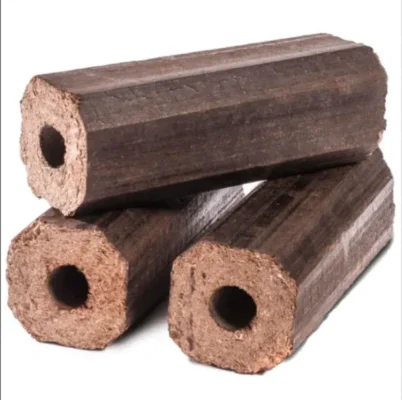
A special type is represented by Pini Kay briquettes with their characteristic octagonal shape and central hole. Many briquettes do expand whilst burning, and you don’t want them to overfill the fire, making shape an important consideration.
Pini Kay:
- Highest density of all types
- Burns for up to 5 hours
- Easy ignition thanks to the opening
- Premium price category
We offer quality Pini Kay briquettes and classic Nestro briquettes according to your requirements.
Best Price For Wood Briquettes (When To Purchase?)
For a similar weight of 910kg, briquettes cost £425 compared to logs at £600, already representing £175 in savings. However, prices vary significantly by season and quality.
Pricing Strategy:
Cheapest Period: May to July (outside heating season), Most Expensive Period: October to January (start of heating season,) Savings: Up to 30% when purchasing off-season
Beware Hidden Costs:
- Delivery and packaging charges
- Home delivery service
- Minimum order requirements
At Wood-Břežany s.r.o., we offer free delivery throughout Europe on pallet quantities. Browse our selection of wood briquettes with guaranteed premium quality.
Comparing Wood Briquettes With Pellets
Pellets and briquettes are similar but have different applications. After 2 hours and 30 minutes of burn time, tests reveal that briquettes burn 62°C hotter on average compared to regular logs (92°C vs 30°C).
Main Differences:
| Parameter | Briquettes | Pellets |
|---|---|---|
| Size | Large (approx. 10×30 cm) | Small (6×20 mm) |
| Equipment | Standard stoves/boilers | Pellet boilers |
| Feeding | Manual | Automatic |
| Calorific value | 4.8-5.0 kWh/kg | 4.8-4.9 kWh/kg |
| Price per kg | £0.12-0.18 | £0.18-0.24 |
| Convenience | Medium | High |
If you’re interested in pellets, view our certified DIN Plus wood pellets or learn more about ENplus certification.
Environmental Aspects Of Burning Briquettes
Briquettes are a by-product from many industries, recycling wood waste that would have gone to landfill if it wasn’t used, making them an environmentally responsible choice.
Environmental Benefits:
- CO₂ neutral (releases only as much CO₂ as the tree absorbed during its lifetime)
- Waste recycling (utilization of sawdust and shavings)
- Minimal emissions during correct combustion
- Ash as fertilizer (contains phosphorus and potassium)
- No chemicals or binders
Ecological heating with briquettes compares favorably with our other products, like DIN hay pellets or straw pellets.
How To Heat Correctly With Wood Briquettes?
To achieve maximum efficiency and burn time,the correct procedure must be followed:
Heating Instructions:
1. Stove Preparation
- Clean ash from previous burning
- Check chimney draft
- Prepare firelighter or thin kindling
2. Ignition
- Place a firelighter or paper
- Add thin wood chips
- Position 1-2 broken briquettes
- Fully open-air supply
- Light from the bottom
3. Refueling
- Wait for thorough ignition (15-20 minutes)
- Add 2-3 whole briquettes
- Adjust air supply as needed
- Fill the stove maximum of half-full
4. Optimal Operation
- For rapid heating: More air, intense flame
- For long burning: Less air, stable glowing
- Regularly check ash levels
Common Heating Mistakes:
- Overfilling the stove (briquettes expand during burning)
- Too little air (tar formation in the chimney)
- Too much air (rapid burn-through)
- Damp briquettes (low calorific value)
Regional Wood Briquette Deliveries
As a European manufacturer and distributor based in Břežany 241, 671 65 Břežany (Company ID: 05273790), we supply quality briquettes throughout Europe.
Delivery Areas:
- United Kingdom (all regions)
- Poland
- Germany
- Austria
- Czech Republic
More information about deliveries can be found on our international shop or Czech shop.
Frequently Asked Questions About Wood Briquettes
Are wood briquettes better than traditional wood?
Yes, from calorific value and practicality perspectives. High-quality, low-moisture wood briquettes burn longer and hotter than the equivalent volume of traditional firewood. Additionally, they don’t require drying, splitting, or as much storage space.
How many briquettes do I need for winter?
For heating an average family home, 4 to 6 tonnes of wood briquettes per year are needed. For weekend properties or occasional supplementary heating in fireplaces or fireplace stoves, 1 to 2 tonnes of briquettes per year are sufficient.
Can I store briquettes outdoors?
Yes, but they must be protected from rain and moisture. A shelter, pallets as a base, and adequate ventilation are ideal. Our briquettes are wrapped in films providing basic protection.
What is the difference between briquettes with and without holes?
From a customer perspective, it makes little difference. The opening helps faster ignition, but solid briquettes burn slightly longer.
Can I burn briquettes in any fireplace?
Yes, briquettes are suitable for all solid fuel stoves, including wood burners, fireplaces, boilers, and fireplace inserts. They achieve the highest efficiency in wood gasification boilers. You can also use our wood shavings as kindling.
Do briquettes produce more ash than wood?
No, quite the opposite. At combustion’s end, approximately 1% ash remains from the original volume. For bark briquettes, the remainder is larger at up to 10%. For comparison, coal contains up to 20% ash.
Is it better to buy RUF or cylindrical briquettes?
That’s a difficult question since wood briquettes are sold by weight and calorific values of different types are practically identical. Cylindrical briquettes have longer burn time and better compression, but RUF briquettes are more affordable. It depends on your needs and stove type.
How much do quality wood briquettes cost?
Prices range between £0.12 and £ 0.18/kg depending on type and quality. RUF briquettes are cheaper (£0.10-0.14/kg), cylindrical more expensive (£0.15-0.18/kg). The most economical is purchasing outside the heating season and in larger quantities.
Key Takeaways: How To Choose The Best Briquettes?
✓ Focus on compression quality, not just wood species
✓ Check moisture content (maximum 10%)
✓ Select cylindrical briquettes for long burning
✓ RUF briquettes are ideal for boilers and large stoves
✓ Overnight briquettes save nocturnal refueling
✓ Purchase off-season (May-July)
✓ Store in dry conditions on pallets
✓ Budget for 3-5 tonnes/year for a standard house
Conclusion: Investment In Quality Briquettes Pays Off
Selecting the right wood briquettes can dramatically impact heating comfort and your budget. Our calculations show that wood briquettes are around 45% better value for money compared to firewood due to greater fuel volume and superior product performance.
At Wood-Břežany s.r.o. (Company ID: 05273790, VAT: CZ05273790), We specialize in supplying premium wood briquettes, pellets, and other ecological fuels throughout Europe. All our products undergo strict quality control and are certified according to European standards.
Contact us via our contact page or browse our complete range on our shop. We offer expert advice, competitive prices, and free delivery.
Prepare for winter with the best briquettes on the market and enjoy warmth and comfort worry-free!
References and Sources
- Wood Fuel Co-operative: Which is the best briquette? (2025)
- Duffield Timber: Wood Briquettes vs Traditional Logs Cost Comparison (2023)
- Woodlets: Best Briquettes for Wood Burners, BBQs & Industrial Use (2025)
- Duffield Timber: Wood Briquettes vs Logs Heat Performance Comparison (2024)
- Fitzpatrick Fuels: Briquettes and Heat Logs vs Firewood (2023)
- Wood Fuel Co-operative: Guide to Briquettes (2021)
- Duffield Timber: Biomass Wood Fuels Guide (2025)