

 Čeština
 Deutsch
 Română
 Polski
 Italiano
 Español
 Nederlands
 Magyar
 Slovenčina
 Slovenščina
 Hrvatski
Lump charcoal vs briquettes for barbecue is a trade-off between heat and consistency. Lump charcoal lights fast, burns hotter and leaves less ash, which suits searing and short cooks. Briquettes burn longer and more evenly because every piece has the same size and density, which suits slow cooking and big grills. The better choice depends on what you cook.
What is the difference between lump charcoal and briquettes?
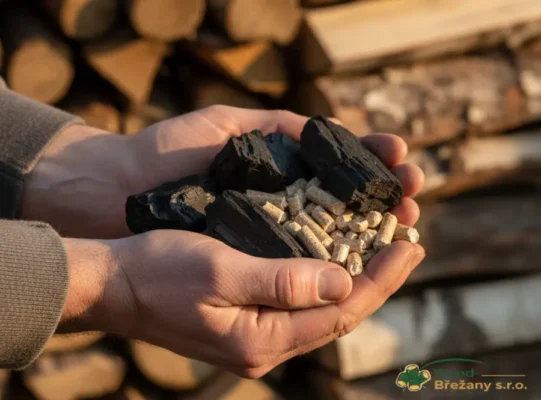
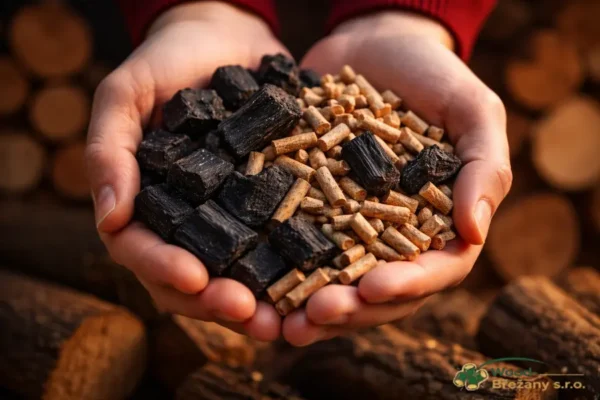
Carbonising pieces of hardwood make lump charcoal in a low-oxygen kiln. The result keeps the shape of the original wood, so a bag contains pieces from fist-sized down to small chips. Briquettes are made differently. Charcoal dust is mixed with a binder, often starch, and sometimes other additives, then pressed into uniform shapes. The Wikipedia article on charcoal describes lump charcoal as made directly from hardwood and briquettes as compressed charcoal with a binder and other additives.
This difference in production explains most of what follows. Lump is closer to pure carbonised wood. Briquettes are an engineered product with a more predictable shape and burn.
Which one burns hotter?
Lump charcoal usually reaches high temperatures faster. It contains more fixed carbon, and its irregular pieces leave gaps for air, so the fire responds quickly when you open the vents. That makes it a good fit for searing steaks, burgers and vegetables over direct heat.
Briquettes generally reach a slightly lower peak, but they hold a steady temperature. The binder and filler make them less reactive to airflow, which some cooks consider a drawback and others consider an advantage. Peak temperatures depend on the product, the grill, the vent settings and how much fuel you load, so compare products on your own grill rather than relying on a single figure.
Which one burns longer?
Briquettes usually win on duration and predictability. Uniform pieces pack tightly and burn at a similar rate, so a full chimney of briquettes often gives you a stable bed for one to three hours, depending on brand and airflow. Lump charcoal burns faster on average, and the irregular sizes mean small pieces burn out while large pieces still glow.
Large, dense lumps can last as long as briquettes, and some premium hardwood lumps give a long cook. A bag with many small fragments does not. Check the bag for the size range and look for pieces of at least 5 cm if you want a long burn.
How much ash do they leave?
Lump charcoal leaves clearly have less ash in most tests. A European Commission study of barbecue charcoal reported typical figures of around 75% fixed carbon and 8% ash for lump charcoal, compared with about 60% fixed carbon and 18% ash for briquettes. You can read the details on the European Commission news item. These are test averages, and individual products vary.
Less ash means better airflow in the grill and less cleaning after each cook. It also means less ash blown onto food in a windy garden. With briquettes, you will need to shake or clear the ash more often during a long cook, because heavy ash can smother the coals.
Which gives better control?
Control depends on the type of cooking. Lump charcoal reacts quickly to vent changes, so you can raise or lower the temperature in a few minutes. That helps with fast grilling but needs attention for long cooks, since the fire can also run away.
Briquettes react more slowly and keep a stable temperature once they are lit, which helps with slow cooking such as ribs, whole chickens or joints of meat. Many people build a two-zone fire with briquettes: a stack on one side for direct heat and an empty side for indirect heat. The uniform shape makes it easy to repeat the same setup each time.
How do they compare on smoke, smell and safety?
Good lump charcoal produces very little smoke once the coals are lit, and it carries a light wood aroma. Briquettes can give off more smoke and odour while the binder burns off, so wait until they are covered with grey ash before you put food on the grill.
The same EU study found that higher moisture, ash and volatile content were linked to higher emissions of pollutants, and that lump charcoal was usually the cleaner option. Both types still produce carbon monoxide. The US Centers for Disease Control and Prevention advises that you never burn charcoal indoors, and that includes in a garage, tent or under a covered porch without ventilation.
Do not mix up barbecue briquettes with coal briquettes. Barbecue briquettes are made from charcoal. Briquetted coal is a mineral fuel for stoves and boilers, and it is not intended for cooking.
Lump charcoal vs briquettes compared
| Feature | Lump charcoal | Briquettes |
|---|---|---|
| Material | Carbonised hardwood pieces | Charcoal dust with binder, pressed |
| Lighting | Fast, often 10 to 15 minutes in a chimney | Slower, often 15 to 25 minutes |
| Peak heat | Higher | Slightly lower |
| Burn time | Varies with piece size | Longer and more even |
| Ash | Low (about 8% in the EU test average) | Higher (about 18% in the EU test average) |
| Temperature control | Fast response | Stable, slower response |
| Consistency | Irregular sizes | Uniform pieces |
| Best for | Searing, short cooks, small grills | Slow cooking, long sessions, big grills |
Lighting times are typical estimates that depend on the chimney, weather and charcoal quality.
Which one should you use?
Use lump charcoal if you grill quickly over high heat, cook on a small kettle or ceramic grill, or want less ash. Use briquettes if you cook slowly, load a large grill, or want the same burn every time. Many cooks keep both: briquettes as the base for a long cook and a lump for a hot start or a sear at the end.
A simple method is to start with a base layer of briquettes and add a handful of lump for extra heat when you need it. This works in a kettle grill and in most barrel and offset smokers. If you also use wood pellets for flavour, our guide to mixing charcoal and wood pellets explains what to watch.
What to check before you buy
- Raw material: look for hardwood such as oak, beech or hornbeam, and avoid unspecified mixes.
- Additives: check whether briquettes list binders, accelerants or fillers.
- Standard: products meeting EN 1860-2 must stay within defined limits for ash, moisture and fixed carbon. The standard requires at least 75% fixed carbon and no more than 8% ash and 8% moisture for barbecue charcoal, according to the published scope of EN 1860-2:2023.
- Piece size: for a lump, bigger pieces are usually better than dust and fragments.
- Dryness: store charcoal in a dry place, because damp charcoal lights badly and smokes.
Be aware that the EU study found that many products on the market did not meet the standard, so checking a label is only a first step. Test a new bag with a small cook before you rely on it for guests.
Key takeaways
- Lump charcoal is carbonised hardwood. Briquettes are charcoal dust pressed with a binder.
- Lump burns hotter, lights faster and leaves less ash.
- Briquettes burn longer and more evenly and give steadier temperatures.
- Use a lump for searing and small grills, and briquettes for slow cooks and large grills.
- Check the label for raw material, additives and EN 1860-2 compliance.
- Never burn charcoal indoors or in an unventilated space.
Lump charcoal compared with charcoal briquettes for barbecue
Is lump charcoal better than briquettes?
Neither is better in every case. Lump charcoal is better for high heat, quick lighting and low ash. Briquettes are better for long, even cooks and repeatable results.
Can I mix lump charcoal and briquettes?
Yes. Many cooks use briquettes as a stable base and add lump for extra heat. Make sure both are fully lit and covered with grey ash before you cook on them.
Do briquettes taste worse than lump charcoal?
Good briquettes made without strong additives do not change the taste of food once they are fully lit. Poor briquettes or ones that are not fully lit can add an unpleasant smell. Waiting until the coals are ashed over avoids most of the problem.
How much charcoal do I need for a barbecue?
It depends on the grill size and the cooking time. For a standard 57 cm kettle grill, a full chimney of about 2 to 3 kg is a common starting point for a direct-heat cook. Slow cooks need less fuel at a time but refills during the session.
Can I reuse unburnt charcoal?
Yes. Close the vents after cooking so that the remaining pieces go out, then store them dry and use them in the next cook. Remove the ash first so that airflow stays good.
Where to buy barbecue charcoal
See our briquetted charcoal, made from natural hardwood and intended for grilling, and read our guide to the best wood briquettes if you also heat with pressed fuels. We deliver across Europe.