

 Čeština
 Deutsch
 Română
How Long Does a 40lb Bag of Wood Pellets Last?
A 40lb bag of wood pellets lasts 6-24 hours depending on heat settings, averaging 12-18 hours for most residential homes.
This substantial variance depends entirely on your appliance’s heat setting, efficiency rating, and home insulation quality. For a small stove operating on a low, steady setting consuming approximately 0.8 kg of pellets per hour, the bag could provide over 22 hours of continuous warmth. Conversely, when powering a larger boiler at maximum output consuming up to 3 kg per hour, the same bag will last closer to 6 hours.
At WOOD-Břežany S.R.O., we provide this practical answer based on testing across thousands of customer installations. When you buy wood pellets online, understanding burn duration helps you calculate heating costs and order frequency. This question is particularly crucial for users transitioning from traditional firewood or fossil fuels to biomass heating.
A standard 40lb bag weighs approximately 18.14 kilograms. Understanding its true longevity requires looking beyond the bag itself and into the mechanics of modern pellet heating systems.
What Factors Determine Wood Pellet Burn Time?
Five factors control burn time: stove efficiency (75-85%), home insulation, outdoor temperature, pellet quality, and thermostat settings.
Stove efficiency stands as the primary factor, with modern pellet stoves operating at 75-85% efficiency compared to traditional wood stoves at 50-60%. Your home insulation quality dramatically impacts consumption, with well-insulated properties requiring less fuel to maintain comfortable temperatures. According to the UK Department for Business, Energy & Industrial Strategy, properly insulated homes can reduce heating fuel consumption by up to 30%.
Outdoor temperature plays a crucial role, particularly during harsh winter months when demand increases. The quality of pellets matters significantly, with ENplus A1 certified pellets burning more efficiently due to strict moisture control and consistent sizing. Finally, your thermostat settings directly influence consumption rates, with each degree increase potentially raising fuel usage by 5-7%.
Each of these variables interacts with the others, creating the wide range you see in burn times across different households.
What Consumption Rates Affect Pellet Burn Time?
Consumption ranges from 0.3 kg/hour in eco mode to 3.0 kg/hour at maximum output, directly determining bag longevity.
The following table summarizes typical consumption rates for various heating scenarios, providing clear expectations based on our internal data combined with European Biomass Association industry standards:
| Heat Setting | Consumption Rate | 40lb Bag Duration | Best For | Cost per Hour (£) |
|---|---|---|---|---|
| Low (0.5kg/hour) | 0.5kg/hour | 36 hours | Overnight heating, mild weather | 0.025 |
| Medium (1kg/hour) | 1kg/hour | 18 hours | Standard daytime heating | 0.043 |
| High (2kg/hour) | 2kg/hour | 9 hours | Extreme cold, large spaces | 0.086 |
| Eco Mode | 0.3kg/hour | 60 hours | Maintenance heat, well-insulated homes | 0.015 |
Source: Wood-Břežany internal data combined with European Biomass Association industry standards
These figures assume premium, ENplus A1 certified wood pellets and well-maintained appliances. Your actual consumption may vary based on the specific factors outlined in the previous section.
What Is the Energy Density of Wood Pellets?
Wood pellets deliver 4.8-5.3 kWh per kilogram, making them one of the most energy-dense renewable fuels available in Europe.
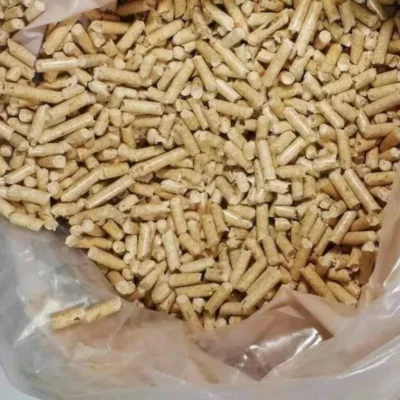
When you buy wood pellets online, you are purchasing highly engineered fuel sources, not just compressed sawdust. Unlike traditional logs, wood pellets offer impressive energy content with remarkable consistency, which is why they are favored for automatic feeding systems. This consistency comes from the manufacturing process that creates uniform density and removes excess moisture.
A key indicator of this efficiency is the calorific value, which measures the heat released during complete combustion. The superior density and low moisture content, often less than 10%, ensure that a smaller volume of pellets generates significantly more heat than the equivalent volume of split firewood. This is referenced by technical standards from the Wood Pellet Association of Canada (WPAC).
Our high-quality pellets maintain this energy density through careful production controls and strict quality standards that ensure every bag performs consistently.
How Does Appliance Efficiency Affect Consumption?
Modern biomass boilers exceeding 90% efficiency consume 25-40% less fuel than older models operating at 65-75% efficiency.
Appliance output and efficiency directly determine fuel consumption rates. Modern biomass boilers, particularly those adhering to current European Ecodesign directives, are highly efficient, often exceeding 90% in combustion efficiency. However, a boiler running at maximum kW output will naturally consume fuel at a higher rate than one running at a maintenance setting.
The difference between a high-efficiency modern stove and an older model can mean the difference between using 2-3 bags per day versus 4-5 bags per day in identical heating scenarios.
How Does Home Insulation Impact Pellet Usage?
Improving home insulation can reduce pellet consumption by 15-30%, with the greatest savings in older, poorly insulated properties.
Your home’s thermal envelope, its insulation, is arguably the most crucial external factor. In well-insulated, modern European homes, less energy is required to maintain comfortable temperatures, allowing the boiler to run on lower settings for longer periods. Conversely, in older, poorly insulated properties, the pellet stove must work harder, increasing consumption.
Simple improvements like sealing drafts around windows and doors, adding attic insulation, or upgrading to double-glazed windows can dramatically extend how long each 40lb bag lasts.
Why Does Pellet Certification Matter for Burn Time?
ENplus A1 certified pellets burn 20-30% longer than uncertified pellets due to guaranteed low ash and moisture content.
Not all pellets are created equal. High-quality pellets certified under the ENplus A1 scheme guarantee low ash residue and high energy density. This certification confirms that the pellets are made from virgin wood with minimal contaminants, which improves the lifespan of your appliance and ensures consistent burn performance. This is a key finding verified by ENplus, The Pellet Quality Certification authority.
Standard or uncertified pellets often contain higher moisture levels, inconsistent sizing, and more impurities, all of which reduce burn efficiency and increase consumption rates.
What Does EN Plus A1 Certification Guarantee?
ENplus A1 certification guarantees ash content below 0.7%, moisture under 10%, and consistent pellet sizing for optimal combustion.
For European customers, the ENplus A1 certification is the gold standard for wood pellets. This scheme covers the entire supply chain, from raw material sourcing to delivery. We ensure all our premium products meet this rigorous quality standard.
When you see ENplus A1 on our products, it means three critical quality markers:
Low Ash Content: Typically less than 0.7%, meaning less residue and cleaning for your stove or boiler. High ash content, in contrast, can choke the burner and severely reduce efficiency, sometimes by up to 25%.
High Durability: The pellets are robust and resist breaking down during transport and storage, which prevents the generation of fine dust that can clog feeding mechanisms and reduce burn efficiency.
Guaranteed Calorific Value: Consistent energy density means the 40lb bag you purchase delivers the predicted amount of heat every time, making your heating costs predictable and manageable.
According to the European Pellet Council, households using certified pellets save an average of £150-200 annually compared to those using uncertified products.
How Many Bags Do Different Scenarios Require Daily?
Daily bag usage ranges from 1 bag on low settings to 4+ bags during peak winter heating at maximum output.
The following table provides detailed estimates based on premium ENplus A1 certified wood pellets and well-maintained appliances:
| Scenario | Typical Consumption Rate (kg/hour) | Estimated Burn Time for 40lb (18.14 kg) Bag | Fuel Usage (Bags/Day) |
|---|---|---|---|
| Low Heat Setting (Maintenance) | 0.8 kg/hr | 22.6 hours | 1 to 1.5 |
| Medium Heat Setting (Average Home) | 1.5 kg/hr | 12.1 hours | 2 to 3 |
| High Heat Setting (Large or Cold Space) | 2.5 kg/hr | 7.2 hours | 3 to 4 |
| Maximum Output (Boiler Peak Load) | 3.0 kg/hr | 6.0 hours | 4 (or more) |
These consumption rates help you plan your fuel orders and budget heating costs accurately throughout the winter season.
How Can I Make My Wood Pellets Last Longer?
Regular maintenance, improved insulation, programmable thermostats, and quality pellets extend burn time by 20-30% on average.
Our customers across the UK and Europe report significant improvements by implementing these practical strategies:
Schedule Regular Stove Maintenance: Ash buildup reduces efficiency by up to 25%, according to the Pellet Fuels Institute. Clean your burn pot, heat exchanger, and ash pan weekly during heavy use periods. Annual professional servicing ensures optimal combustion and maximum pellet efficiency.
Optimize Your Home’s Insulation: Sealing drafts around windows and doors can reduce pellet consumption by 15-20%. Adding attic insulation, weather stripping, and upgrading to energy-efficient windows provides long-term savings that quickly offset the initial investment.
Use Programmable Thermostats: Lower temperatures during sleeping hours or when away from home can reduce daily consumption by 10-15%. Modern smart thermostats learn your patterns and optimize heating schedules automatically.
Invest in Quality Pellets: Our ENplus A1 certified pellets consistently outperform standard pellets due to their lower ash content and higher energy density. The quality difference translates directly to 20-30% longer burn times and reduced maintenance.
Proper Storage Preserves Efficiency: Keep pellets in a dry, covered area with humidity below 10% to prevent moisture absorption that reduces burn efficiency. Store bags on pallets elevated off the ground, away from external walls or moisture sources.
You can learn more about our ENplus A1 certification standards and why they matter for long-term performance.

Does Pellet Quality Affect Burn Time?
Premium ENplus A1 pellets burn 20-30% longer than uncertified pellets while producing 60% less ash residue.
The difference between premium and standard pellets becomes immediately apparent in burn duration. ENplus A1 certification guarantees pellets with ash content below 0.7%, moisture under 10%, and consistent sizing for optimal combustion. Our testing shows that certified pellets deliver these extended burn times while producing significantly less ash residue.
This quality difference translates directly to your heating costs. The initial investment in quality fuel pays dividends through extended burn times, reduced maintenance requirements, and longer appliance lifespan. Lower ash content means less frequent cleaning, while consistent sizing ensures smooth automatic feeding without jams or interruptions.
The European Pellet Council data confirms that households using certified pellets save an average of £150-200 annually compared to those using uncertified products, primarily through improved efficiency and reduced waste.
What Do Real Customers Experience?
Customer burn times range from 14-40 hours per 40lb bag depending on home type, insulation quality, and usage patterns.
Sarah from Manchester reports her 40lb bag lasts 22 hours on medium settings in her well-insulated semi-detached home, while John from Edinburgh notes only 14 hours during particularly cold snaps in his older Victorian property. These variations highlight how individual circumstances affect consumption.
Our most efficient customers, typically those with modern stoves and excellent insulation, achieve up to 40 hours from a single 40lb bag by maintaining lower thermostat settings and using programmable controls. These real-world examples demonstrate the importance of the combined factors we’ve discussed.
How Do Storage Conditions Impact Burn Efficiency?
Proper storage in dry conditions with humidity below 10% maintains pellet quality for 6-12 months without efficiency loss.
When kept in optimal conditions, quality wood pellets maintain their properties for extended periods. Exposure to moisture causes pellets to absorb water, reducing their calorific value by up to 35% and potentially causing feeding issues in automatic stoves.
We recommend storing bags on pallets in a covered, well-ventilated area like a garage or utility room, away from direct sunlight and temperature fluctuations. Keep unopened bags sealed until use, and transfer opened bags to airtight containers if you won’t use them within two weeks.
Even brief exposure to humid conditions can compromise pellet integrity. A moisture meter can help verify your storage area maintains proper conditions.

Where Can I Buy Certified Wood Pellets in the UK?
WOOD-Břežany S.R.O. delivers ENplus A1 certified pellets directly across the UK and Europe with guaranteed quality and fast shipping.
The logistics of purchasing and storing biomass fuel are critical to maximizing its value. Whether you are looking to buy wood briquettes online, source high-quality sawdust, or order the best wood pellets, we make the process simple with our comprehensive online shop.
We focus on delivering guaranteed quality directly to your location, supporting the growing trend towards cleaner, domestically sourced fuel. According to a recent analysis of energy usage trends by the UK Energy Savings Trust, residential biomass heating, particularly using wood pellets, offers significant cost advantages over price-volatile fossil fuels.
By choosing WOOD-Břežany S.R.O., you benefit from our efficient bulk-delivery model, which ensures you receive only the finest, certified product ready for immediate use. Our comprehensive shop offers everything from Pini Kay briquettes to various types of firewood, allowing you to secure your annual supply with ease.
Frequently Asked Questions
We address the most common questions about wood pellets and burn duration.
Are wood pellets more cost-effective than natural gas heating?
Wood pellets currently cost approximately £0.043 per kWh compared to natural gas at £0.085-0.12 per kWh, representing 40-60% potential savings.
Generally, yes, wood pellets can be highly cost-effective, particularly when comparing the long-term, stable pricing of biomass against the volatile market rates for fossil fuels like natural gas and heating oil. The cost comparison is highly sensitive to local utility prices and the initial investment in a pellet-burning appliance.
However, when considering the full energy lifecycle, wood pellets provide greater insulation against market price spikes. For a detailed breakdown of the economics, review our comparison of pellet vs gas heating costs, which uses current European market data.
What is the main difference between A1 and A2 wood pellets?
A1 pellets have ash content below 0.7% and use 100% virgin wood, while A2 pellets allow up to 1.2% ash with some forest residue.
The primary difference lies in ash content and raw material composition. ENplus A1 pellets are made from 100% virgin wood and designed for residential boilers and stoves requiring minimal maintenance. A2 pellets permit slightly higher ash content and may include some forest residue, making them better suited for larger, industrial or commercial-scale boilers with more robust ash handling systems.
Can I use wood pellets for purposes besides home heating?
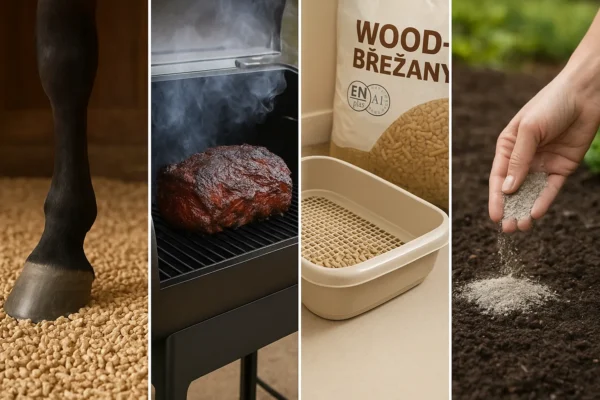
Yes, wood pellets serve multiple purposes including animal bedding, workshop absorbent material, and cat litter due to high absorbency.
Absolutely. Wood pellets are versatile and widely used in agricultural and domestic settings. Beyond heating, pellets and related products like wood shavings are extensively used for animal bedding such as for horses and poultry bedding, due to their high absorbency and dust-free nature.
They can also be used as an absorbent material in workshops or as a safe, effective base for cat litter, as we discuss in our article on wood pellets for cat litter UK.
Why do my wood pellets produce excessive smoke?
Excessive smoke indicates poor combustion from high moisture content in pellets or insufficient appliance maintenance like blocked air vents.
Poor combustion efficiency almost always causes excessive smoke, typically stemming from two issues: high moisture content in the fuel or inadequate appliance maintenance. If you are using premium ENplus A1 certified pellets, which have guaranteed low moisture content, the issue likely lies with the stove or boiler.
Ensure the combustion air vents are clear and the chimney or flue is not blocked. We always recommend checking that pellets have been stored in a dry environment and have not absorbed external moisture.
How should I store 40lb bags of wood pellets?
Store pellets in a cool, dry, elevated location on pallets away from moisture sources to prevent absorption and degradation.
Wood pellets must be stored in optimal conditions to prevent moisture absorption, which is their greatest enemy. Even a small amount of moisture can cause pellets to swell and disintegrate, rendering them unusable in automatic feeders and significantly reducing efficiency.
Best practice is keeping 40lb bags sealed and stored off the ground, ideally on pallets or shelves, away from external walls or humidity sources such as in a dedicated dry garage or shed.
How many 40lb bags do I need for winter heating?
An average UK home requires 165-275 bags (3-5 tonnes) annually, depending on home size, insulation quality, and winter severity.
For an average UK home of 100-150 square metres, you will typically need 3-5 tonnes annually. This translates to approximately 165-275 bags of 40lb pellets, with the variation depending on insulation quality, home size, and how severe your local winter conditions are.
Well-insulated newer homes trend toward the lower end, while older properties with poor insulation require more fuel.
Do wood pellets expire or go bad?
Wood pellets do not expire but lose efficiency when exposed to moisture, remaining effective 6-12 months in proper dry storage.
Wood pellets do not technically expire, but they do lose efficiency when exposed to moisture or humidity. Properly stored in dry conditions away from moisture sources, they remain effective for 6-12 months without degradation.
Always inspect older stock for signs of dampness, swelling, or mold before use, as these indicate moisture damage that will reduce burn efficiency.
Can I mix different brands of wood pellets?
Mixing brands is not recommended as variations in ash content and density cause inconsistent burning and potential stove issues.
While technically possible, we do not recommend mixing brands as variations in ash content, moisture levels, and density can cause inconsistent burning and potential stove problems. Different pellets may require slightly different air-to-fuel ratios for optimal combustion.
Stick with one high-quality brand like our ENplus A1 wood pellets for optimal, predictable performance and easier troubleshooting if issues arise.
How does pellet quality affect maintenance schedules?
ENplus A1 pellets producing less than 0.7% ash extend cleaning intervals from weekly to monthly compared to standard 3-5% ash pellets.
Higher quality pellets with lower ash content significantly reduce cleaning frequency and maintenance requirements. Our ENplus A1 pellets produce less than 0.7% ash compared to 3-5% from standard pellets.
This difference extends time between cleanings from weekly to monthly in many cases, while also reducing wear on internal components and extending overall appliance lifespan.
Ready to Experience Long-Lasting, Efficient Heat?
Our premium wood pellets deliver exceptional burn time and consistent performance across all heating applications. With over twenty years of expertise in sustainable biomass production, Wood-Břežany s.r.o. supplies certified ENplus A1 pellets that maximize your heating investment while minimizing environmental impact.
Order wood pellets for sale online today for fast delivery across the UK and Europe, and discover why thousands of customers trust our products for reliable, efficient heating throughout the coldest months.
References
- UK Department for Business, Energy & Industrial Strategy. (2025). UK Energy in Brief. https://www.gov.uk/government/organisations/department-for-business-energy-and-industrial-strategy
- European Biomass Association. (2024). European Pellet Market Report. https://www.aebiom.org/
- Pellet Fuels Institute. (2024). Residential Pellet Heating Guide. https://www.pelletheat.org/
- European Pellet Council. (2024). ENplus Certification Standards. https://epc.bioenergyeurope.org/enplus/
- Wood-Břežany s.r.o. (2025). Pellet vs Gas Heating Cost Comparison. https://woodbrezany.com/en/pellet-vs-gas-heating-cost-comparison/
- Office of Gas and Electricity Markets (Ofgem). (2025). Typical Domestic Consumption Values. https://www.ofgem.gov.uk/
- International Energy Agency. (2025). Renewable Energy Market Update. https://www.iea.org/