

 Čeština
 Deutsch
 Română
Is it Cheaper to Burn Wood or Pellets? Cost Comparison
Struggling to choose between firewood and wood pellets for cost-effective home heating? Our comprehensive analysis compares the true cost of burning wood versus wood pellets, factoring in efficiency rates, storage requirements, and long-term savings. We examine current European market prices, appliance performance, and real-world heating expenses to help you make the smartest choice for your budget. The question on every homeowner’s mind as winter approaches is simple yet crucial: is it cheaper to burn wood or wood pellets?
With energy costs continuing to rise across Europe, selecting the right heating fuel has never been more important for household budgets. We’ll break down the real numbers, efficiency factors, and hidden costs to help you make an informed decision.
What Makes Wood Pellets Different from Traditional Firewood?
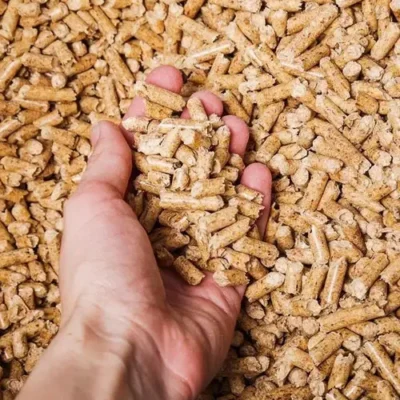
Wood pellets are compacted and highly dense biomass fuel made from compressed sawdust and wood shavings, whilst traditional firewood consists of cut logs from various tree species. The manufacturing process transforms waste materials into uniform cylinders with consistent energy content.
The key difference lies in moisture content. Pellets are manufactured with consistent density and low moisture, so nearly all their energy is converted into heat. Firewood typically contains 20-25% moisture content, even when properly seasoned, reducing its effective heat output.
Our Buy EN Plus A1 Wood Pellets meet the strictest quality standards, ensuring maximum efficiency and minimal ash production. The standardised size (6-8mm diameter) allows for automated feeding systems and predictable burn rates.

Buy Wood Pellets Online: Current European Market Prices for 2024-2025
In 2024, the average cost of wood pellets in the United States ranges from $200 to $300 per ton. However, European markets show slightly different pricing structures. On 06/10/25, a one-tonne pallet of bagged Woodlets wood pellets was £379 for 65 x 15kg bags, translating to approximately £389 per tonne in the UK market.
For firewood, A cord of wood used to be $200 with a $25 delivery and $50 stacking charge in 2018. Now it’s $410 with an $80 delivery charge and stacking at $60 per hour. This represents a significant price increase of over 100% since 2018.
When you buy wood pellets online, you’re investing in consistent quality and predictable pricing. Unlike firewood markets, which fluctuate dramatically, pellet prices have remained relatively stable, according to historical data showing wood pellet prices have been relatively stable, with modest increases over time.
Cost Comparison Table: Wood Pellets vs Firewood
| Fuel Type | Unit | Price Range | Energy Content | Efficiency Rate | Cost per Million BTU |
|---|---|---|---|---|---|
| Wood Pellets | Per tonne | £300-£400 | 4.8 kWh/kg | 75-90% | £15-18 |
| Hardwood Logs | Per cord | £350-£500 | 15.3 million BTU | 50-70% | £15-20 |
| Natural Gas | Per therm | Variable | 1 therm | 80-95% | £10-15 |
| Heating Oil | Per litre | Variable | High | 80-85% | £20-25 |
| Electricity | Per kWh | Variable | 3.6 MJ | 100% | £30-40 |
How Much Heat Do You Actually Get? Efficiency Matters
The true cost isn’t just about purchase price; it’s about usable heat delivered to your home. Modern pellet boilers and stoves achieve efficiency rates above 90%. Open fires or traditional wood burners rarely exceed 50–60%.
This efficiency gap transforms the cost equation. Every cord utilizes 15.3 million BTUs. In heating your home, you benefit from 10.7 million BTUs out of that total, enjoying a stove efficiency level of 70%. Compare this to pellet stoves, where pellets come in 40-lb bags and the stoves have a BTU output of 13.6 million per ton of pellets. From this, you soak up 11.3 million BTUs of heat, coming in at about 83%.
Our best wood pellets UK collection includes premium grades specifically selected for maximum combustion efficiency. When you buy wood briquettes online, you’re accessing products that bridge the gap between traditional logs and modern pellets.
Best Wood Pellets for Sale: Quality Certifications That Matter
Not all pellets deliver equal value. In 2024, ENplus® certified pellets were estimated to correspond to 75% of the European pellet heating market, and certified pellet traders handled a record 7,5 million tonnes. This certification guarantees specific performance standards.
Key quality indicators include:
- Ash content: Below 1% for premium grades
- Moisture content: Under 10% for optimal combustion
- Energy density: Minimum 4.6 kWh/kg
- Mechanical durability: Above 97.5% for A1 grade
Learn more about what is ENplus certification and why it matters for your heating investment. Our Buy DIN Wood Pellets meet German industrial standards, ensuring consistent performance throughout the heating season.
Where to Buy Wood Pellets: Storage and Handling Costs
Practical considerations impact your total expenditure. Pellets are generally more expensive than firewood. Require electricity, but offer significant convenience advantages.
Storage requirements differ dramatically:
Firewood needs 4-6 months of seasoning time in covered, ventilated spaces. A cord occupies approximately 128 cubic feet and requires protection from moisture. You’ll need substantial outdoor space and must manage potential pest issues.
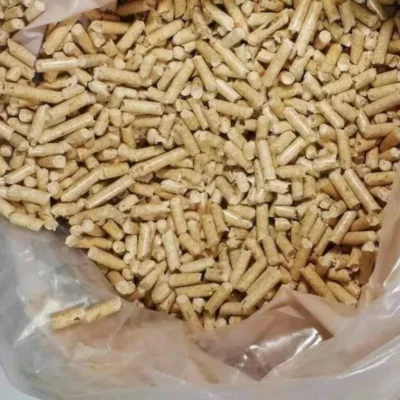
Wood pellets arrive in sealed 15kg bags, stacked on pallets. They require indoor storage in dry conditions but occupy far less space. A ton of wood pellets is equal to approximately 1.5 cords of firewood, meaning equivalent heat energy in significantly less volume.
When you buy firewood online, consider delivery, stacking, and storage infrastructure costs. Our Buy Dried Firewood Online service includes properly seasoned logs, eliminating the waiting period.
Which Heating System Costs More? Initial Investment Comparison
Wood stoves average around $3,000 – $4,200 when you factor in the cost of bringing in a pro installer. Installation complexity depends on existing chimney infrastructure and local building regulations.
Pellet stove systems typically cost £3,000-£5,500 installed, but Most pellet stoves only need a direct vent or small chimney system, not a fully insulated chimney system, making them less expensive to install when no chimney exists.
Installation considerations:
- Wood stoves require full chimney systems with annual inspections
- Pellet stoves can vent through exterior walls
- Both need heart pads and appropriate clearances
- Professional installation ensures safety compliance
Our comprehensive pellet vs gas heating cost comparison examines all heating options available to European homeowners. Understanding appliance lifespan matters too. The average wood stove can last up to 25 years, while the average pellet stove has an estimated lifespan of 15 to 20 years.

Buy Firewood Near Me vs Buy Wood Pellets: Convenience Factor
Time investment represents hidden costs. Traditional wood heating demands continuous attention, physical effort, and time commitment. You’ll spend hours splitting, stacking, carrying, and tending fires.
We used about 75 -100 bags a heating season, and it costs us around $4-$5 a bag. So we usually spend about $500 a year on heating with a pellet stove. (as opposed to $3000/year for Gas, Oil, or Electricity). This real-world example demonstrates a pellet system economy combined with minimal effort.
Daily operation differences:
- Pellet stoves: Fill hopper every 24-72 hours, empty ash pan weekly
- Wood stoves: Constant fuel loading, fire management, ash removal
- Automated pellet boilers: Seasonal fuel loading, minimal intervention
Whether you buy beech firewood online or buy hornbeam firewood online, handling solid logs requires physical capability. Pellets offer accessibility for those with mobility limitations.
Are Wood Pellets Safe to Use Indoors? Environmental and Health Considerations
Both fuels burn cleaner than fossil alternatives, but performance varies. Pellet stoves have an efficiency rating of about 80%, while wood stoves only manage 60% according to Penn State University research.
Emissions comparison reveals:
- Modern pellet stoves produce 1-4 grams of smoke per hour
- EPA-certified wood stoves emit 2-7 grams per hour
- Old wood stoves generate 30+ grams per hour
- Pellets create minimal creosote buildup
Safety extends beyond emissions. Pellet stoves are cleaner and safer overall. They are equipped with various features like automatic shutdowns and pressure switches that detect when the vent system is not working properly.
Check our guide on are wood pellets safe to use indoors for detailed safety information. Our Buy Biomass Wood Pellets come from sustainable forestry operations, supporting environmental responsibility.
Long-Term Heating Costs: Which Fuel Saves Money Over Time?
Annual heating expenditure depends on home size, insulation quality, and climate zone. Annual spending on heating wood pellets can range from $500 to $760, while those opting for wood might spend between $150 and $1,500 on firewood each year.
The wide firewood cost range reflects variables like self-harvesting versus purchasing cut-split-delivered logs. Pellets give the lowest savings, and “cut your own” cordwood gives the greatest savings because it costs the least when you have free wood sources.
Five-year cost projection (2,000 sq ft home):
- Premium pellets: £2,000-£3,500 annually = £10,000-£17,500 total
- Delivered hardwood: £1,800-£3,000 annually = £9,000-£15,000 total
- Heating oil: £2,500-£4,500 annually = £12,500-£22,500 total
- Natural gas: £1,500-£2,500 annually = £7,500-£12,500 total
These figures exclude appliance maintenance, chimney sweeping, and replacement parts. Wood pellets are expected to remain competitive with or cheaper than heating oil and electricity in most regions as environmental regulations affect fossil fuel pricing.

European Market Trends: Why Pellet Demand Keeps Growing
In Germany alone, the number of wood pellet heating systems has increased by approximately 60% since 2021, reaching almost 800,000 installations by 2024. This growth reflects consumer confidence in pellet technology and fuel availability.
Market expansion continues despite challenges. More than 5,6 million European households are estimated to rely on wood pellets for their heating needs, creating robust distribution networks across the continent.
Government policies driving adoption include:
- Renewable heat incentive programmes
- Carbon pricing mechanisms
- Fossil fuel phase-out regulations
- Energy efficiency requirements for new buildings
Numerous European countries have put supportive laws and incentives in place to encourage using renewable energy sources, such as wood pellets. Austria exemplifies this approach, offering substantial subsidies for biomass heating installations.
For alternative options, consider our Buy Hay Pellets DIN for Heating or browse Buy Wood Shavings Online UK for animal bedding applications.
How to Choose Between Wood and Pellets for Your Home
Your circumstances determine the optimal choice. Consider these decision factors:
Choose wood if you:
- Have free or very cheap firewood access
- Enjoy the physical activity and fire-tending ritual
- Already own a quality wood stove
- Need heat during power outages
- Possess adequate storage space
Choose pellets if you:
- Value convenience and consistent temperatures
- Have limited outdoor storage
- Want automated heating control
- Prefer minimal physical effort
- Can accommodate small electrical consumption
Many households adopt hybrid strategies. Maintain your buy alder firewood online or buy pine firewood online for supplemental heating whilst relying on pellet systems for primary warmth.
Key Takeaways
- Wood pellets deliver 75-90% efficiency versus 50-70% for traditional firewood
- Pellet prices remain stable whilst firewood costs have doubled since 2018
- One tonne of pellets equals approximately 1.5 cords of firewood in heat energy
- Initial appliance costs favour wood stoves but pellet systems require less installation infrastructure
- Annual heating costs range £1,500-£3,500 depending on fuel choice and consumption
- European markets strongly favour certified ENplus® A1 pellets for quality assurance
- Over 5.6 million European households now use pellet heating systems
Frequently Asked Questions
1. Is it actually cheaper to burn wood or wood pellets in 2024?
When efficiency, storage, and long-term savings are considered, pellets usually win. While logs may seem cheaper initially, wood pellets deliver more heat, greater convenience, and better value overall. The answer depends on whether you’re calculating purchase price alone or total cost of ownership including time, storage, and efficiency losses.
2. How long will one tonne of wood pellets last for heating?
One ton of wood pellets typically lasts between 1.2 months, depending on the size of your home, how often you use your pellet stove, and the temperature outside. Factors like insulation quality, desired temperature, and outdoor climate significantly affect consumption rates. Well-insulated homes with modern pellet boilers maximise fuel efficiency.
3. Can I save money by buying wood pellets in bulk?
Yes, bulk purchasing reduces per-tonne costs significantly. The best time of year to buy wood pellets is during the summer months when demand is lower. Buying in bulk can also save you money in the long run. We offer competitive pricing for pallet quantities and seasonal pre-buy programmes.
4. Which burns hotter, wood pellets or firewood?
Both hard and softwood pellets are effective for heating your home, but hardwood pellets generally burn longer and hotter than softwood pellets. However, pellet stoves maintain more consistent temperatures through automated feeding systems, whilst wood fires fluctuate between hot and cooler periods requiring constant management.
5. Do wood pellets work during power cuts?
A pellet stove will not work during a power outage, as it requires electricity to operate the auger and blower. However, some models may have battery backups or generators as a backup power source. Traditional wood stoves operate independently of electrical supply, providing reliable heat during infrastructure failures.
References
- ComfortBilt. (2024). The True Cost of Pellet Stove Heating. Retrieved from https://www.comfortbilt.net/blogs/stoves/the-true-cost-of-pellet-stove-heating-are-wood-pellets-the-budget-friendly-choice
- Balcas Energy. (2025). Is It Cheaper to Burn Wood or Wood Pellets?. Retrieved from https://balcasenergy.com/is-it-cheaper-to-burn-wood-or-wood-pellets/
- Mordor Intelligence. (2025). Europe Wood Pellets Market. Retrieved from https://www.mordorintelligence.com/industry-reports/europe-wood-pellet-market
- Bioenergy Europe. (2025). Pellets Statistical Report 2025. Retrieved from https://bioenergyeurope.org
- Penn State Extension. (n.d.). Wood Heat for Your Home: Does It Pay Off?. Retrieved from https://extension.psu.edu
- Fixr.com. (n.d.). Wood Stove vs Pellet Stove Comparison. Retrieved from https://www.fixr.com/comparisons/wood-stove-vs-pellet-stove
- Wood Pellet Reviews. (2023). Wood Pellets for Heating Your Home. Retrieved from https://woodpelletreviews.com