

 Čeština
 Deutsch
 Română
2025 Heating Strategy: Wood Pellet vs. Gas Cost Comparison for Commercial & Residential Stakeholders
Comparing the cost of heating with pellets versus gas. Every year, thousands of households in the UK, Germany, and Poland ask: Is it better to heat with gas or wood pellets? In 2025, with energy prices remaining volatile and inflation still affecting budgets, this question is more important than ever. Here at Wood-Břežany s.r.o., we have prepared a detailed, current cost comparison so you can decide with full confidence.
In the current economic climate, energy price volatility remains a top-tier risk for residential developers and commercial facility managers. With natural gas prices tied to geopolitical instability, wood pellets offer a localized, stable alternative. This report breaks down the cost-benefit analysis for the 2025–2026 heating season.
Buy ENplus A1 wood pellets online from Wood-Břežany s.r.o. means investing in clean, reliable, and economical heating. Our pellets meet the strictest European standards with an ash content of ≤ 0.7 %, moisture under 8 %, and a calorific value of min. 18 MJ/kg. We make them exclusively from clean spruce, beech, and oak without chemical additives. Thanks to ENplus A1 certification, we guarantee maximum efficiency, minimal emissions, and lower maintenance costs for your boiler. Order quality wood pellets with fast delivery across the UK and to neighbouring countries.
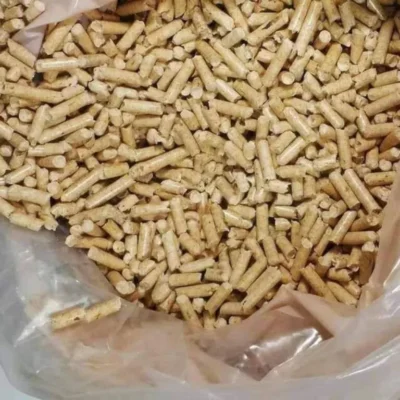
What’s Cheaper in 2025: Pellets or Gas?
According to the latest analyses, heating with wood pellets is significantly cheaper than natural gas. The average cost for 1 kWh of heat from pellets ranges between £0.04 and £0.05, while for natural gas, it reaches up to £0.12/kWh. This means that for the same consumption, you can save up to 60% with pellets.
In the UK, the average price of natural gas in June 2025 was around £0.085/kWh. In contrast, certified ENplus A1 pellets are available from £300 per tonne. With a calorific value of 4.6 kWh/kg, this results in a cost of around £0.043/kWh.
The Economic Reality: Cost per kWh Analysis
For decision-makers, the most critical metric is the cost per kilowatt-hour (kWh). Current data shows a significant price gap:
- Natural Gas: Costs in the UK have reached between £0.085 and £0.12 per kWh.
- ENplus A1 Wood Pellets: Average costs range between £0.04 and £0.05 per kWh.
Investing in certified wood pellets means securing a fuel source that is currently 40–60% cheaper than natural gas. For a standard tonne of ENplus A1 pellets priced at approximately £300, the high calorific value of 4.6 kWh/kg results in a highly competitive cost of roughly £0.043 per kWh.
Why Are Pellets More Economical and Convenient?
Wood pellets are not just cheaper, but also more convenient than traditional logs and competitive with modern systems. Unlike natural gas, whose price depends on geopolitical situations and market rates, pellets are made from local raw materials, and their price is more stable.
Our ENplus A1 wood pellets are:
- Certified to the highest European standard
- Made from clean wood without chemicals
- With a low ash content (≤ 0.7 %), which reduces boiler maintenance
- Packaged in hermetically sealed bags for maximum protection against moisture
How Much Will You Pay Annually for Heating?
For a medium-sized household (100–150 m²), the annual heating costs are as follows:
- Natural Gas: £1,500 – £2,100/year
- Wood Pellets: £1,050 – £1,350/year
- Firewood: £600 – £1,050/year
While firewood is the cheapest, pellets offer the ideal balance of price, convenience, and efficiency. They are suitable for fully automated boilers, which means less work and greater comfort.
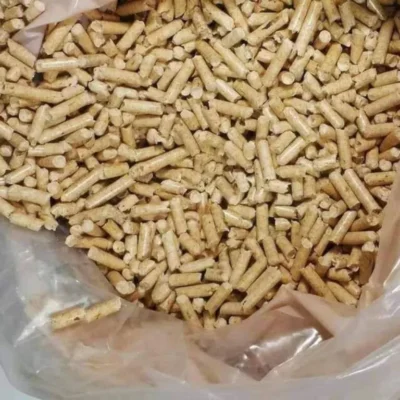
Table: Heating Cost Comparison for 2025
| Fuel | Cost per kWh (£) | Annual Costs (£) | Maintenance | Automation |
|---|---|---|---|---|
| ENplus A1 Wood Pellets | 0.04 – 0.05 | 1,050 – 1,350 | Low | Full |
| Natural Gas | 0.085 – 0.12 | 1,500 – 2,100 | Medium | Yes |
| Firewood | 0.04 – 0.05 | 600 – 1,050 | High | No |
| Electricity | 0.12 – 0.27 | 1,800 – 2,700 | Low | Full |
Sources: UK Office of Gas and Electricity Markets (Ofgem), European Biomass Association (AEBIOM), Wood-Břežany internal data
Why Choose Our Pellets?
At Wood-Břežany s.r.o., we have been producing wood pellets for over twenty years. Our raw materials come from local, certified forests and are processed without any chemical additives. Every batch is tested and certified according to ENplus A1, which is the highest quality grade for domestic heating.
“ENplus certification guarantees that your pellets will burn cleanly, efficiently, and without problems.”
How to Order?
Buy wood pellets online is simple. We have most products in stock and deliver typically within 3–5 working days across the UK. For repeat customers, we also offer regular deliveries according to your schedule.
Residential Performance: Annual Expenditure
For residential developers or managers of medium-sized properties (100–150 m²), the annual savings directly impact property value and tenant satisfaction:
- Natural Gas Annual Cost: £1,500 – £2,100.
- Wood Pellet Annual Cost: £1,050 – £1,350.
While firewood is cheaper (£600–£1,050), wood pellets provide the automation and convenience expected in modern developments. Pellets are ideal for fully automated boilers, offering a “hands-off” experience similar to gas but with superior price stability.
Commercial & Advisory Insight: Scalability and Stability
For the commercial segment, the primary advantage of wood pellets is supply chain resilience.
- Local Sourcing: Unlike gas, pellets are manufactured from local raw materials (spruce, beech, oak), shielding businesses from global market spikes.
- Maintenance Efficiency: High-quality pellets meet the ENplus A1 standard, guaranteeing an ash content of ≤ 0.7% and moisture under 8%. This reduces boiler maintenance costs and ensures a calorific value of min. 18 MJ/kg.
- European Outlook: In Germany and Poland, pellets average €4.5 per GJ, compared to €12 per GJ for gas, proving biomass is a continent-wide strategic advantage.
Technical Quality Standards
The “Boardroom” must prioritize ENplus A1 certification. Standard, uncertified pellets can lead to dirty combustion and permanent boiler damage. Certified pellets ensure:
- Clean Combustion: No chemical additives.
- Hermetic Packaging: Protection against moisture, allowing for up to 2 years of storage in dry conditions.
Frequently Asked Questions (Pellet vs Gas Heating Cost Comparison)
1. What is the difference between ENplus A1 and standard pellets?
ENplus A1 is an international certification guaranteeing ash content ≤ 0.7 %, moisture ≤ 10 %, and a calorific value of ≥ 4,600 kWh/t. Standard pellets may not meet these parameters, which can lead to dirty combustion and boiler damage.
2. How many tonnes of pellets do I need for the heating season?
For a medium-sized household, the estimate is 3 to 8 tonnes per year, depending on the home’s insulation and climate conditions.
3. Are pellets cheaper than gas in Germany and Poland too?
Yes. According to European analyses, the average cost of heating with pellets is approximately €4.5 per GJ, while gas costs €12 per GJ. This trend also applies in Germany and Poland.
4. How long can pellets be stored?
With dry and covered storage (e.g., in a garage or cellar), pellets retain their properties for up to 2 years. It is important to protect them from moisture.
5. Can I use pellets in any boiler?
No. ENplus A1 pellets are designed for boilers and stoves with an automatic feeder. If you have an older boiler, we recommend consulting an expert or visiting our FAQ page.
Key Takeaways
- In 2025, ENplus A1 wood pellets are 40–60% cheaper than natural gas.
- ENplus certification guarantees clean combustion, low maintenance, and maximum efficiency.
- Pellets are ideal for automated heating systems in the UK, Germany, and Poland.
- Wood-Břežany s.r.o. supplies quality, certified pellets with fast delivery and transparent pricing.
Ready to Save on Heating?
Order ENplus A1 wood pellets today and enjoy a warm, clean, and economical heating year. Have questions? Don’t hesitate to contact us via our contact form.
- Buy Charcoal Online
- Buy firewood online
- Buy sawdust online
- Buy wood briquettes online
- Buy wood chips online
- Buy wood pellets online
- Buy wood shavings online
References
- UK Office of Gas and Electricity Markets (Ofgem). (2025). Typical Domestic Consumption Values.
- European Biomass Association (AEBIOM). (2025). European Pellet Market Report.
- ENplus Certification Scheme. (2025). Quality Standards for Wood Pellets.
- UK Department for Business, Energy & Industrial Strategy. (2025). UK Energy in Brief.
- International Energy Agency (IEA). (2025). Global Energy Review.