

 Čeština
 Deutsch
 Română
 Polski
 Italiano
 Español
 Nederlands
 Magyar
 Slovenčina
 Slovenščina
 Hrvatski
Can wood briquettes go bad?
Wood briquettes have no fixed expiry date, but can swell, crumble and lose burning quality due to moisture. Stored dry and in intact packaging, they remain significantly better protected than goods stored open or damp.
A bag of wood briquettes that has been left in the basement or garage for months may initially seem unproblematic. However, it is not just the storage period that is important. Water, high humidity and wet ground can affect the compacted compacts. Anyone who orders a pallet for the winter should therefore first check the storage location.
Wood briquettes consist of pressed wood biomass. The international standard ISO 17225-3 describes quality classes and specifications for wood briquettes. It is not a guarantee of durability for each specific delivery. How well briquettes are preserved after purchase also depends on whether moisture penetrates and the packaging is damaged.
“For wood briquettes, a dry storage area is part of fuel care.”
Buy wood briquettes and store them in a dry place
Our wood briquettes are suitable for households looking for a compact wood fuel for suitable stoves. Before ordering, check the available type, packaging and delivery conditions. With dry, protected storage, you can maintain the shape and quality of your briquettes until they are used.
At Wood-Břežany we supply customers with biomass fuels. You can find our range and the available delivery options in the category buy wood briquettes online.
How long do wood briquettes last?
If stored in a dry place and in closed, undamaged packaging, wood briquettes can be kept for a long time; There is no general fixed expiry time. The specific shelf life depends on the product, packaging and storage conditions.
A laboratory study of briquettes made from spruce chips compared storage in closed and net-like plastic bags over nine months. The quality of the well-sealed bags hardly changed in this test. In contrast, the net-like bags showed greater damage, especially under unfavorable storage conditions. The results apply to the briquettes and conditions examined, not automatically to each variety and each delivery. The study is published in the Journal of Forest Science.
In practice this means: It is not the calendar date that is the best first indication, but rather the condition of the goods. Do not store briquettes uncontrolled for years, but check the packaging and storage environment regularly. If you store larger quantities, you should first ensure that the storage room remains permanently dry.
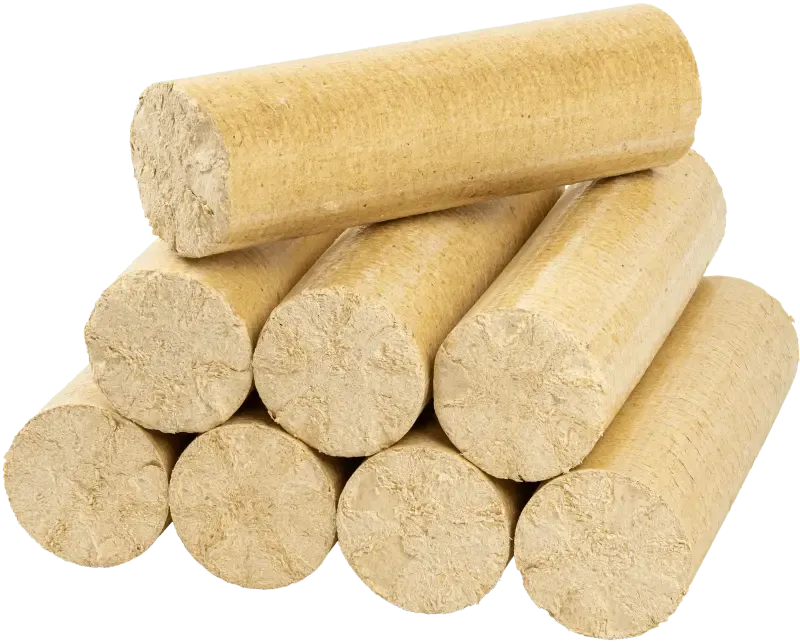
How do you recognize damp or damaged wood briquettes?
Swollen, soft or disintegrating pellets indicate moisture damage. Also check the packaging, the storage floor and the surrounding area for water stains or persistent moisture.
Typical warning signs at a glance
Single small crumbs do not automatically prove that the entire delivery is spoiled. On the other hand, significant swelling, persistent moisture, mold or a musty smell are clear reasons for careful inspection. If you want to complain about a fresh delivery, take a photo of the closed package, the affected areas and the label.
Wet briquettes can be harder to handle and behave differently than dry goods. A general statement about the remaining heating output of individual damaged briquettes cannot be made with certainty based on their appearance alone. We cannot confirm the quality of your specific package without testing. If there is visible mold or excessive moisture, you should not put the affected goods in the oven.
The quality of wood briquettes is described, among other things, by raw material, moisture and mechanical properties. For certified goods, DIN CERTCO explains the requirements of the DINplus mark for wood briquettes. However, certification does not mean that a product remains unchanged after wet storage.
How should you store wood briquettes?
Store wood briquettes in a dry place, protected from rain, elevated above the ground and, if possible, in their intact original packaging. Avoid basement areas with condensation, leaky sheds and places next to washing machines or water pipes.
The British specialist authority Forest Research provides advice on the storage and handling of wood fuels. For wood briquettes specifically, a British wood dealer also recommends storing the goods in a dry and protected place, avoiding damage to the packaging and not placing briquettes directly on the ground. His practical instructions for storing wood briquettes also describes swelling and crumbling as possible signs of moisture.
Practical steps for the storage area
- Choose a dry room. A dry indoor space or a tight, covered outbuilding is better than an open wooden shelter.
- Keep clear of the floor. Place the packages on a pallet or other dry surface.
- If possible, leave the goods in the original packaging. Only open as many packages as you need in a timely manner.
- Protect open packages with additional protection. Close them carefully or place them in a dry, suitable container.
- Check the storage location. Look for leaks, condensation, damp walls and damaged foil.
- Do not store directly on the stove. Keep fuel away from heat and open flames and follow the stove manufacturer’s safety distances.
An unheated room is not automatically unsuitable. What is crucial is whether it stays dry and no moisture from the floor, outside wall or leaky roof gets onto the packaging. In a damp cellar, a pallet can be problematic even if the foil is intact if water penetrates or condensation forms.
Are wood briquettes still usable after opening?
Yes, opened wood briquettes can remain usable if they are dry, clean and dimensionally stable. Protect the remaining pellets from moist air and, if possible, use them without a long open storage period.
Do not open a pack until you need fuel. An open bag next to the stove is convenient, but not always the best place: heat alone does not protect against humidity, splashes or spilled water. Seal the pack after each removal and keep briquettes away from cleaning agents, paints and other substances that could get onto the fuel.
Before lighting it, check your oven’s user manual. Not every stove is suitable for every type of solid fuel or for arbitrarily large quantities of briquettes. Use only fuels approved by the appliance manufacturer and do not overfill the firebox. briquettes can expand during firing; follow your oven’s specifications.
Is it worth stocking up on wood briquettes?
Buying in stock makes sense if price and delivery quantity match and you have a dry storage space for the entire shipment. Without suitable space, moisture can negate the advantage of a larger order.
Before purchasing a pallet, you should measure the footprint and check access. Also consider unloading: a larger shipment requires space to unload and a dry route to the warehouse. Check the product description, package size, and delivery terms instead of comparing only the price per pallet.
If you would like to compare properties of different molds, read our article onRUF briquettes and other types of wood briquettes. For orders in Germany you can find available products atbuy wood briquettes online. Availability, price and range may change; check the current information before ordering.
Which wood briquettes burn the longest without loss of quality?
Hardwood briquettes made from beech or oak with low residual moisture burn the longest and retain their quality for several years when stored dry.
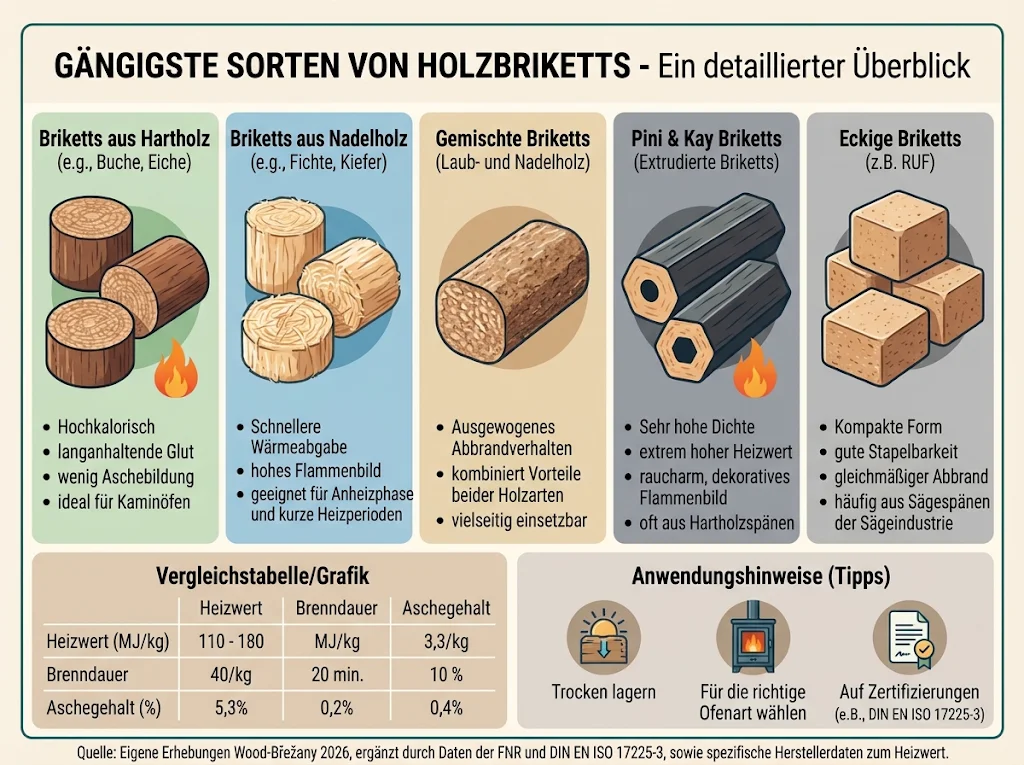
Not all wood briquettes age equally. The type of wood plays a role. Hardwood briquettes made from beech, oak, or hornbeam have a higher density and a higher Calorific value as softwood briquettes made of spruce or pine. This means they burn off more slowly and hold the embers longer.
If you want to know, which wood briquettes burn the longest, we recommend taking a look at our detailed Comparison of wood briquettes by types and calorific values. There you will also find information about Night briquettes, specially designed for long-term overnight ember storage.
| Storage location | Humidity | Estimated shelf life | Calorific value loss after 12 months | Our recommendation |
|---|---|---|---|---|
| Dry cellar (heated) | 40 to 55% | 3 years and longer | under 2% | Ideal for storage |
| Unheated cellar (dry) | 55 to 65 % | 2 to 3 years | 2 to 5 % | Good, regular checks |
| Garage (closed) | 60 to 70% | 1 to 2 years | 5 to 10% | Only with pallets and ventilation |
| Carport (covered) | 70 to 80% | 6 to 12 months | 10 to 20 % | For short-term storage only |
| Outdoors (unprotected) | over 80% | A few weeks | over 30% | Not recommended |
Frequently asked questions about wood briquettes and shelf life
Can you still use old wood briquettes?
Old wood briquettes can be used without any problems as long as they remain dry and solid. Be sure to check the structure and smell before burning.
Age alone is not an exclusion criterion. We have customers who burn wood briquettes from the previous season without any loss of quality. As long as the briquettes have been stored dry and show no signs of mold or decay, you can use them without worry.
Can wood briquettes be stored outdoors?
Wood briquettes should never be left unprotected outdoors, as rain and high humidity can quickly dissolve the structure and significantly reduce the calorific value.
Even a short period of rain is enough to soften the outer layers of a briquette. If you do not have a covered storage facility, use at least a weatherproof tarpaulin and an elevated surface.
How much space do I need for a pallet of wood briquettes?
A standard pallet with 960 kilograms of wood briquettes requires around two square meters of floor space and a stacking height of around 1.2 meters in your storage room.
The exact dimensions can be found on our page for the 960 kg pallet of wood briquettes. Allow some additional space for air circulation around the stack.
Are wood briquettes better than regular firewood?
Wood briquettes offer a significantly higher calorific value and less ash than logs, but require dry storage so that the pressed structure does not disintegrate.
The direct comparison shows: Wood briquettes achieve a calorific value of up to 5.5 kWh/kg, while air-dry logs are around 4.0 kWh/kg. On the other hand, dried firewood is less sensitive to moisture. You can find a detailed comparison in our article wood briquettes or firewood.
Can wood briquettes get moldy?
Yes, wood briquettes can mold if the humidity is constantly high. Always store them in a dry place and check them regularly for musty smells.
Mold occurs when the residual moisture in the briquette exceeds 20 percent over a long period of time and the ambient temperature is between 15 and 30 degrees Celsius. You should not burn infected briquettes in closed living spaces as mold spores can get into the air.
Summary of key points
- Wood briquettes do not spoil, but lose their calorific value and structure when exposed to moisture.
- Storage is the determining factor for shelf life, not age.
- Briquettes stored dry remain fully usable for two to three years or longer.
- Check the strength, smell and surface before burning older briquettes.
- Only order goods with a residual moisture below ten percent and a verifiable certification.
- Store briquettes on pallets, away from walls and in well-ventilated rooms.
- Hardwood briquettes made from beech or oak retain their burning quality the longest.
If you have any questions about storage or our products, visit our Frequently Asked Questions page or Contact Wood Brezany directly.
What questions are frequently asked about wood briquettes?
The most common questions concern durability, moisture, open packaging, and the usability of damaged briquettes. The answers help with an initial visual inspection but do not replace product inspection.
Can wood briquettes still be good after two years?
Yes, if they have been stored continuously dry and protected and show no signs of damage. Check the shape, packaging, and smell before use.
Can I still burn easily broken wood briquettes?
Small fragments may be usable depending on the furnace and manufacturer’s specifications. You should not treat heavily decayed or damp goods like intact briquettes.
What happens when wood briquettes get wet?
Moisture can cause briquettes to swell, change their shape, and make them crumbly. If visible dampness or mold appears, do not burn the affected goods.
Should I store wood briquettes in the basement?
Only if the basement is dry and no moisture from the floor, walls, or condensation reaches the packaging. A pallet keeps the goods off the ground.
Do I have to use opened wood briquettes straight away?
Not necessarily. Seal the package after removal and store it in a dry place. The longer the goods remain open, the more important protection against moist air and water becomes.
How do I store a pallet of wood briquettes in winter?
Place the pallet on a dry surface in a covered, sheltered room. Regularly check the film and storage environment and keep briquettes away from water sources.
Editorial sources and internal links: The statements on storage are based on the linked study in the Journal of Forest Science, the fuel class data on ISO 17225-3 and DIN CERTCO, as well as on references from Forest Research and Duffield Timber. The internal pages of Wood-Břežany lead to briquette information and available products.
Shelf life of wood briquettes, storing wood briquettes properly, damp wood briquettes, wood briquettes mold, buying wood briquettes in Germany, can briquettes go bad, wood briquettes durability, can briquettes mold, how long do wood briquettes last, how long can wood briquettes be stored
#Holzbriketts #HolzbrikettsLagern #Brennstoff #HeizenMitHolz #WoodBrezany
Sources
- Agency for Renewable Resources (FNR), Solid Biofuels: Quality Requirements and Storage, https://www.fnr.de
- German Pellet Institute (DEPI), Storage of solid biofuels, https://www.depi.de
- European Pellet Council, ENplus quality seal for wood pellets and briquettes, https://www.enplus-pellets.eu
- Federal Ministry of Food and Agriculture (BMEL), Renewable raw materials and bioenergy, https://www.bmel.de
- C.A.R.M.E.N. e.V., Competence Center for Renewable Raw Materials: Heating with Wood, https://www.carmen-ev.de
- Stiftung Warentest, Heating with wood: stoves and fuels tested, https://www.test.de
- Energy experts, Wood briquettes: calorific values, types and storage, https://www.energie-experten.org
wood briquette storage,
wood briquette shelf life,
moisture damage to briquettes,
How to store wood briquettes,
dry heating briquettes