

 Čeština
 Deutsch
 Română
 Polski
 Italiano
 Español
 Nederlands
 Magyar
 Slovenčina
 Slovenščina
 Hrvatski
Buy wood briquettes cheaply: secure the best prices!
If you want to buy wood briquettes cheaply, you need to consider more than just the price per tonne. The right wood species, purchase timing and order quantity have a significant impact on your actual heating costs. We share our knowledge from day-to-day fuel trading to help you make informed decisions.
Buy wood briquettes cheaply and reduce heating costs immediately
Are you looking for a reliable, affordable heat source for your home? At Wood-Břežany, we deliver wood briquettes in bulk quantities directly to your door. Our briquettes are pressed from pure-grade hardwood and softwood and meet the usual European quality standards for biomass heating materials. Order now through our shop and benefit from transparent tiered prices, short delivery routes and personal advice from our team. Whether you need a single pallet or a full truckload, we tailor the offer to your consumption. Contact Wood Brezany for an individual quotation.
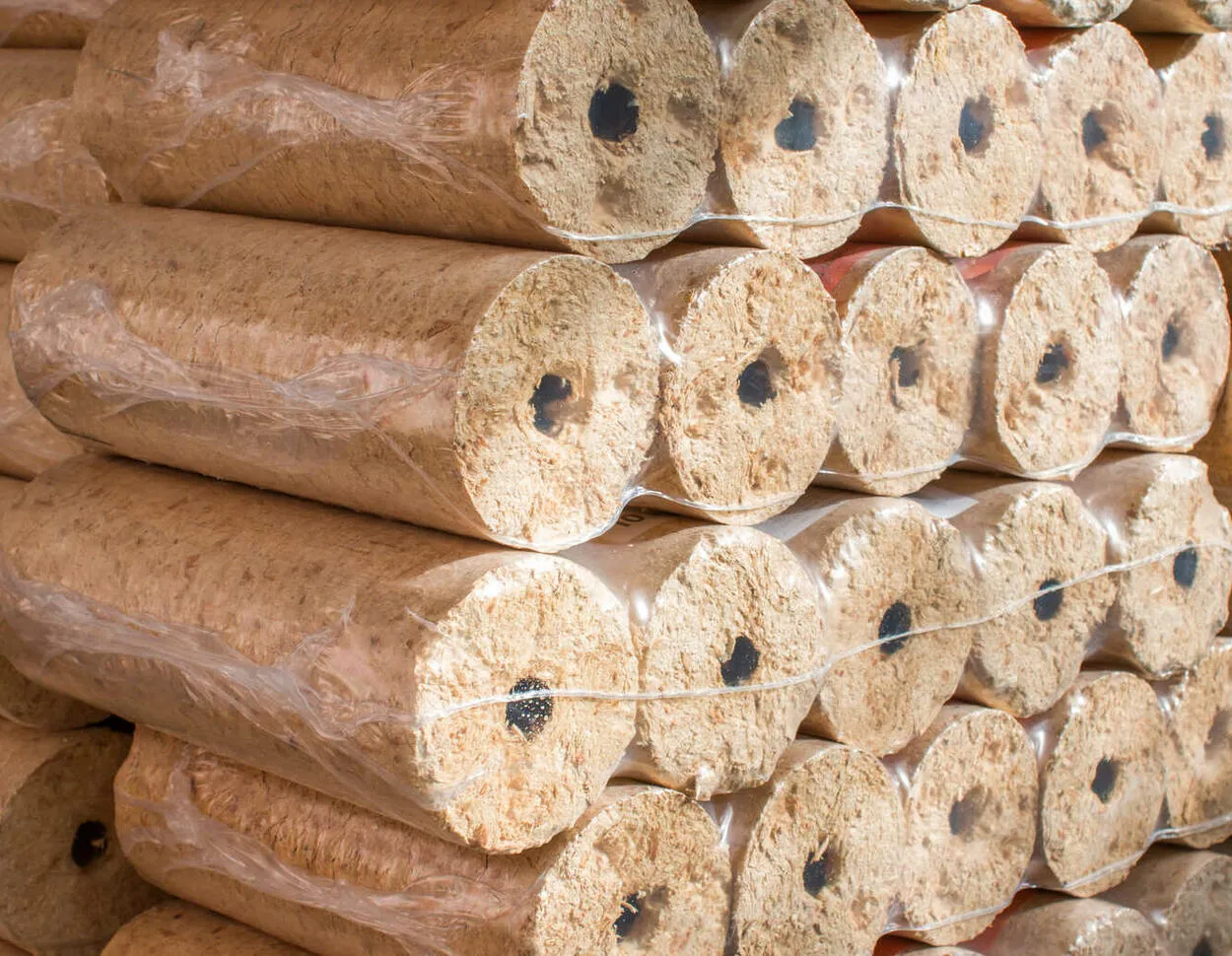
What are wood briquettes, and why are they worthwhile?
Wood briquettes are compressed wood residues with a high calorific value that serve as an inexpensive, clean alternative to conventional logs.
Wood briquettes are made by compacting dry sawdust and wood residues into dense shapes under high pressing pressure. The result is a fuel with a moisture content below ten percent and a calorific value of around 4.8 to 5.5 kWh per kilogram. According to the Agency for Renewable Resources (FNR), the energy content of one tonne of wood briquettes is therefore considerably higher than that of air-dried logs, which often still contain 15 to 20 percent residual moisture.
For your budget, this means less storage volume, less ash in the stove and more heat per euro. Since they are made from wood residues, briquettes are considered CO₂-neutral and fall within the category of biomass fuels eligible for subsidies.
Buy wood briquettes online: premium quality by the truckload
Anyone operating a domestic stove or commercial heating system knows the challenge of sourcing high-quality energy at predictable costs. At Wood-Břežany s. r. o., we deliver first-class biomass directly to your home or business. Our product range includes wood briquettes to buy online in Germany, wood pellets, dried firewood, charcoal and wood shavings to buy online in Germany.
If you are looking for maximum efficiency and high energy density, our compressed RUF and Nestro briquettes are the ideal choice. We supply customers throughout Europe in bulk packages, by the tonne and in full truckloads. Visit our shop or contact Wood Brezany for an individual quotation that precisely matches your requirements.
Where can you buy wood briquettes cheaply in Germany?
The best way to buy wood briquettes cheaply is directly from a wholesaler online, ideally in quantities of at least one tonne with delivery.
Physical retailers often add 20 to 40 percent to the wholesale price. We recommend buying directly from specialist suppliers such as Wood-Břežany, which deliver wood briquettes ordered online in Germany and neighbouring countries such as Austria and Switzerland. Eliminating intermediaries and consolidating transport routes noticeably reduces the final price.
Tip: Ask about joint orders with neighbours or local heating groups. Our lowest tiered prices apply from three tonnes.
How much do wood briquettes cost per tonne in 2026?
In 2026, the average price of wood briquettes is approximately 250 to 350 euros per tonne, depending on wood species, quality and delivery location.
Price trends for wood pellets and briquettes show that costs have returned to a stable level after the energy-price shock of previous years. According to data from the German Pellet Institute (DEPI) and current market reports from C.A.R.M.E.N. e. V., hardwood RUF briquettes are priced at the upper end, while softwood briquettes are traded more cheaply.
“Those who cover their fuel requirements in summer can save an average of 15 to 25 percent on heating costs compared with buying in winter.” (Federation of German Consumer Organisations)
Ordering the best wood briquettes: bulk or pallet?
Bulk orders of three tonnes or more significantly reduce the unit price, while palletised goods are better suited to smaller households.
The choice between bulk delivery and palletised goods depends on your storage space and annual consumption. A standard pallet containing 960 kg of palletised wood briquettes fits in most garages and basements. Bulk deliveries by tipper truck are worthwhile from an annual requirement of three tonnes.
| Briquette type | Wood species | Calorific value (kWh/kg) | Burning time | Ash content | Price per tonne (approx.) |
|---|---|---|---|---|---|
| RUF briquettes | Hardwood (beech, oak) | 5.0 to 5.5 | 2 to 3 hours | below 1% | €300 to €350 |
| Nestro briquettes | Softwood (spruce, pine) | 4.8 to 5.2 | 1.5 to 2.5 hours | below 0.7% | €250 to €300 |
| Pini Kay briquettes | Hardwood mix | 5.2 to 5.6 | 2.5 to 4 hours | below 1.2% | €320 to €370 |
Source: Wood-Břežany’s own survey, as of spring 2026, based on market data from the European Biomass Association (AEBIOM).
If you would like to buy RUF wood briquettes or order Nestro wood briquettes, we will be happy to advise you on the appropriate quantity. We also stock Pini Kay briquettes.
Which wood briquettes are best for your budget?
Hardwood RUF briquettes offer the best value for money for households looking to buy wood briquettes cheaply.
The calorific value alone does not tell the whole story about cost-effectiveness. What matters is the ratio of price to actual heat output over the entire burning time. RUF briquettes made from beech or oak burn evenly and leave little ash. This means less cleaning and longer intervals between refuelling.
For households using a wood-burning stove occasionally, softwood briquettes are an affordable entry-level option. Anyone operating a central heating system with a briquette insert, however, should choose hardwood varieties. Our guide to wood briquettes and RUF briquettes explains the differences in detail.
When is the best time to buy wood briquettes?
The cheapest time is between April and July, when demand falls and suppliers offer discounted summer prices.
The seasonal curve for biomass fuels follows a clear pattern. Demand rises in autumn and winter, and prices increase. Planning ahead and ordering between April and July secures the lowest prices. We recommend covering your annual requirements in one or two deliveries rather than repeatedly ordering small quantities. This saves on both unit prices and transport costs.
Another advantage is that summer gives you enough time to prepare your storage area and store the briquettes in dry conditions before the heating season begins.
How does the wood species affect price and quality?
Hardwood briquettes made from beech or oak burn longer and more evenly, while softwood varieties release heat faster and are cheaper to buy.
The choice of raw material largely determines combustion behaviour. Hardwood has a higher bulk density and continues glowing in the ember bed for hours after burning through. Softwood briquettes, by contrast, ignite faster and are excellent for quickly heating cold rooms.
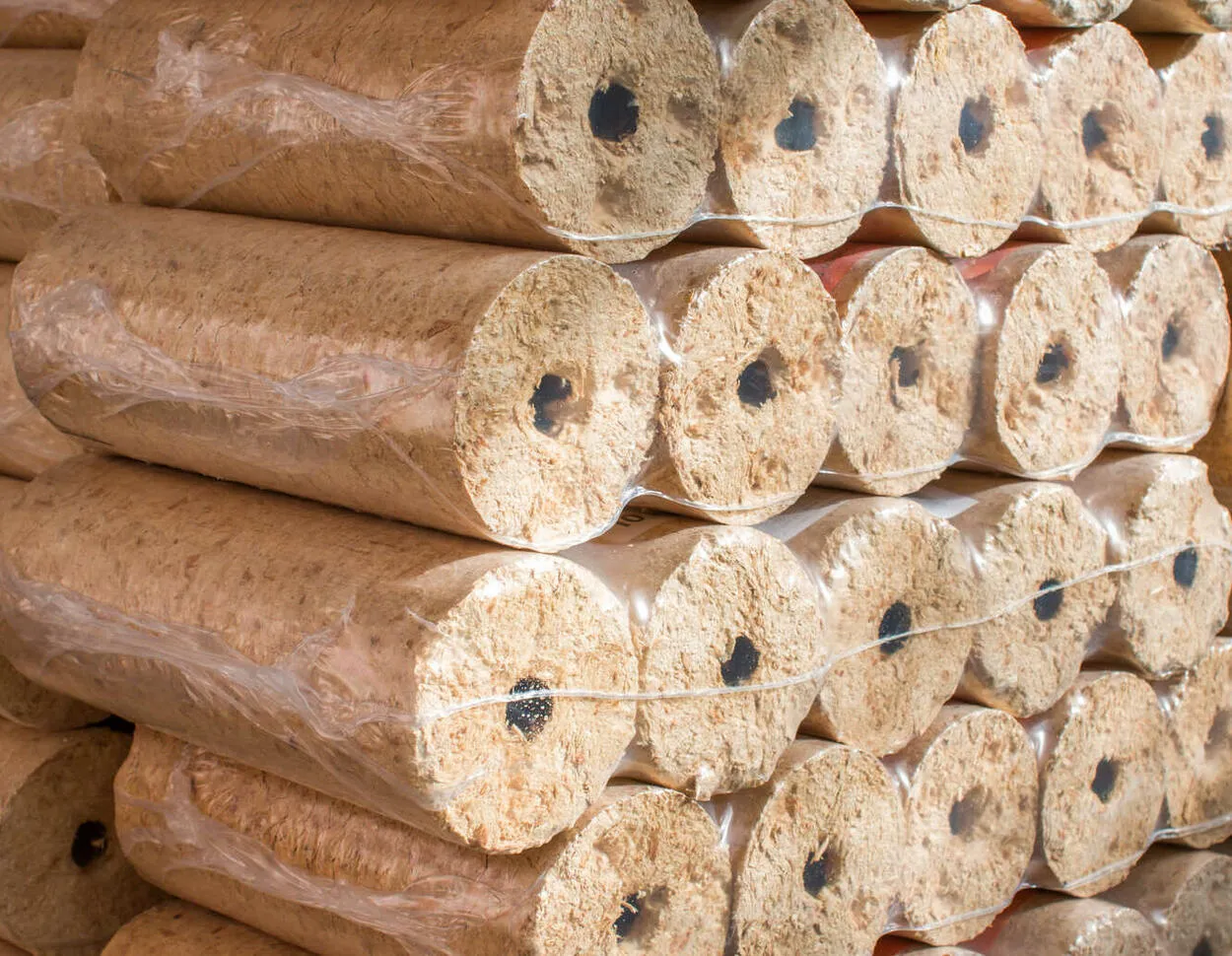
When planning their budget, consumers should analyse their stove type and personal heating habits. Anyone away during the day who wants steady, continuous warmth is best advised to invest in dense hardwood briquettes.
| Briquette type | Material used | Calorific value in kWh/kg | Price level | Suitable for |
| RUF hardwood | Beech, oak, ash | approx. 4.9 to 5.2 | Medium to high | Continuous-burning stoves, fireplaces |
| Nestro softwood | Spruce, pine | approx. 4.5 to 4.8 | Low | Rapid heating |
| Pini Kay (exotic) | Mixed wood residues | approx. 5.1 to 5.3 | High | Long-lasting embers |
| A1 wood pellets | Pure softwood | approx. 4.8 to 5.0 | Variable | Automatic pellet stoves |
Where should you store wood briquettes to prevent moisture damage?
Wood briquettes must be stored dry in well-ventilated rooms or on pallets with protective film to prevent moisture absorption and disintegration.
Because wood briquettes act like a sponge when directly exposed to water or high humidity, choosing the right storage location is crucial. A damp basement or an uncovered outdoor area causes the briquettes to swell and lose their structural stability.
“Buying fuel in bulk and out of season reduces heating costs by up to thirty percent without sacrificing thermal performance.” Energy expert
A dry, roofed space with sufficient air circulation is recommended. Pallets should never be in direct contact with the ground, making support blocks or pallet feet essential. Additional advice is available in our Frequently Asked Questions.
Frequently asked questions
How much do wood briquettes cost per tonne?
In 2026, wood briquettes cost between 250 and 370 euros per tonne, depending on wood species, briquette shape and purchase quantity.
The price depends heavily on the wood species and DIN certification. Hardwood briquettes are at the upper end, while softwood varieties are cheaper. We offer volume discounts for purchases of five tonnes or more. Current prices are available in our shop.
Are wood briquettes better than firewood?
Wood briquettes deliver more heat per kilogram than logs and produce less ash, but they are not always the cheaper option.
The calorific value of briquettes is approximately 5 kWh/kg, whereas air-dried logs achieve only 3.5 to 4.2 kWh/kg. Comparing wood briquettes and firewood by calorific value and price shows that briquettes are particularly advantageous where storage space is limited.
How should wood briquettes be stored?
Wood briquettes must be stored dry, ventilated and protected from direct ground moisture, ideally on pallets indoors.
Moisture is briquettes’ greatest enemy. Even a small amount of wetness causes them to swell and fall apart. Store briquettes on pallets at least 10 cm above the ground and ensure air circulation. A dry basement or roofed garage is ideal.
How long do wood briquettes burn?
A single wood briquette burns for between 1.5 and 4 hours, depending on its type and stove settings.
The burning time depends on the briquette’s density, wood species and the stove’s air supply. Pini Kay briquettes, with their high compression, last longest. Details of burning times for different types are available in our article “How long do wood briquettes last?”.
Which wood briquettes have the highest calorific value?
Hardwood Pini Kay briquettes achieve the highest calorific value among common briquette types, at up to 5.6 kWh/kg.
The combination of hardwood and extremely high pressing pressure makes Pini Kay the highest-performing variety. However, beech RUF briquettes are often the more economical choice for daily heating because they offer a more balanced price-to-performance ratio. Our overview of the best wood briquettes for heating helps you decide.
Key findings
- The best way to buy wood briquettes cheaply is to order directly from a wholesaler and place joint orders of at least three tonnes.
- Buying in summer, between April and July, saves 15 to 25 percent compared with winter prices.
- Hardwood RUF briquettes offer the best overall combination of calorific value, burning time and ash content.
- Dry storage is essential to the longevity and performance of your briquettes.
- Compare not only the price per tonne but also the price per kilowatt-hour of heating energy.
At Wood-Břežany, we are here to provide practical help and advice. Visit our shop or learn more about us on the About Us page. For questions, consult our Frequently Asked Questions or contact us directly at any time.
order wood briquettes, wood briquette price per tonne, buy RUF briquettes, wood briquette pallet, firewood alternative
Sources
- Agency for Renewable Resources (FNR), “Basic Bioenergy Data for Germany 2025,” https://www.fnr.de/
- German Pellet Institute (DEPI), “Wood Pellet and Briquette Price Overview 2026,” https://www.depi.de/
- C.A.R.M.E.N. e.V., “Market Overview of Solid Biofuels,” https://www.carmen-ev.de/
- European Biomass Association (AEBIOM), “European Bioenergy Market Report 2025,” https://aebiom.org/
- Federation of German Consumer Organisations, “Heating with Wood: Tips for Buying Fuel,” https://www.verbraucherzentrale.de/
- Statista, “Energy Prices in Germany 2025/2026,” https://de.statista.com/
- Federal Ministry for Economic Affairs and Climate Action (BMWK), “Energy Data: Renewable Heat,” https://www.bmwk.de/