

 Čeština
 Deutsch
 Română
 Polski
 Italiano
 Español
 Nederlands
 Magyar
 Slovenčina
 Slovenščina
 Hrvatski
How Wood Pellets Are Made: The Full Production Process and What It Means for Quality
How wood pellets are made involves a sophisticated mechanical process where raw timber residues are compressed under high pressure into small, energy dense cylinders. Looking for the ultimate heating solution? Our premium wood pellets provide unmatched efficiency and clean burning for your home or business. We manufacture our products using strictly controlled processes to ensure every bag meets the highest European standards. Whether you need fuel for a specialized pellet stove or a large scale industrial boiler, our range delivers consistent heat output and minimal ash.
Experience the difference of sustainably sourced biomass that protects your appliance and the environment. Order your winter supply today and benefit from our reliable European delivery network. Quality heating starts with the right fuel choice.
At WOOD-Břežany s.r.o., we have spent years refining our supply chain and quality controls because we know that what happens inside the factory is directly reflected in the warmth radiating through your home.
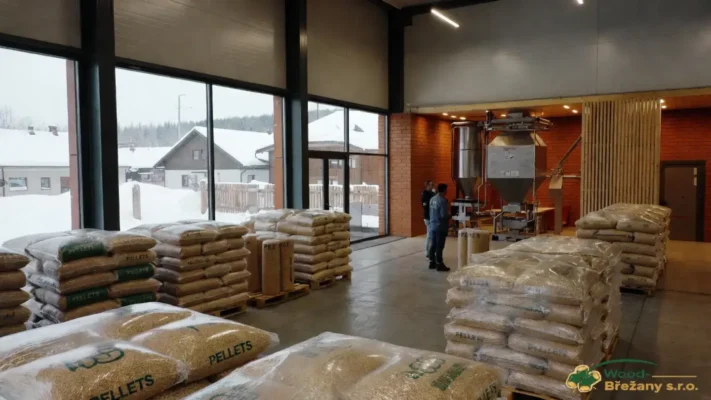
What Are Wood Pellets Made From? The Raw Material Foundation
A premium wood pellet begins its life not as a log but as clean, virgin wood fiber collected from sawmills and timber processing facilities. The primary ingredients are sawdust, wood shavings, and wood chips. It is a common misconception that any old floor sweepings will do. In reality, high-performance pellets require carefully selected feedstock. According to industry standards, the raw material must consist of untreated softwood or hardwood residues free from bark, paint, glue, or any chemical contaminants.
What is the first step in wood pellet production?
The process begins with the careful collection of high quality raw materials like sawdust and wood shavings from sustainable forestry operations.
At WOOD-Břežany s.r.o., we understand that the secret to a high-performing fuel lies in the integrity of the source material. Our production journey starts by sourcing clean, untreated wood residues. According to a 2026 report by the European Biomass Association, the purity of the raw fiber determines the final ash content and calorific value. We ensure that no bark or contaminants enter the initial mix. This dedication to quality is why customers choose to buy EN Plus A1 wood pellets from our facility. The raw material is first screened to remove any stones or metal fragments that could damage the machinery or degrade the fuel quality.
Why is the wood drying stage so critical?
Drying reduces the moisture content of the raw wood to approximately 10 percent, which is essential for achieving a stable and efficient burn.
Raw wood typically contains a high percentage of water, often exceeding 50 percent in green timber. If we attempted to pelletise wet wood, the structural integrity of the pellet would fail. Our facility uses industrial drum dryers to gently remove excess moisture. This stage is vital because moisture levels directly impact the net calorific value of the fuel. High moisture results in steam and smoke rather than heat. By maintaining a strict 10 percent threshold, we produce pellets that ignite easily and burn hotter. You can see the results of this precision when you buy wood pellets online through our shop.
How does the grinding process work?
Before compression, the dried wood must be processed into a consistent, flour-like consistency using a heavy duty hammer mill system.
A hammer mill pulverizes the wood chips into a uniform size. This uniformity ensures that the pellets have a smooth surface and do not crumble during transport. If the particles are too large, the pellet will be brittle. WE calibrate our mills to create a fine biomass powder. This attention to detail is what sets our products apart in the European market. Koupit Sušené Palivové Dřevo or other wood products requires an understanding of how particle size affects combustion. For pellets, the smaller the particle, the denser the final product.
How are wood pellets compressed into shape?
The fine wood powder is fed into a pellet mill where a rotating die presses the material through small holes at high temperature.
“The natural lignin in the wood acts as a biological glue when heated by friction, holding the pellet together without any chemical additives.”
During this phase, the pressure reaches incredible levels. The friction generates heat, which softens the lignin, a natural polymer found in wood cells. As the wood is forced through the die, it forms the familiar cylindrical shape. We do not use artificial binders. The strength of our pellets comes purely from the quality of the wood and the precision of our machinery. This is a hallmark of the ENplus A1 vs A2 vs B pellets comparison that experts often discuss. If you want the best performance, you should always buy DIN Plus wood pellets, which follow this rigorous mechanical standard.
Cooling and screening for durability
After leaving the press, the hot pellets are rapidly cooled to harden the lignin and ensure they remain intact during handling.
The pellets emerge from the die at temperatures near 90°C. They are soft and fragile at this point. We move them into a counter-flow cooler where air stabilizes their structure. Once cooled, they pass over a vibrating screen. This removes “fines,” which are small bits of dust that didn’t form a pellet. We recycle these fines back into the production loop to ensure zero waste. High-quality pellets should have very low dust content. This is a major factor for those looking to buy wood pellets near me for sale UK as excess dust can clog residential stoves.
Production Specifications Table
| Production Stage | Target Parameter | Purpose |
| Material Sourcing | 100% Virgin Wood | Ensures low ash and high heat |
| Drying | < 10% Moisture | Maximum energy density |
| Hammer Milling | < 3mm Particle Size | Structural integrity |
| Pelletising | 600 kg/m³ Density | Efficient storage and burn |
| Cooling | Ambient Temperature | Hardens natural lignin binders |
Where can you buy high quality wood pellets?
You can order premium pellets directly from our online store for reliable delivery across Romania, Germany, and the rest of Europe.
WE take pride in Oor logistics network. Whether you are in the Czech Republic or Germany, we ensure our pellets arrive in pristine condition. For our German customers, looking at the Holzpellets Preise aktuell shows that buying in bulk is the most cost-effective way to heat your home. Our products are packed in moisture-resistant bags to maintain the quality. we worked so hard to create during the manufacturing process. You can browse OUR full range at the WOOD-Břežany shop.
Why ENplus A1 Certification Matters for Quality
Understanding the pellet production process is only half the story. The other half is verification. The European market relies on the ENplus certification scheme to guarantee that a pellet meets the strict specifications required for modern, low-emission heating appliances.
ENplus A1 represents the pinnacle of wood pellet quality. This standard mandates that pellets must have an ash content below 0.7% and a moisture content below 10%. These are not arbitrary numbers; they directly correlate to how often you must empty the ash pan and how much heat you extract from each kilogram of fuel. In 2024, over 13.3 million tonnes of ENplus certified pellets were produced globally, reflecting the market’s trust in this rigorous certification system.
Below is a clear comparison of what the ENplus A1 specification guarantees versus lower grades:
| Quality Parameter | ENplus A1 Standard (Premium) | ENplus A2 / B Standard (Lower Grade) |
|---|---|---|
| Ash Content | ≤ 0.7% | ≤ 1.2% to 2.0% |
| Mechanical Durability | ≥ 97.5% | ≥ 96.5% |
| Moisture Content | ≤ 10% | ≤ 10% |
| Bulk Density | ≥ 600 kg/m³ | ≥ 600 kg/m³ |
| Net Calorific Value | ≥ 16.5 MJ/kg | ≥ 16.3 MJ/kg |
| Ash Melting Behavior | ≥ 1200 °C | ≥ 1100 °C |
Source: ENplus Handbook and ISO 17225-2
Which Wood Pellet Burns Best for Your Heating System?
The “best” pellet often depends on your specific appliance and storage situation. While softwood pellets (pine, spruce) generally offer a higher calorific value and lower ash content, there is no single correct answer. We encourage you to explore the differences more deeply. For a detailed breakdown of how hardwood and softwood compare in real-world scenarios, you can read our comprehensive guide on Hardwood vs Softwood Pellets: Which Burns Better?.
For those in the United Kingdom looking for top-tier fuel, we have also curated a list of the most reliable options available today. Check out our analysis of the Best Wood Pellets UK. And if you are ready to order, we invite you to explore our Buy EN Plus A1 Wood Pellets page to see our current stock and specifications.
How Many Pellets Do You Actually Need?
Once you understand the manufacturing quality, the next logical question is about consumption. A common concern for new pellet stove owners is how much fuel they will burn in a typical winter day. The answer varies based on insulation, stove efficiency, and desired room temperature. However, we have broken down the average usage rates to help you plan your bulk order. We recommend reading our detailed guide: How Many Pellets Does a Pellet Stove Use in 24 Hours?.
Frequently Asked Questions
What are wood pellets used for?
Wood pellets are used for heating residential homes, powering industrial boilers, and even as highly absorbent animal bedding.
How long does a 15kg bag of pellets last?
Depending on the efficiency of your stove, a standard 15kg bag typically provides 15 to 20 hours of continuous heat in a domestic setting.
Can I mix wood pellets with charcoal?
Yes, many outdoor cooking enthusiasts mix charcoal and wood pellets to add a specific smoky flavour to grilled meats.
How should wood pellets be stored?
Pellets must be stored in a dry, ventilated area off the ground to prevent them from absorbing moisture and expanding.
What does ENplus A1 certification mean?
This certification guarantees the highest quality standards, including low ash content and high melting temperatures to prevent clumping in your burner.
References
- Balcas Energy. (2022). How we create our locally produced wood pellets. https://balcasenergy.com/how-we-create-our-wood-pellets/
- ENplus. (2025). Zweite Ausgabe der ENplus® Standards ST 1001 und ST 1003 veröffentlicht. https://enplus-pellets.eu/language/de-at/2025/10/16/zweite-ausgabe-der-enplus-standards-st-1001-und-st-1003-veroffentlicht/
- Derevo.ua. (2025). ENplus Acknowledged as Sole Quality Certification for Wood Pellets by European Accreditation Cooperation. https://derevo.ua/en/publication/enplus-acknowledged-as-sole-quality-3485
- Renewable Energy World. (2016). How To Make Wood Pellets — Wood Pellet Manufacture Steps. https://www.renewableenergyworld.com/solar/how-to-make-wood-pellets-wood-pellet-manufacture-steps/
- Springer. (2024). Monitoring Quality Parameters of Wood Pellets Available on the Polish Market. https://link.springer.com/chapter/10.1007/978-3-031-70955-5_53
- Kintek Solution. (2026). Is There A Machine That Makes Wood Pellets? The Pellet Mill Explained For Diy And Industrial Use. https://kindle-tech.com/faqs/is-there-a-machine-that-makes-wood-pellets
- Kintek Solution. (2026). Are Wood Pellets Made From Sawdust? Unlock The Secret To High-Performance Fuel. https://kindle-tech.com/faqs/are-wood-pellets-made-from-sawdust