

 Čeština
 Deutsch
 Română
 Polski
 Italiano
 Español
 Nederlands
 Magyar
 Slovenčina
 Slovenščina
 Hrvatski
Hardwood vs Softwood Pellets: Which Burns Better, Longer, and Cleaner?
Hardwood vs softwood pellets create confusion for homeowners shopping for heating fuel. Many buyers assume hardwood pellets always outperform softwood varieties because traditional hardwood logs burn longer in fireplaces. However, the pellet manufacturing process changes everything. Both hardwood and softwood pellets achieve identical density through compression, which means the old firewood rules no longer apply.
The burning characteristics depend more on manufacturing quality than wood species. Softwood pellets have a higher BTU output than hardwood pellets, meaning they burn hotter and longer than hardwood pellets because of natural resin content. This guide examines BTU ratings, ash production, maintenance requirements, and cost differences between the two pellet types to help you make an informed heating decision for 2026.
Hardwood vs Softwood Pellets: Which Burns Better in 2026
When choosing wood pellets for heating, understanding whether hardwood or softwood pellets deliver better performance saves you money and reduces maintenance. Both pellet types offer excellent heating efficiency, but they burn differently. Softwood pellets typically generate 10 to 20 percent higher heat output due to natural resin content, producing 8,500 to 9,000 BTUs per pound compared to hardwood’s 8,000 to 8,500 BTUs. Additionally, softwood pellets create up to three times less ash than hardwood varieties, which means fewer cleanings and smoother stove operation. Manufacturing quality matters more than wood species alone. Look for ENplus A1 certification, moisture content below 8 percent, and ash content under 0.7 percent for optimal results.
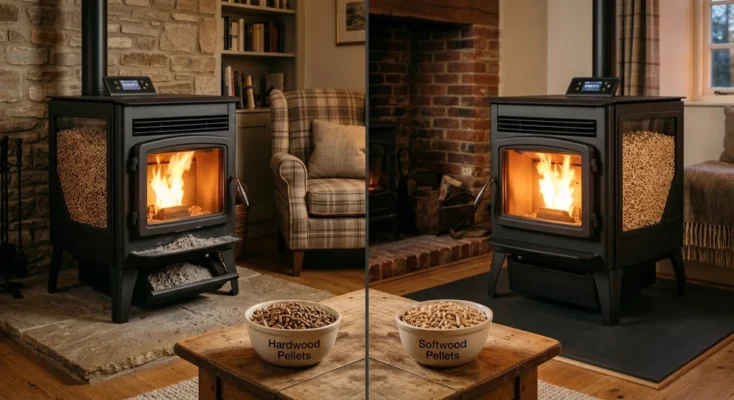
What Are Hardwood Pellets and How Do They Burn?
Hardwood pellets come from deciduous trees such as beech, oak, maple, and birch. These dense wood species create pellets that produce steady, consistent heat with slightly lower energy output compared to their softwood counterparts.
Hardwood and softwood pellets go through similar processing, and the final products end up having the same density. Manufacturers grind the wood into dust, compress it into uniform pellets, then dry and package the finished product. This manufacturing process eliminates the natural density differences found in raw logs.
The combustion characteristics of hardwood pellets include moderate flame intensity and longer burn times in some stove models. Hardwood pellets tend to produce a bed of coals, which can provide longer-lasting heat, though this benefit varies depending on your specific pellet stove design.
What Are Softwood Pellets and Their Burning Properties?
Softwood pellets originate from coniferous trees including pine, spruce, fir, and cedar. These species contain higher concentrations of lignin, a natural binding agent that delivers exceptional heating value when burned.
The increase and heat output is due to the higher concentration of lignins, which are natural polymers that hold wood together. This resin content gives softwood pellets their distinctive advantage in BTU production without requiring different stove settings or equipment modifications.
Manufacturing creates uniform pellets regardless of wood type. Softwood pellets burn more sufficiently than hardwood pellets, and the burning efficiency is more than 80 percent, which exceeds traditional coal’s 60 percent efficiency rating. Modern pellet stoves handle both hardwood and softwood varieties equally well, provided you purchase quality certified products.
We stock premium Buy EN Plus A1 Wood Pellets that meet the strictest European quality standards for residential heating applications.
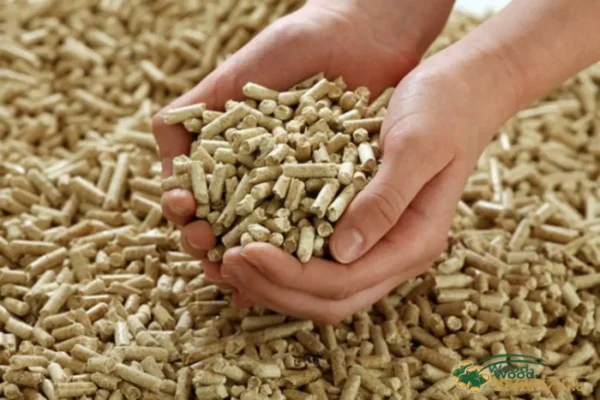
Which Wood Pellets Burn Hotter and Produce More Heat?
Softwood pellets deliver 10 to 20 percent higher BTU output per pound compared to hardwood pellets. Softwood pellets typically produce more heat because softwood trees like pine and spruce have higher resin content, which delivers more energy when burned.
The specific numbers tell the story clearly. On average, softwood pellets produce anywhere from 8,500 to 9,000 BTUs, whereas hardwood puts out around 8,000 to 8,500. This difference might seem minimal on paper, but it compounds significantly over an entire heating season.
Depending on the species of wood and other factors, softwood pellets can have 10 to 20 percent more BTU per weight than hardwood pellets due to the resin content in softwoods offering higher heating value. For a 2,000 square foot home, you need approximately 60,000 BTUs total heating capacity, which means fewer bags of softwood pellets compared to hardwood varieties.
| Pellet Type | BTU Per Pound | Ash Content | Moisture | Burn Characteristic |
|---|---|---|---|---|
| Softwood | 8,500 to 9,000 | 0.3 to 0.5% | 6 to 8% | Hot, efficient, less ash |
| Hardwood | 8,000 to 8,500 | 0.9 to 1.5% | 6 to 8% | Steady, moderate heat, more ash |
| ENplus A1 | 8,000+ | Under 0.7% | Under 10% | Certified quality standard |
How Much Ash Do Hardwood vs Softwood Pellets Produce?
Ash content creates the most significant practical difference between hardwood and softwood pellets. Hardwood pellets produce up to three times more ash than softwood pellets, which directly impacts how often you clean your stove and how efficiently it operates.
The numbers demonstrate this clearly. All wood pellets have less than 1 percent ash content, but the exact figure can still differentiate hardwood from softwood pellets. Premium ENplus A1 certified pellets must contain no more than 0.7 percent ash regardless of wood species, which guarantees cleaner combustion.
Although all high quality wood pellets contain lower than 1 percent ash content, hardwood pellets may generate 3 times the ash of soft wood pellets, and given a winter period, their disparities are large. This means significantly more frequent ash pan emptying and increased risk of clinker formation in your combustion chamber.
Check our complete selection of Cumparati Peleti de Lemn Online for certified low-ash heating solutions.
Why is this? Ash content depends on the mineral content of the raw wood and how much bark is mixed in. Softwood trees generally have a lower mineral composition. ENplus A1 certification requires ash content below 0.7%. Many premium softwood pellets achieve ash levels as low as 0.3% to 0.5%. Hardwood pellets, depending on the bark content, can leave behind more residue. This means less maintenance for you and a cleaner heat exchanger for your boiler.
| Feature | Softwood Pellets (Pine/Spruce) | Hardwood Pellets (Oak/Beech) |
|---|---|---|
| Heat Output (BTU/lb) | 8,500 – 9,000 (Higher) | 8,000 – 8,500 (Lower) |
| Ash Content | Very Low (0.3% – 0.7%) | Low to Medium (0.5% – 1.0%+) |
| Ignition Speed | Very Fast | Slower |
| Burn Style | Hot and Intense | Steady and Mellow |
| Durability | High (Good compression) | Very High (Harder pellet) |
| Maintenance | Less frequent cleaning | May require more ash removal |
Can I Buy ENplus A1 Pellets for My Boiler in Europe?
Absolutely. Regardless of the wood species, you should always look for certification. The ENplus certification is the gold standard for pellet quality. It guarantees low moisture, high durability, and low ash.
In 2024, ENplus-certified pellets made up an estimated 75% of the European pellet heating market. This standard applies to both hardwood and softwood. However, most producers find it easier to meet the strict A1 standards using softwood because of its natural binding properties. If you are buying in Germany, Austria, or Poland, always check for the ENplus A1 logo.
How Much Do Wood Pellets Cost in 2025 and 2026?
Pricing for biomass fuel fluctuates based on season and demand. Data from the 2025/2026 heating season shows significant shifts. In Western Austria, the average price per ton rose from 308 euros in August 2025 to 396 euros in January 2026. German prices followed a similar trend, hitting 417 euros per ton in January 2026.
The good news is that softwood pellets are generally priced very competitively. Often they are the same price or slightly cheaper than hardwood. However, because softwood gives you more BTUs per ton, your effective cost per unit of heat is lower. You get more heat for every euro spent.
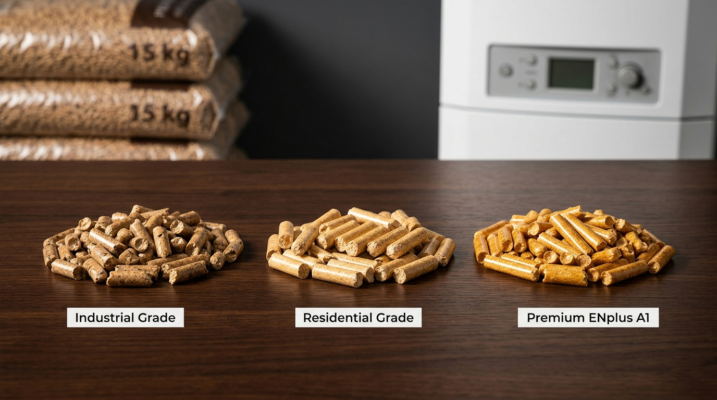
Why Do Softwood Pellets Create Less Ash?
High-quality softwood pellets are often lower in ash simply because the raw material is cleaner and more uniform. Coniferous trees naturally contain fewer minerals compared to hardwood species, and proper debarking removes additional contaminants before pelletising.
Softwood pellets generally produce less ash than hardwood pellets of the same grade because softwoods tend to have lower mineral content, and ash levels drop further when the material is properly debarked. Manufacturing quality controls play the decisive role here rather than wood type alone.
The practical impact extends beyond simple convenience. When pellets produce less ash, there is less cleanup for you to do, more combustible fuel to burn and greater airflow for the fire. Reduced ash accumulation keeps heat exchangers cleaner and maintains optimal combustion efficiency throughout the burn cycle.
Buy Hardwood Pellets or Softwood: Which Costs Less?
Pricing between hardwood and softwood pellets has equalized in recent years. Years ago, hardwood pellets were generally the slightly cheaper option, but today, with improvements in pellet manufacturing, softwood and hardwood pellets are typically priced about the same.
However, the total cost calculation requires looking beyond per-bag pricing. Since softwood tends to produce more heat per pound, you can end up using fewer pellets over the season, which results in overall cost savings in the long run. The higher BTU output means your heating system runs less frequently to maintain comfortable temperatures.
Regional availability affects pricing more than wood species. Softwood pellets are generally more readily available and often more affordable compared to hardwood pellets, though regional availability and demand can impact the cost and availability of both types. Shopping for bulk quantities during summer months typically delivers the best pricing regardless of pellet type.
Browse our Cumparati Peleti de Lemn ENplus A1 inventory for competitive wholesale pricing on certified premium pellets.
Does Manufacturing Quality Matter More Than Wood Type?
The manufacturer and the region the wood comes from have the greatest influence over pellet quality than whether it is a hardwood or softwood pellet. Production standards, raw material cleanliness, and quality control procedures determine final performance far more than wood species selection.
Burning performance depends more on the manufacturer’s methods than the type of wood in the pellets, and there are hardwood pellets that are much better than some softwood pellets and vice versa due to manufacturing quality. The pelletising process gives manufacturers precise control over moisture content, density, durability, and ash content.
Premium manufacturers use exclusively stem wood without bark, avoiding contamination from soil, stones, or excessive mineral content. Refining the production process leads to the most efficient wood pellets for your stove, and the wood’s region of origin is also a key factor in wood pellet quality because environmental conditions affect wood composition.
Where Can You Buy EN Plus A1 Certified Wood Pellets?
ENplus A1 certification represents the highest quality standard for residential wood pellets in Europe. ENplus A1 certification is considered the highest quality standard primarily due to strict requirements for moisture content, ash content, mechanical durability, and batch traceability.
The certification requirements ensure consistent performance. ENplus A1 pellets have durability over 97.5 percent, and ash is no more than 0.7 percent, while in regular pellets it can be 2 to 3 percent. This quality difference translates directly into fewer stove cleanings and more efficient heat production.
Both softwood and hardwood can achieve ENplus A1 certification when properly processed, though mixing different wood species requires careful quality management to maintain consistent specifications. We maintain strict adherence to these standards across our entire product range.
Order premium Cumparati Peleti din Lemn EN Plus A1 with guaranteed certification and full batch traceability.
How Long Does Each Pellet Type Burn in Your Stove?
Burn duration depends more on stove settings, home insulation, and outdoor temperatures than pellet type alone. A 40-pound bag typically lasts 24 to 48 hours depending on your stove’s settings and home insulation, and on medium heat setting, expect about 36 hours of continuous burn time.
The higher BTU output of softwood pellets means your auger feeds less material to maintain target temperatures. This efficiency advantage compounds over weeks and months of continuous operation during winter heating seasons.
Cold weather and larger homes will use pellets faster regardless of wood type. Proper insulation, sealed windows, and programmable thermostats deliver greater fuel savings than any pellet selection alone.
Best Wood Pellets for Heating Stoves and Boilers
The ultimate pellet for your indoor fireplace depends on your stove model and priority, with maximum BTUs for cold climates leaning toward high-quality softwood or slightly longer burn times with some high-quality hardwood blends. Most modern pellet stoves handle both types equally well with minor adjustment to air and feed settings.
Pellet performance hinges on manufacturing quality, not just the wood source. Focus your purchasing decisions on certification, ash content below 0.7 percent, moisture content below 8 percent, and verified ENplus A1 certification rather than wood species alone.
The best pellets are in the 8,000 to 8,500 range for BTU output, have moisture content of 6.5 percent and below, contain low ash content of 0.6 percent or less, and include no additives or bark. These specifications guarantee optimal performance in residential heating applications.
Visit our Cumparati Peleti de Biomasa din Lemn page for sustainably sourced biomass heating solutions.
hardwood vs softwood pellets burn
Softwood pellets deliver 10 to 20 percent higher BTU output compared to hardwood varieties, producing 8,500 to 9,000 BTUs per pound versus hardwood’s 8,000 to 8,500 BTUs. This heat advantage comes from natural resin content found in coniferous species.
Hardwood pellets generate up to three times more ash than softwood pellets, which requires more frequent stove cleaning and reduces combustion efficiency over time. Premium softwood pellets often contain just 0.3 to 0.5 percent ash compared to hardwood’s 0.9 to 1.5 percent.
Manufacturing quality matters more than wood species selection. ENplus A1 certification guarantees ash content below 0.7 percent, moisture under 10 percent, and mechanical durability above 97.5 percent regardless of whether pellets contain hardwood or softwood.
Both pellet types cost approximately the same per bag in 2026, but softwood’s higher BTU output means you use fewer bags throughout the heating season, which delivers long-term cost savings and reduced handling requirements.
We supply certified Cumparati Peleti de Lemn A1 Romania with guaranteed quality and competitive bulk pricing across European markets.
What is the difference between hardwood and softwood pellets?
Hardwood pellets come from deciduous trees like oak and beech, while softwood pellets originate from coniferous species such as pine and spruce. Softwood pellets contain more natural resin, which produces 10 to 20 percent higher BTU output and generates three times less ash than hardwood varieties.
Which wood pellets burn hotter and longer?
Softwood pellets burn hotter due to higher lignin content, producing 8,500 to 9,000 BTUs per pound compared to hardwood’s 8,000 to 8,500 BTUs. Both types achieve similar burn duration in modern pellet stoves, though actual runtime depends more on stove settings and home insulation than pellet species.
Why do softwood pellets create less ash than hardwood?
Softwood species naturally contain fewer minerals than hardwood trees, and proper debarking removes additional contaminants before manufacturing. High-quality softwood pellets produce just 0.3 to 0.5 percent ash compared to hardwood’s 0.9 to 1.5 percent, which means significantly less frequent stove cleaning.
Are hardwood pellets better quality than softwood pellets?
Manufacturing quality determines pellet performance more than wood species alone. Both hardwood and softwood pellets can achieve ENplus A1 certification when properly processed. Look for certification, ash content below 0.7 percent, and moisture under 8 percent rather than focusing solely on wood type.
Where can I buy certified wood pellets in Romania?
We supply ENplus A1 certified pellets across Romania and Europe through our Shop with guaranteed quality and competitive bulk pricing. Contact us via our Contactati Wood Brezany s.r.o. page for wholesale inquiries and delivery scheduling.
How much do wood pellets cost in 2026?
Wood pellet pricing varies by region, certification level, and purchase quantity. Softwood and hardwood pellets cost approximately the same per bag, but softwood’s higher BTU output reduces total seasonal consumption by 10 to 20 percent, which delivers long-term savings despite similar upfront pricing.
Can I use both hardwood and softwood pellets in my stove?
Modern pellet stoves handle both hardwood and softwood varieties equally well. Your stove may require minor adjustments to air and feed settings when switching between pellet types, but both will produce reliable heat. Check your Intrebari Frecvente section for specific stove compatibility guidance.
REFERENCES
- Pellet Heat: Hardwood Pellets vs Softwood Pellets
- Pellet Making: Comparison between hardwood and softwood pellets
- North Atlantic Fuels: Softwood vs Hardwood Pellets
- MBTEK: Softwood pellets vs hardwood pellets
- Energy Co-op of Vermont: Choosing Wood Pellets
- About Darwin: Best Wood Pellets For Heating 2026
- Inflame EU: ENplus A1 Standard for Wood Pellets