

 Čeština
 Deutsch
 Română
 Polski
 Italiano
 Español
 Nederlands
 Magyar
 Slovenčina
 Slovenščina
 Hrvatski
7 Costly Pellet Buying Mistakes and How to Avoid Every Single One
Buying wood pellets without proper knowledge costs you money, damages your heating system, and wastes valuable storage space. You need to understand certification standards, storage requirements, and quality indicators before spending a single euro. We see customers make the same expensive mistakes repeatedly when purchasing pellets for their homes or businesses. Avoid costly pellet buying mistakes. Learn how to choose quality ENplus A1 wood pellets, prevent moisture damage, and save money on heating fuel in 2026.
The European wood pellet market reached 23.45 million metric tons in 2025, with consumption projected to continue growing as more households transition to renewable heating. This expansion brings both opportunities and risks for buyers. You face countless suppliers, varying quality levels, and confusing certification labels. One wrong decision leads to clogged burners, frequent maintenance, and reduced heating efficiency.
Stop Wasting Money on Poor Quality Wood Pellets
Buying wood pellets seems simple until you discover swollen bags, excessive ash, and skyrocketing heating costs. Most buyers make seven critical mistakes that waste hundreds of euros annually. You risk moisture damage, equipment failure, and reduced heating efficiency without proper certification knowledge. We supply premium ENplus A1 certified wood pellets across Romania with guaranteed quality from production to delivery. Our pellets contain less than 0.7% ash, maintain below 10% moisture, and demonstrate 98% mechanical durability. Buy certified wood pellets that protect your investment and heating system.
We store premium ENplus A1 certified wood pellets at our facilities with strict moisture control protocols. Our quality assurance process prevents the seven critical mistakes that cost European buyers thousands of euros annually. You deserve transparent information about pellet quality, storage requirements, and certification standards before making purchasing decisions.
What Is the Biggest Mistake When Buying Wood Pellets?
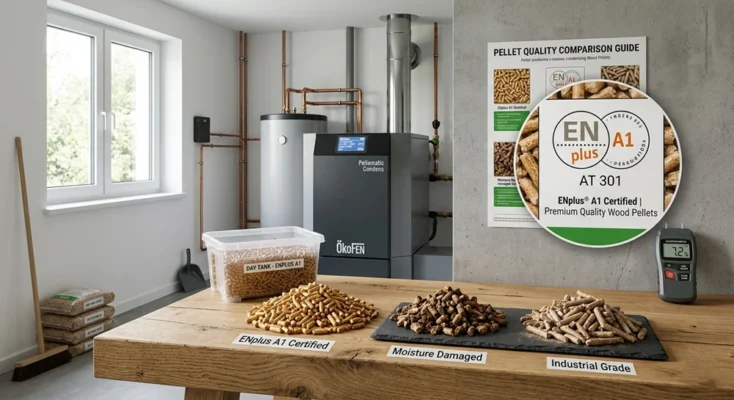
Ignoring certification is the costliest pellet buying mistake you can make.
ENplus A1 certified pellets contain less than 0.7% ash content, while non-certified alternatives can exceed 2-3%. This difference means you will clean your boiler three times more frequently with uncertified pellets. We test every batch at our Wood-Břežany facilities to guarantee ENplus A1 standards across all deliveries.
The European wood pellet market was valued at USD 13.29 billion in 2026 and is projected to reach USD 18.03 billion by 2031. This rapid growth attracts suppliers selling substandard products without proper quality controls. You must verify certification authenticity through official ENplus databases before purchasing any pellets.
How to Verify Real ENplus Certification
Check the progressive number printed on each bag. Producer numbers range from 001 to 299, while distributor codes start from 301 to 999. Visit the official ENplus website and enter this number to confirm validity. Counterfeit certifications are common in expanding markets.
Key differences between certification grades:
| Grade | Ash Content | Primary Use | Annual Cleaning Frequency |
|---|---|---|---|
| ENplus A1 | ≤ 0.7% | Residential heating systems | Every 1-2 weeks |
| ENplus A2 | ≤ 1.2% | Medium commercial facilities | Every 3-5 days |
| EN-B | ≤ 3.0% | Industrial boiler houses | Every 2-3 days |
Our biomass wood pellets meet the highest ENplus A1 standards. We provide laboratory test results with every delivery to eliminate uncertainty about quality.
Which Pellet Grade Should You Buy for Home Heating?
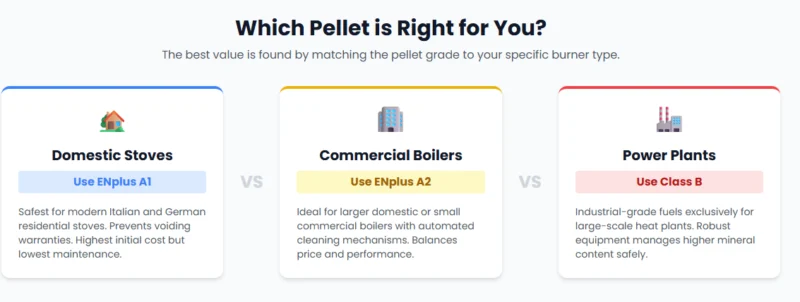
You need ENplus A1 certified pellets for residential heating systems under 100 kW capacity.
ENplus A2 or EN-B class are suitable only for industrial capacities over 500 kW because large boilers handle increased ash content better. Using industrial-grade pellets in home systems causes excessive maintenance costs and reduced equipment lifespan. We recommend A1-certified options for all residential applications.
The ash content determines cleaning frequency and system efficiency. If you burn 5 tons of pellets per season with A1-grade products (0.7% ash), you produce 35 kg of ash, but regular uncertified pellets at 2-3% ash create 100-150 kg. This translates to 3.5 times more boiler cleanings annually.
Why A2 Pellets Cost Less but Waste Money
You pay lower upfront costs for A2-grade pellets but spend more on maintenance and reduced efficiency. ENplus A2 pellets permit ash content up to 1.2% by mass, making them suitable for medium-scale commercial facilities where slightly higher ash production remains acceptable. Your residential boiler was not designed to handle this ash volume.
Temperature fluctuations increase with lower-grade pellets. You will notice inconsistent heating and higher fuel consumption throughout winter months. Our Category A1 wood pellets maintain stable combustion temperatures and predictable performance.
How Does Moisture Damage Ruin Wood Pellets?
Moisture exposure destroys pellet integrity within minutes, turning compressed fuel into unusable sawdust.
Wood pellets have hydrophilic properties due to their low moisture content below 10% and high density, which means they actively search for moisture to absorb. Even humidity in basements or sheds causes gradual deterioration. You cannot restore damaged pellets regardless of drying attempts.
Studies show that a moisture content increase of just 5% in wood pellets reduces their heating value by as much as 15%. This directly impacts your heating costs and system performance. We store all dried firewood and pellets in climate-controlled facilities with continuous monitoring.
Storage Mistakes That Cause Moisture Problems
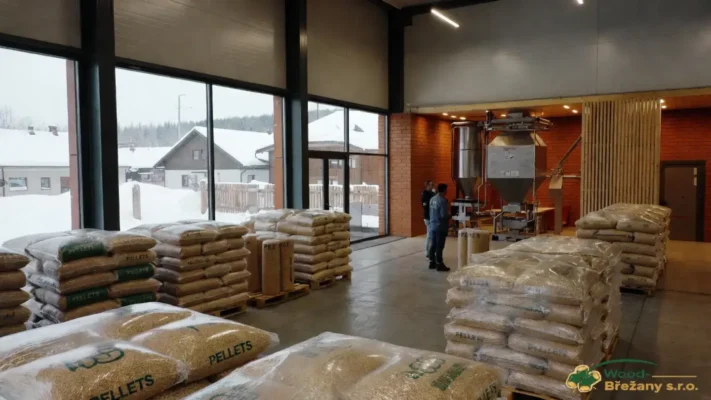
Never place pellet bags directly on concrete floors. Moisture wicks up through the bottom of bags even when concrete doesn’t appear wet because wood fuel pellets are hygroscopic and readily absorb moisture from surrounding environments. You need pallets or elevated platforms for proper air circulation.
Proper storage checklist:
- Keep bags sealed until use
- Elevate pellets on cardboard-covered pallets
- Maintain indoor temperatures between 15-20°C
- Ensure ventilation without humidity exposure
- Rotate stock using older inventory first
- Inspect bags for tears or damage weekly
Outdoor storage requires waterproof covers and protected locations. When pellets absorb moisture, they swell, crumble, and eventually fall apart into sawdust, appearing dull instead of smooth and shiny while feeling soft instead of hard and dense. Our delivery trucks maintain sealed conditions from warehouse to your location.
Why Do People Buy Too Many or Too Few Pellets?
You waste money buying excessive quantities without adequate storage capacity or face delivery charges from multiple small orders.
Calculate your seasonal consumption before purchasing. A typical European household with 150-200 square meters heating space consumes 4-6 tons of pellets annually. You need dry storage accommodating this volume plus 10% safety margin. We help customers buy wood pellets for heating with precise quantity recommendations based on home specifications.
When stored correctly in a dry, ventilated space, high-quality pellets can last up to two years without losing quality. However, most households lack climate-controlled storage for multi-year supplies. You should order quantities matching one heating season unless you have professional storage facilities.
How to Calculate Your Exact Pellet Requirements
Measure your heating area and insulation quality. Well-insulated homes consume approximately 25-30 kg of pellets per square meter annually. Older buildings with poor insulation require 35-45 kg per square meter. You can test consumption during the first month and extrapolate for full season planning.
Order bulk deliveries for cost savings. Our EN Plus A1 certified pellets come with volume discounts for orders exceeding 3 tons. You benefit from lower per-ton pricing and reduced delivery frequency.
What Quality Indicators Should You Check Before Buying?
Inspect pellet appearance, density, and moisture content using simple physical tests.
Good quality pellets should sink in water because objects with density higher than water will sink, and they dissolve and expand quickly in water within a very short time. This water test reveals compression quality and purity instantly. You can perform this verification before accepting delivery.
Physical quality inspection checklist:
- Surface appearance: Smooth and shining without cracks
- Length uniformity: 30-40mm according to ENplus standards
- Diameter consistency: 6mm or 8mm without variation
- Dust content: Less than 1% fines at bag bottom
- Hardness test: Pellets resist breaking when squeezed
- Color: Natural wood tone without dark discoloration
ENplus A1 pellets have durability over 97.5%, which means they withstand transportation loads without cracking. You can verify this by examining pellets from the middle and bottom of bags for breakage. Our beech firewood and pellet products undergo rigorous durability testing before distribution.
Why Cheap Pellets Create Expensive Problems
Low-priced pellets often contain bark, leaves, and impurities. Non-certified pellets may include bark and leaves and other impurities that can adversely affect food flavor and possibly pose a health risk if ingested. You experience incomplete combustion, excessive ash, and potential equipment damage with contaminated fuel.
The price difference between certified and uncertified pellets averages €20-30 per ton. You will spend this amount on extra cleaning supplies, maintenance visits, and reduced efficiency within months. We maintain competitive pricing while guaranteeing quality standards.
How Do BBQ Pellets Differ from Heating Pellets?
Heating pellets and BBQ pellets serve different purposes despite similar appearance.
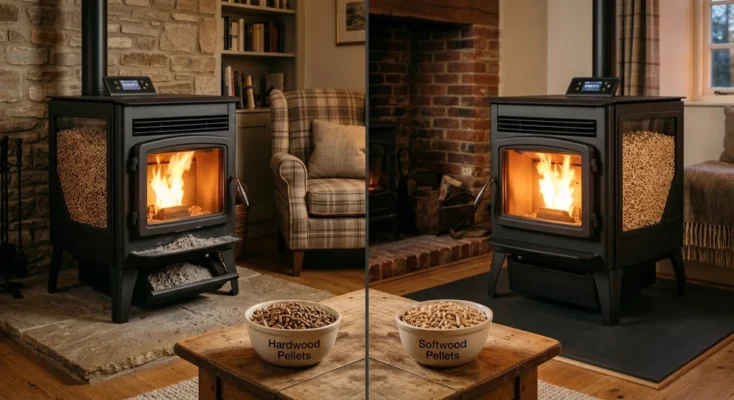
BBQ pellets are food-grade pellets made only from 100% hardwood containing no fillers, binders, or additives except possibly vegetable-based oil, while heating pellets can consist of various woods including softwoods like pine. You must never use heating pellets in smokers or grills designed for food preparation.
Heating pellets focus on maximum BTU output and cost efficiency. They may contain softwood species that burn hot but produce resinous compounds unsuitable for cooking. Our pine firewood provides excellent heating performance but should not be used for food smoking.
Cost Comparison Between Heating and BBQ Pellets
BBQ pellets cost 50-100% more per ton than heating pellets because of stricter purity requirements and hardwood sourcing. Heating pellets are significantly less expensive than BBQ pellets, making them appealing to budget conscious shoppers. Resist this temptation if you need food-grade products.
You save money by purchasing the correct product for each application. We offer specialized wood briquettes for heating and oak wood chips for smoking applications with clear usage specifications.
When Should You Reject a Pellet Delivery?
Refuse deliveries showing signs of moisture damage, bag tears, or quality inconsistencies.
Inspect bags immediately upon arrival. Damaged pellets appear swollen or soft to the touch, have a musty smell indicating moisture damage, feel soft when squeezed, and form heavy clumps that won’t break apart easily. You have the right to reject compromised products before payment.
Delivery acceptance checklist:
- Check bag integrity for tears or punctures
- Verify certification labels and batch numbers
- Examine pellets through clear bag sections
- Test firmness by squeezing sample pellets
- Confirm delivery quantity matches invoice
- Document any damage with photographs
- Request replacement for compromised products
We provide quality guarantees with every delivery of our straw pellets and wood products. You can contact us immediately if any quality concerns arise during inspection.
Key Takeaways for Smart Pellet Buying
Avoid these seven mistakes to protect your heating investment and ensure optimal system performance throughout winter months. You need proper certification verification, grade selection, storage planning, quality inspection, quantity calculation, product differentiation, and delivery acceptance protocols.
European households waste approximately €200-400 annually through preventable pellet buying mistakes. Your heating system lifespan decreases by 30-40% when using substandard fuel consistently. We have supplied certified pellets across Romania for over a decade with zero quality complaints.
Remember these essential points:
- Only purchase ENplus A1 certified pellets for residential heating
- Verify certification authenticity through official databases
- Store pellets elevated in dry, ventilated spaces
- Calculate seasonal requirements before ordering
- Inspect physical quality indicators before accepting delivery
- Never substitute BBQ and heating pellets between applications
- Reject any delivery showing moisture damage signs
Visit our shop to explore our complete range of certified wood pellets, briquettes, and biomass heating solutions. We deliver across Romania with guaranteed quality and transparent pricing. You deserve reliable heating fuel that performs as promised without unexpected problems or maintenance costs.
Learn more about Romanian wood pellet market trends and frequently asked questions to make informed decisions. Our expertise helps you select the right products for your specific heating requirements and budget constraints.
How can I tell if wood pellets have gone bad?
Check for swollen appearance, musty odors, soft texture when squeezed, heavy clumping, and crumbly consistency. Bad pellets produce excessive smoke, lower heat output, and may contain visible mold growth. You should discard any pellets showing these deterioration signs because they damage heating equipment and reduce efficiency. Good pellets maintain hard density, smooth surface, natural wood smell, and consistent cylindrical shape throughout storage periods.
Can you still use old wood pellets from last season?
Yes, if pellets were stored properly in sealed bags within dry, climate-controlled environments. High-quality pellets can retain integrity for up to a year or more when kept in dry, stable environments. However, inspect them carefully for moisture damage before use. Test a small quantity in your burner to verify burn quality and heat output before loading your full hopper with old stock.
What happens if you burn wet wood pellets?
Wet pellets produce incomplete combustion, excessive ash, temperature fluctuations, equipment jams, and reduced heating efficiency. Moisture absorbs some heat energy during combustion, causes pellets to smolder and produce more ash and build-up in the burn pot, and can cause pellets to swell, break apart, and jam the auger or motor. You must never attempt burning compromised pellets because they damage your heating system permanently.
How much do ENplus A1 certified pellets cost compared to uncertified ones?
ENplus A1 certified pellets typically cost €20-30 more per ton than uncertified alternatives. However, you save this amount through reduced maintenance, higher efficiency, longer equipment lifespan, and lower ash disposal costs. The annual net savings from certified pellets exceed €150-200 for average European households when accounting for all factors beyond initial purchase price.
Is it worth buying pellets in bulk for the whole winter?
Yes, bulk purchases offer volume discounts averaging 10-15% and eliminate multiple delivery charges. You need adequate dry storage capacity accommodating 4-6 tons for typical homes. Calculate your seasonal consumption accurately and ensure proper storage conditions before committing to bulk orders. Split deliveries work better if storage space is limited or environmental conditions are suboptimal.
Can heating pellets be used in pellet grills or smokers?
No, never use heating pellets for food preparation because they may contain softwoods, bark, and additives unsuitable for consumption. Heating pellets can consist of various woods including softwoods like pine which contains resin that infuses food with bitter unappetizing taste. You must purchase food-grade BBQ pellets made from 100% hardwood without fillers specifically certified for cooking applications.
What should I do if my pellets get wet during storage?
Discard wet pellets immediately because they cannot be restored through drying. Once pellets absorb moisture, they can rot, destroying their integrity, and when damp and degraded, they can clog up the stove’s hopper, which may result in mechanical malfunction. Use them as garden mulch if completely saturated. Prevent future moisture exposure by improving storage conditions with sealed containers, elevated platforms, and climate control.
References and Citations
- Wood-Břežany Wood Pellet Energy Complete Guide Europe (2026)
- Bear Mountain BBQ Wood Pellet Misconceptions
- Biofuel Machines: How to Determine Wood Pellet Quality
- Inflame EU: ENplus A1 Standard Complete Guide (2025)
- Balcas Energy: Do Wood Pellets Go Bad Storage Guide (2025)
- Heath Riles BBQ: Wood Pellet Storage Tips (2026)
- Mordor Intelligence: Europe Wood Pellets Market Analysis (2026)