

 Čeština
 Deutsch
 Română
 Polski
 Italiano
 Español
 Nederlands
 Magyar
 Slovenčina
 Slovenščina
 Hrvatski
Wood Pellet Grades: Industrial, Residential, and Premium Compared
Short answer: premium pellets (ENplus A1 or DINplus) have up to 0.7% ash and suit every home stove and boiler. Residential grades (ENplus A2 or B) have up to 1.2 to 1.5% ash and suit larger boilers. Industrial pellets can contain up to 3% ash and 15% moisture and are made for power plants and CHP systems.
Not sure which wood pellet grade suits your boiler or stove? Compare industrial, residential,l and premium wood pellet grades and order certified pellets today. At Wood-Břežany, we supply certified wood pellets across three grades, industrial, residential, and premium, to heat homes, power commercial boilers, and fuel large biomass plants across Europe. Our ENplus-certified pellets meet ISO 17225-2 standards, with moisture content below 10% and ash content as low as 0.7% for premium grades. Whether you manage a factory, run a farm, or heat a family home, we have the right pellet grade for your system. Order online today and receive reliable delivery across Europe.
Wood Pellet Grades Comparison: Industrial, Residential, and Premium
If you have ever searched for wood pellets for heating and found yourself staring at three different grades without a clear explanation, you are not alone. Wood pellet grades determine how efficiently your boiler burns, how much ash you clean out each week, and how much money you spend on fuel over a full heating season. At Wood-Břežany, we supply all three grades to customers across Europe, and this comparison will help you choose the right one for your system.
According to a 2024 study published in Biomass Conversion and Biorefinery, European pellet consumption reached 33.4 million tonnes in 2022, with 19.4 million tonnes used for heat generation. Getting your grade right is not optional. It is a technical requirement that your appliance manufacturer spells out in the warranty documents.
What Are Wood Pellet Grades and Why Do They Matter?
Wood pellet grades classify pellets by ash content, moisture level, calorific value, and raw material source, all defined under the ISO 17225-2 standard.
The European standard for wood pellets was originally EN 14961-2, which was superseded in 2014 by the internationally recognised ISO 17225-2. Today, three primary grades govern the European and UK markets: premium (ENplus A1), residential (ENplus A2 or B), and industrial.
Each grade has specific requirements for:
- Ash content (residue remaining after combustion)
- Moisture content (how dry the pellet is at the point of delivery)
- Calorific value (megajoules of heat energy produced per kilogram)
- Mechanical durability (resistance to crumbling during transport and feeding)
- Diameter and length (6 mm or 8 mm, affecting auger feed compatibility)
Using the wrong grade in your appliance causes blockages, carbon build-up on heat exchangers, and, in most cases, a voided manufacturer’s warranty. Our complete wood pellet energy guide for Europe covers how each of these parameters directly affects your running costs.
What Is the Difference Between Industrial and Residential Wood Pellets?
Industrial pellets allow ash content up to 3% and wider size tolerances, making them entirely unsuitable for domestic boilers designed for A1 or A2 certified grades.
Industrial-grade pellets are manufactured for biomass power stations, district heating networks, and large combined heat and power (CHP) facilities. They are not a home heating product. The EN-B industrial class is intended for large boiler houses and combined heat and power plants, where ash content up to 3% is permitted.
Key industrial pellet characteristics include:
- Ash content: up to 3.0%
- Moisture content: up to 15%
- Calorific value: approximately 16.5 MJ/kg
- Raw material: can include bark, agricultural residues, and mixed biomass origins
- Diameter: 6 mm, 8 mm, 10 mm, or 12 mm, depending on the plant specification
Residential-grade pellets, certified under ENplus A2 or ENplus B, sit between industrial and premium in both quality and price. ENplus A2 allows slightly higher ash content up to 1.2% and is more commonly used for medium-scale commercial facilities. Residential pellets suit larger domestic boilers and agricultural heating systems where the budget is the primary constraint.
We supply industrial DIN pellets and biomass wood pellets for customers operating large-scale heating infrastructure.
Why Industrial Pellets Cause Damage in Home Boilers
Many homeowners order industrial pellets because the price per ton is lower. The logic is understandable. The outcome is expensive. Higher ash content clogs domestic feed augers within days, and the build-up on heat exchangers reduces boiler efficiency by a significant margin. High-quality sources note that high moisture content alone reduces boiler efficiency by 15 to 25% and forces cleaning intervals down from every 1 to 2 weeks to every 3 to 5 days. That saving on the purchase price disappears fast.
Why Premium ENplus A1 Wood Pellets Are the Best Buy for Home Heating
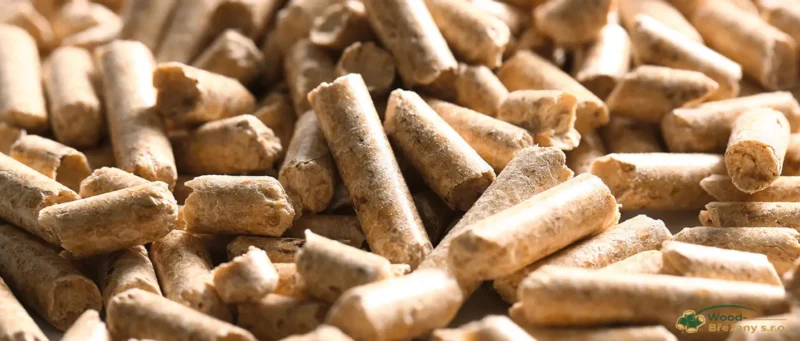
Premium ENplus A1 pellets carry an ash content below 0.7%, moisture under 10%, and mechanical durability above 98%, making them the correct fuel for modern condensing boilers.
Premium wood pellets, certified under ENplus A1, are manufactured exclusively from clean, debarked softwood or hardwood with no additives beyond trace quantities of approved natural binders. The ash content benchmark for ENplus A1, the premium quality used in private household boilers or stoves, is below 0.7% by mass.
Under updated ISO 17225-2 standards, the abrasion resistance requirement for premium Class A1 pellets is set at 98%, a tighter specification than the 97.5% that applies to A2 and B grades. This matters practically: harder pellets produce less dust during transport, which in turn reduces the fine particulate feeding through your burner nozzle.
“Choosing ENplus A1 pellets is one of the most effective steps a homeowner can take to reduce annual heating costs while staying within boiler warranty compliance.” (European Pellet Council, 2025)
Benefits of ordering premium pellets from our online wood pellets shop:
- Lower ash means less frequent cleaning and lower maintenance costs
- Higher energy density reduces the number of bags you need per season
- Certified origin ensures sustainable sourcing and full supply chain traceability
- Compatible with all major pellet stove and boiler brands across Europe
- Consistent 6 mm diameter for reliable auger feeding without blockages
Our ENplus A1 wood pellets and DINplus A1 certified pellets are sourced from sustainably managed central European forests and tested in accredited laboratories before dispatch. For a full breakdown of what certification means in practice, read our guide on ENplus certification.
Wood Pellet Grade Comparison Table
| Feature | Industrial (EN-B / ISO Class I) | Residential (ENplus A2 / B) | Premium (ENplus A1 / DINplus) |
|---|---|---|---|
| Ash Content | Up to 3.0% | Up to 1.2 to 1.5% | Up to 0.7% |
| Moisture Content | Up to 15% | Up to 10% | Up to 10% |
| Calorific Value | ~16.5 MJ/kg | ~16.9 MJ/kg | ~17.0 MJ/kg |
| Mechanical Durability | Basic | 97.5% minimum | 98.0% minimum |
| Pellet Diameter | 6, 8, 10, 12 mm | 6 mm or 8 mm | 6 mm standard |
| Raw Material | Bark, mixed biomass | Clean wood, limited bark | Debarked clean wood only |
| Suitable For | Power plants, CHP | Large commercial boilers | Domestic stoves and boilers |
| Certification Standard | ISO 17225-2 | ENplus A2 or B | ENplus A1 or DINplus |
| Typical Price Per Tonne | Lowest | Mid-range | Premium |
| Warranty Compatible | Commercial only | Semi-commercial | All residential appliances |
| Annual Cleaning Frequency | Very frequent | Moderate | Minimal |
| Recommended For | Industrial use only | Commercial and agricultural | All home heating systems |
How to Choose the Best Wood Pellet Grade for Your Heating System
Match your pellet grade precisely to the specification in your appliance manual. Using a lower grade than the manufacturer requires voids the warranty and reduces heat output.
Here is a practical decision guide:
Order industrial pellets if:
- You operate a biomass power station, district heating network, or CHP plant
- Your system is specifically engineered for high-ash-content solid fuel
- You are purchasing in bulk quantities above 100 tonnes per delivery
Order residential pellets if:
- You run a large commercial or agricultural heating boiler
- Your appliance specifies ENplus A2 or B compatibility
- You need to balance running costs with fuel quality on a mid-range budget
Order premium ENplus A1 pellets if:
- You have a domestic pellet stove or condensing boiler at home
- Your appliance warranty specifies ENplus A1 or DINplus compliance
- You want maximum combustion efficiency, minimum cleaning, and certified sustainable biomass traceability
Not sure which grade your boiler requires? Browse our frequently asked questions or contact our team directly. We advise customers across the UK, Germany, the Czech Republic, Poland, Romania, and Austria. For buyers in Germany specifically, our page on Holzpellets kaufen covers local delivery options and pricing.
Where to Order Certified Wood Pellets Online Across Europe
Wood-Břežany ships ENplus A1 and DINplus certified wood pellets across Europe, with bulk pricing and fast delivery for residential, commercial, and industrial customers.
We supply the full range of certified wood pellets from our depot in Břežany, Czech Republic, with routes covering the UK, Germany, Austria, Romania, and Poland. Our premium A1 pellets sit alongside our biomass wood pellets and straw pellets DIN for agricultural applications.
For UK buyers, our guide on buying wood pellets near you in the UK covers delivery lead times and bag sizes. If you are weighing up fuel costs before you order, our breakdown of whether it is cheaper to burn wood or pellets uses current European energy price data to give you real figures. Once your order arrives, our wood pellet storage guide tells you exactly how to keep moisture and humidity away from your fuel stock.
ENplus certified pellets currently make up approximately 80% of pellets sold in the European residential heating sector, and buyers across the continent are increasingly insisting that imported pellets carry ENplus certification before placing orders. We hold those certifications. You can verify our product batch numbers directly on the ENplus official certification directory.
Key Takeaways
- Wood pellet grades are formally classified under ISO 17225-2 into premium (A1), residential (A2/B), and industrial categories.
- Industrial pellets are for power plants and CHP systems only. Using them in a domestic boiler causes damage and voids warranties.
- Residential pellets suit large commercial and agricultural boilers where budget is a priority.
- Premium ENplus A1 is the correct grade for all home heating stoves and condensing boilers.
- Always verify the grade your appliance manufacturer specifies before placing an order.
- Low-quality pellets create a chain of problems, from excessive ash build-up and heat exchanger clogging to significantly reduced boiler efficiency and lifespan.
- Wood-Břežany supplies all three grades with ENplus certification and European-wide delivery from our shop.
Best Wood Pellet Grades
What is the difference between ENplus A1 and ENplus A2 wood pellets?
ENplus A1 pellets carry a maximum ash content of 0.7% and a mechanical durability above 98%. ENplus A2 allows slightly higher ash content up to 1.2% and is more commonly used for medium-scale commercial facilities rather than private homes. A1 also requires the strictest supply chain traceability of all three grades.
Can I use industrial wood pellets in my home boiler?
No. Industrial pellets exceed the ash and moisture tolerances of domestic boilers, causing rapid blockages and heat exchanger damage. Using out-of-specification pellets forces cleaning intervals down from every one to two weeks to every three to five days and substantially reduces the lifespan of the burner and auger feed system. Most boiler manufacturers void warranties if non-certified pellets are detected during a service callout.
Are premium wood pellets worth the higher price per tonne?
Yes, for home heating. Premium pellets produce more heat per kilogram, require fewer bag changes per season, and reduce the time and cost of maintenance. High ash content forces 3.5 times more boiler cleanings per season compared to low-ash A1 pellets, and increases the risk of slag formation on grates. Our ENplus A1 pellets are priced competitively for European buyers.
What does DINplus certification mean for wood pellets?
DINplus is a German quality certification that is equivalent to ENplus A1 in its technical specifications. DINplus was established in 2002 by DIN Certco in Germany and has since adopted the European Union standards for wood pellets and references the ISO 17225-2 standard. We stock DINplus-certified pellets specifically for customers in Germany and Austria.
How many bags of premium pellets does an average UK home need per heating season?
According to the Biomass Energy Centre, an average UK home running a 15 kW pellet boiler uses between 2.5 and 3.5 tonnes of pellets per heating season. At 15 kg per bag, that works out to between 167 and 233 bags annually, depending on insulation levels and local climate conditions. Our guide on how long 20 kg of wood pellets last gives a more detailed breakdown by room size and boiler output.
Which wood pellet size is best for domestic pellet stoves in the UK and Europe?
Most domestic pellet stoves across the UK and Europe are engineered for a 6 mm diameter pellet. To comply with ENplus standards, the pellet diameter must be between 6 mm and 8 mm, with a length ranging from 3.15 mm to 40 mm. Using 8 mm pellets in a feed system designed for 6 mm can cause auger blockages and uneven combustion. Always check your stove manual before ordering. Our standard ENplus A1 pellets are 6 mm in diameter.
Where can I buy premium ENplus A1 wood pellets online for delivery across the UK?
You can buy certified ENplus A1 and DINplus wood pellets directly from Wood-Břežany with delivery across the UK and Europe. Our product range covers premium, residential, and industrial grades. Visit our About Us page for company details and our quality commitments.
References
- ENplus Certification Scheme — European Pellet Council ENplus programme, quality standards, supply chain requirements, and certified producer directory.
- ISO 17225-2 Graded Wood Pellets Standard — International Organisation for Standardisation, technical specifications for wood pellet quality classes A1, A2, and B.
- European Pellet Council (EPC) — Governing body overseeing ENplus certification, market statistics, and pellet quality policy across Europe.
- Biomass Conversion and Biorefinery, Springer Nature, 2024 — Peer-reviewed research on ENplus A1 certified pellet quality and combustion behaviour in residential appliances.
- DIN CERTCO, DINplus Certification — German certification body responsible for the DINplus wood pellet quality mark, equivalent to ENplus A1.
- Biomass Energy Centre, UK — UK government-linked resource on biomass fuel standards, residential pellet consumption estimates, and appliance guidance.
- Canadian Biomass Magazine, Understanding Wood Pellet Quality Certifications — Industry overview of ENplus, DINplus, CANplus, and ISO 17225-2 certification differences and market adoption data.