

 Čeština
 Deutsch
 Română
 Polski
 Italiano
Best firewood to burn chart UK: which logs give the hottest, longest burn
A reliable best firewood to burn chart UK households can trust ranks logs by three things: heat output, burn time and moisture content. Get those three right, and a stove or open fire performs well regardless of price. Get them wrong, and even a load of “hardwood” can smoulder, smoke and coat a chimney in creosote. This guide sets out a full UK firewood chart, explains the science behind it in plain terms and shows which logs are worth ordering for the coming season.
Warm your home with logs chosen from our best firewood to burn chart UK buyers trust. Every batch is kiln-dried below 20% moisture and sold under the Woodsure Ready to Burn scheme, so it lights fast, burns clean and leaves less creosote in the flue. Choose dense beech or hornbeam for a long, hot overnight burn or a mixed firewood pallet for everyday convenience. All logs are cut, dried and packed at our Břežany yard before dispatch across the UK and mainland Europe. Order today and get properly seasoned wood, not a soggy log pile.
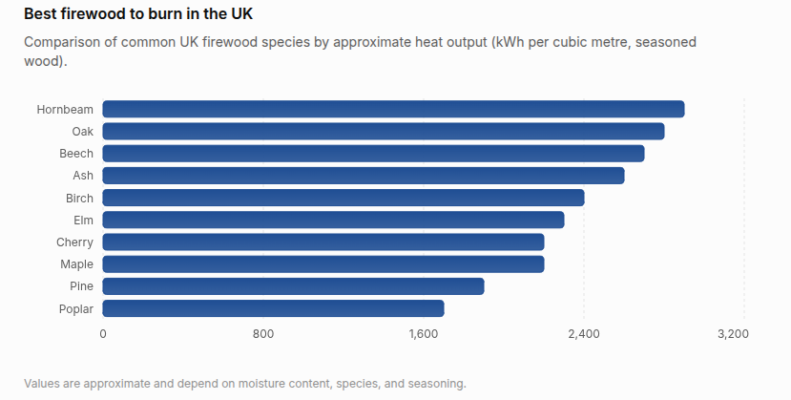
What is the best firewood to burn chart UK buyers use?
A UK firewood chart ranks common log species by heat output (BTUs), typical burn time and how long they need to season before they are safe to burn. Oak, ash, beech and hornbeam sit at the top for heat and burn duration. Pine, spruce and poplar sit lower, useful for kindling but not for an overnight fire.
Heat output alone does not tell the whole story. A log’s density, how it splits, how quickly it catches and how much smoke it produces when burnt all matter to a household choosing fuel for a real UK winter, not a lab test.
Which wood burns hottest and longest? Full UK firewood comparison table
Density is the reason hardwoods outperform softwoods. A tightly packed log holds more fuel in the same space, so it burns slower and releases heat over hours rather than minutes. The table below sets out how the most widely available UK species compare.
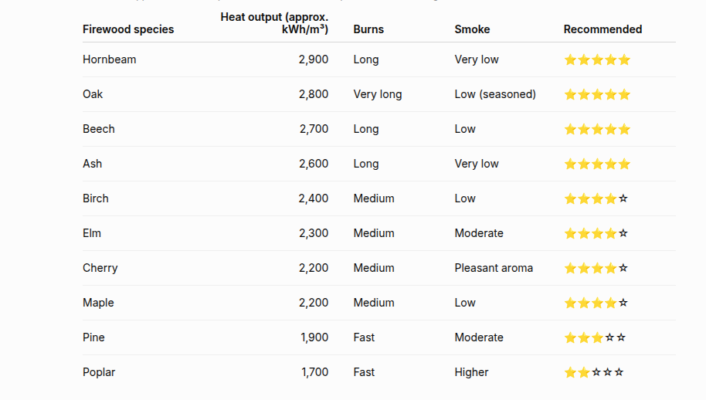
Best firewood to burn: a chart for the UK
| Firewood species | Heat output (approx. kWh/m³) | Burns | Smoke | Recommended |
|---|---|---|---|---|
| Hornbeam | 2,900 | Long | Very low | ⭐⭐⭐⭐⭐ |
| Oak | 2,800 | Very long | Low (seasoned) | ⭐⭐⭐⭐⭐ |
| Beech | 2,700 | Long | Low | ⭐⭐⭐⭐⭐ |
| Ash | 2,600 | Long | Very low | ⭐⭐⭐⭐⭐ |
| Birch | 2,400 | Medium | Low | ⭐⭐⭐⭐☆ |
| Elm | 2,300 | Medium | Moderate | ⭐⭐⭐⭐☆ |
| Cherry | 2,200 | Medium | Pleasant aroma | ⭐⭐⭐⭐☆ |
| Maple | 2,200 | Medium | Low | ⭐⭐⭐⭐☆ |
| Pine | 1,900 | Fast | Moderate | ⭐⭐⭐☆☆ |
| Poplar | 1,700 | Fast | Higher | ⭐⭐☆☆☆ |
Best firewood for UK homes
- Hornbeam: highest heat output and long burn.
- Oak, excellent overnight burning once properly seasoned.
- Beech, clean burning with high heat.
- Ash burns efficiently and is easy to split.
- Birch, ideal for quick, bright fires.
Figures are averages drawn from UK and North American firewood data and vary with tree age, region and how the wood was stored. As a rule, oak and beech are the benchmark for a long overnight burn, while pine and poplar earn their place as kindling rather than a main fuel.
“The most crucial takeaway from any firewood chart is that ‘best’ is entirely situational. Oak is best for maximum, sustained heat, but ash is the superior all-rounder for its balance of heat, burn time and ease of use.”
That balance is exactly why many UK households buy a mixed firewood pallet rather than a single species. Softer woods catch the fire quickly, then denser logs take over once the stove is hot.
Why does moisture content decide how well firewood burns?
Moisture content matters more than species. Wood above 20% moisture wastes energy boiling off water instead of producing heat, smokes heavily and builds up creosote in the flue. Under UK law, wood sold in units under two cubic metres must meet the Woodsure Ready to Burn standard of 20% moisture or below, following the Air Quality (Domestic Solid Fuels Standards) (England) Regulations 2020.
Freshly cut, “green” wood can hold 30 to 60% moisture. Air-drying it outdoors, stacked and covered, typically brings hardwoods down to a burnable level within 12 to 24 months. Kiln drying speeds up this process dramatically, taking logs to under 20% moisture, sometimes under 15%, in a matter of days rather than seasons. That is why our dried firewood range is kiln-processed before it ever leaves the yard.
A simple way to check before buying: two logs knocked together should sound sharp and hollow, not dull. Bark that flakes away easily and a lighter overall weight are further signs the wood has properly seasoned.
Best firewood to buy for a UK log burner or open fire
For daily heating in a wood-burning stove, dense hardwoods with a long, steady burn are the practical choice. Our recommendations, based on the chart above:
- Overnight and main heating fuel: beech, hornbeam or oak-grade dense hardwood for a slow burn that leaves warm coals by morning.
- Everyday convenience: beech firewood, easy to light and reliably hot without the long seasoning wait some other hardwoods need.
- Open fires and garden fire pits: alder firewood, a milder, gentler burn suited to shorter sessions.
- Kindling and quick-start fires: pine firewood is cheap, easy to split and fast to catch; it’s best mixed with a hardwood once the fire is established.
- Budget or general use: poplar firewood, a softer hardwood that burns fast but is useful as a top-up log.
- Mixed loads: mixed firewood online, a blend that covers lighting, sustaining and finishing a fire without buying several separate bags.
Hornbeam deserves a special mention. It is one of the densest broadleaf woods grown in Europe and, once properly seasoned, rivals oak for heat output while splitting more easily. Our hornbeam firewood is a strong pick for anyone wanting maximum heat from a smaller stack of logs.
Hardwood vs softwood: which should you actually order?
Hardwoods (oak, ash, beech, hornbeam, and birch) grow slowly, so their cell structure is tight and dense. That density is stored fuel, and it is why hardwood consistently outperforms softwood on a heat-per-log basis. Softwoods (pine, spruce, and fir) grow faster, contain more resin and burn brighter but far quicker, which is why they suit kindling and short garden fires rather than a full evening’s heating.
Key takeaways:
- Oak, beech and hornbeam top the UK firewood chart for heat output and burn time.
- Moisture below 20% is a legal requirement for small-volume wood sales in England and the single biggest factor in a clean, efficient burn.
- Kiln-dried logs are ready to burn immediately; air-dried hardwood needs 12 to 24 months of proper storage.
- Softwoods like pine light quickly but burn fast, making them ideal kindling rather than a primary fuel.
- A mixed load of hard and soft species often gives the most practical, cost-effective burn for everyday use.
Where can you buy Ready to Burn certified firewood in the UK?
Reputable suppliers sell logs under the Woodsure Ready to Burn or HETAS certification schemes, which confirm independent moisture testing below 20%. Buying certified wood keeps a household compliant with smoke control area rules and avoids the fines, up to £300 on the spot and £1,000 for repeat offences, that councils can issue for burning non-compliant fuel in a designated zone.
Our own kiln-dried and seasoned ranges are prepared to that standard and shipped across the UK and wider Europe from our yard in Břežany. Browse the full shop or read more about our sourcing on the about us page.
How much does kiln-dried firewood cost in the UK?
Prices vary by species, volume and delivery distance, but kiln-dried hardwood generally costs more per bag than air-dried logs because of the extra processing and guaranteed low moisture. The trade-off is a log that lights first time, burns hotter for its weight and produces less ash and smoke, so many buyers find the higher price is offset by needing fewer logs per fire.
When is the best time to buy and season firewood?
Late spring through summer is the ideal window to buy green or part-seasoned hardwood if a household plans to season it themselves, giving oak, ash or beech the full 12 to 24 months needed before the following winter. For anyone who wants heat this season rather than next year, kiln-dried logs remove that wait entirely and can go straight into the stove.
Wood should always be stacked off the ground, under cover on top with the sides open to air flow. A tightly wrapped tarpaulin trapping moisture underneath does more harm than good.
Buy hardwood firewood for sale
If you want the most dependable option, hardwood firewood for sale is usually the first place to look. Dense hardwoods tend to burn longer and produce more usable heat than lighter woods, which makes them a common choice for stoves and winter heating. youtube
“Choose wood for heat, not just appearance. Dense logs usually give a calmer, longer fire.”
Which wood burns best for heating?
The best firewood to burn chart in the UK usually puts ash, oak, beech, and hornbeam near the top for heating. These woods are dense, stable, and more suited to long indoor fires than lighter species, which can flare quickly and finish sooner.
If you want a balanced option, ash is often a safe choice because it lights well and still gives steady heat. Oak is excellent for longer burns, while beech gives strong and even heat. Hornbeam is often prized when maximum burn duration matters.
Why moisture content matters
Even the best wood burns poorly if it is too wet. Dry logs light more easily, smoke less, and give better heat than green or damp wood. youtube
That is why a page like ‘buy dried firewood online’ fits naturally in this topic. If your fuel looks good but feels heavy or damp, it may be losing heat to water instead of warming the room.
Best firewood to burn chart uk for stoves
For a stove, the best firewood to burn chart in the UK should favour hardwoods with low moisture and steady output. Ash, oak, beech, and hornbeam are strong choices because they hold a fire for longer and need less constant refuelling.
Softwoods can still help as kindling or for a quick boost, but they are usually not the main answer for a long evening burn. A sensible product page link here is “buy mixed firewood online”, since many buyers want a blend rather than a single species.
Best firewood to burn chart uk for open fires
Open fires benefit from logs that are easy to light and pleasant to watch. Birch and alder can work well where you want a lively flame, while hardwoods help maintain warmth once the fire is established. youtube
If your audience is buying for a hearth rather than a stove, a lighter wood can be useful at the start. Then a denser log can take over once the fire bed is strong.
Best firewood to burn chart uk for sale in Europe
If you sell across the UK and wider Europe, the best firewood to burn chart for the UK should support buying decisions, not just explain theory. That means linking to product pages, adding clear fuel types, and keeping your wording simple and direct.
Which firewood creates the most creosote?
Wet or unseasoned softwoods like pine and spruce create the most creosote, since trapped resin and moisture condense unburned in the flue.
Any wood above 20% moisture adds to this risk, regardless of species, which is why moisture content matters more than the wood type alone.
How do I make my wood fireplace produce more heat?
Burn dense, well seasoned hardwood below 20% moisture, keep the air control open, and add logs gradually instead of loading a cold firebox.
A hot bed of coals before reloading and a clear, unobstructed flue both make a noticeable difference to heat output.
What’s the worst firewood to burn?
Wet, unseasoned wood and resinous softwoods like pine burn worst, producing heavy smoke, weak heat output and dangerous creosote buildup.
Driftwood and any wood treated with paint, glue or preservative belong in this category too, for health rather than performance reasons.
What is the top 10 strongest wood?
By Janka hardness, the strongest woods include ipe, hickory, hard maple, white oak, ash and beech, though strength does not predict firewood heat output.
Hardness measures resistance to denting, not calorific value, so a “strong” wood is not automatically the best firewood choice.
What kind of fire burns the hottest?
A fire built from dense, kiln dried hardwood with strong airflow and an established bed of coals burns hottest in a domestic stove.
Flame and flue temperatures vary by appliance, but well seasoned oak, ash or beech consistently outperform damp or resinous wood.
What is the hottest and longest burning wood?
Osage orange burns hottest overall, while oak, hickory and beech are the most widely available woods combining high heat with a long burn.
Osage orange is rarely sold commercially, which is why oak and hickory remain the practical top choice for most households.
What wood has the highest burning temperature?
Osage orange has the highest burning temperature among common firewoods, followed closely by hickory, black locust and other dense hardwoods.
For UK buyers without access to these species, oak, beech and hornbeam are the closest widely available equivalents.
What burns hotter than wood?
Anthracite coal, charcoal and compressed heat logs or briquettes burn hotter than raw wood, since they hold more energy in less volume.
Briquettes reach these higher temperatures because their moisture content is often under 10%, well below seasoned firewood.
Which burns better, soft or hard wood?
Hardwood burns better for sustained heating, since it is denser, burns longer and produces more heat per log than lighter, resinous softwood.
Softwood still has a place for kindling and quick-start fires, where fast ignition matters more than burn duration.
What type of firewood burns the cleanest?
Kiln dried hardwood below 15 to 20% moisture, such as oak, ash or beech, burns the cleanest, with minimal smoke and low creosote. Clean burning also depends on good stove airflow and a properly swept flue, not moisture content alone.
What wood should not be burned?
Never burn painted, treated or glued wood, driftwood, or wet green logs; they release toxic fumes, corrosive salts or excess smoke.
Household waste, plastics and chipboard also fall into this category and are unsafe in any domestic appliance.
Do bigger logs burn hotter?
Bigger logs do not burn hotter; they burn slower with less surface area exposed, while smaller split logs ignite and heat up faster.
Splitting logs to a size that suits the appliance improves both ignition speed and overall combustion efficiency.
What are the best heat logs?
The best heat logs are dense, low moisture briquettes made from compressed sawdust, giving a hotter, longer, cleaner burn than raw firewood.
Ready to Burn certified briquettes with under 10% moisture typically outperform even kiln dried logs on heat per kilogram.
What wood not to burn in a log burner?
Avoid burning wet or green wood, driftwood, plywood, chipboard, painted timber and resin heavy pine in an enclosed log burner.
These materials either smoke excessively, corrode the stove and flue, or release fumes that are unsafe indoors.
What kind of firewood burns the hottest?
Dense hardwoods like hickory, oak and hornbeam burn hottest among common firewoods, thanks to their tight grain and high energy density.
Moisture content still decides the real-world result: even the densest hardwood underperforms if it has not been properly seasoned.
Are heat logs better than logs?
Heat logs generally burn hotter, longer and cleaner than raw firewood, thanks to low moisture and high density, though they cost more.
Firewood keeps the traditional look and scent of a real log fire, so the choice often comes down to budget versus performance.
Which burns hotter, oak or hickory?
Hickory burns slightly hotter than oak, averaging around 27 to 28 million BTU per cord versus oak’s 24 to 27 million BTU.
In practice, most people notice little difference between the two once both are properly seasoned or kiln dried.
Which wood creates the most creosote?
Resinous, unseasoned softwoods like pine and spruce create the most creosote, especially once moisture content sits above 20%.
Regular chimney sweeping and burning only certified dry wood are the most effective ways to reduce creosote buildup.
What is stronger, hickory or oak?
Hickory is generally stronger than oak on the Janka hardness scale, though white oak resists rot better and splits more easily.
Strength affects splitting difficulty and tool wear more than it affects how much heat the wood produces when burned.
What are the disadvantages of hickory wood?
Hickory is expensive, hard to split, slow to season and less widely available than oak, despite its strong heat output and aroma.
Its tight, interlocked grain also means hickory needs a hydraulic splitter for most home users to process efficiently.
What is more expensive, oak or hickory?
Hickory is usually more expensive than oak, since it is denser, harder to split and process, and less commonly stocked by suppliers.
Oak remains the more widely available, budget-friendly hardwood across most UK and European firewood suppliers.
What burns hotter, beech or oak?
Beech and oak burn at similar temperatures, with beech often igniting faster while oak sustains heat slightly longer once fully seasoned.
Many stove owners mix the two, using beech to build the fire quickly and oak to hold heat through the evening.
Frequently asked questions
What is the best firewood to burn in the UK? Oak, ash, beech, and hornbeam are widely rated the best UK firewoods, thanks to high heat output, long burn times, and manageable seasoning periods compared with softer species.
How do I know if firewood is dry enough to burn? Look for the Woodsure Ready to Burn label, or test with a moisture meter for a reading under 20%. Dry logs sound hollow when knocked together and feel noticeably lighter than green wood.
Is it illegal to burn wet wood in the UK? Selling wet wood (over 20% moisture) in units under two cubic metres has been restricted in England since May 2021 under the Air Quality (Domestic Solid Fuels Standards) Regulations. Burning it yourself is not itself illegal, but it produces far more smoke and creosote.
Can you burn pine in a wood-burning stove? Yes, dry pine can be burnt in a stove, though it burns faster and produces more resin and smoke than hardwood, so it is better suited to kindling or short fires than an overnight burn.
How long does kiln-dried firewood last once delivered? Stored correctly, off the ground and under cover with airflow, kiln-dried logs stay below 20% moisture for a long period, though they will slowly reabsorb ambient moisture if left uncovered outdoors for months.
Which firewood burns the longest overnight? Dense hardwoods such as oak, beech, and hornbeam hold their heat longest, producing a bed of coals that can still be glowing by morning when the stove air control is turned down for the night.