

 Čeština
 Deutsch
 Română
 Polski
 Italiano
 Español
 Nederlands
 Magyar
 Slovenčina
 Slovenščina
 Hrvatski
DINplus vs ENplus pellets: which seal should you trust when you buy in bulk?
Every autumn we hear the same question: DINplus vs ENplus pellets, which is the better fuel? The answer surprises buyers who expect a winner. Both seals certify pellets to the same A1 quality class under EN ISO 17225-2, so the pellets burn as equals. The difference sits in the issuer, the audit scope along the supply chain, and which markets trust which mark. We ship both grades by the tonne and full truck, so this comparison comes from loading docks, not a brochure.
DINplus vs ENplus pellets is a comparison between two quality marks for wood pellets: DINplus, run by DIN CERTCO in Germany, and ENplus, run by the European Pellet Council. Both test pellets against the ISO 17225-2 standard for A1 class. Based on the sources we checked, both schemes are still active, but ENplus is far more common on European bags.
What is the short answer?
If you buy residential pellets for a stove or boiler, look for an ENplus A1 ID or a DINplus registration number on the bag or delivery note. Either one tells you an independent body has tested the pellets against a recognised standard. The difference lies in scope: ENplus audits the whole chain from producer to trader to storage, while DINplus is a product certification for the pellets and the producer.
The two marks are not interchangeable in a legal sense, and neither one replaces checking the certificate yourself. The rest of this article explains where each mark comes from, what it covers, and how to look up a number.
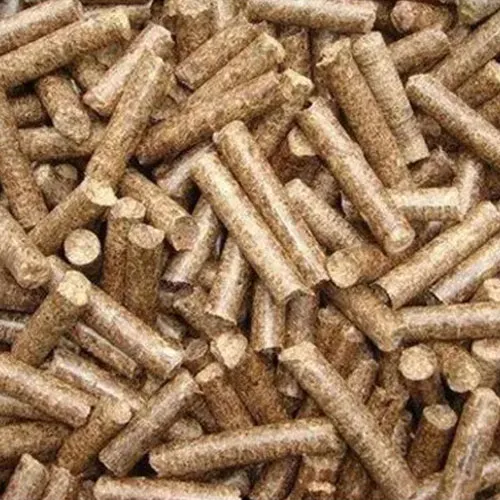
What is the difference between DINplus and ENplus pellets?
Both seals sit on the same EN ISO 17225-2 A1 limits for ash, moisture, and heat, and differ in issuer, history,y and the scope of their audits.
DINplus is the older mark. DIN CERTCO developed the scheme in 2002 from the German DIN 51731 and Austrian ÖNORM M 7135 standards, as the history of pellet certification shows (Biopellet Machine). When Europe unified pellet specs, DINplus adopted the EN 14961-2 standard and now references ISO 17225-2, so today it certifies the same A1 tier ENplus uses (Biomass Energy Lab). ENplus arrived in 2010 from the European Pellet Council and became the most widely used pellet quality scheme in Europe. So the honest verdict in the DINplus vs ENplus pellets comparison is a tie with different paperwork.
New to the grading system? Our guides on what ENplus certification is and the ENplus A1 vs A2 vs B comparison explain the classes simply.
Order certified DIN and ENplus A1 wood pellets in bulk from Wood Brezany.
We supply certified wood pellets in bulk quantities, by the tonne or by the full truck, from our yard at Břežany 241, Czech Republic. Every load meets the A1 quality class of EN ISO 17225-2: maximum 10% moisture, maximum 0.7% ash content, and at least 16.5 MJ/kg of calorific value. Order EN Plus A1 Wood Pellets for whole-chain certified fuel with batch traceability or DIN wood pellets for the German quality mark. German buyers can also buy DINplus and ENplus A1 pellets, and Czech buyers can buy pelety DINplus ENplus A1. Ask for a written certificate and the latest lab analysis with your quote, and contact us for delivery anywhere in Europe.
What does DINplus certification guarantee when you buy pellets?
DINplus is the pellet quality mark of DIN CERTCO in Germany, created in 2002 on DIN 51731 and ÖNORM M 7135, and now certified to EN ISO 17225-2 A1.
DIN CERTCO, part of the TÜV Rheinland group, runs certification and monitoring worldwide, as its official wood pellet certification page explains. In practice, the mark means factory testing, surveillance of the production site, and a documented product declaration. Buyers in Germany and Austria still ask for the seal by name. You can buy DIN wood pellets in bulk or order via our German page for DINplus and ENplus A1 pellets.
Where does DINplus come from?
DINplus grew out of the German pellet standard DIN 51731, which dated from the 1990s and covered compressed wood fuel in general. One industry overview from the Biomass Energy Lab states that DINplus was set up in 2002 as the first wood pellet quality scheme on the market, with stricter limits than the base standard. We could not confirm the exact launch year in a primary source, so treat 2002 as approximate.
Over time, the German national standard was replaced by European and then international standards. Today DIN CERTCO, a subsidiary of TÜV Rheinland, states that DINplus certification is based on DIN EN ISO 17225-2, the international standard for graded wood pellets.
Where does ENplus come from?
ENplus was launched around 2011 by the European Pellet Council, according to the same industry overview. It was designed as a Europe-wide scheme so that a bag bought in one country meets the same rules as a bag bought in another. It is based on ISO 17225-2 and divides pellets into three classes: ENplus A1, ENplus A2 and ENplus B.
The ENplus FAQ explains that the scheme covers raw material, production, handling, trading and the quality management system. Producers, traders and service providers (for example, the bagging or storage companies that do not own the goods) can all be certified. Our own ENplus certification guide goes into the audit process in more detail.
Is DINplus still issued today?
Yes, according to the sources we could open. DIN CERTCO’s own pellet page describes DINplus as an active scheme with around 500 valid certificates from more than 25 countries. It also says certificates run for five years, provided annual surveillance is passed, and can be extended in five-year steps.
DIN CERTCO also published an expert interview stating that the scheme was updated in November 2021 with tighter requirements, including a lower ash limit (from 0.7 to 0.6 per cent) and higher mechanical durability (from 97.5 to 98 per cent). We found no notice of withdrawal or discontinuation. Because certification schemes change, confirm the current status on the DIN CERTCO website before relying on this, especially for a large purchase.
One caveat: some older web pages describe DINplus as the dominant German mark or as obsolete. Neither is accurate as a general statement. DINplus exists, but it is certified for far fewer companies than ENplus.
What does each certificate cover?
| Point | DIN Plus | ENplus |
|---|---|---|
| Run by | DIN CERTCO (TÜV Rheinland) | European Pellet Council |
| Standard basis | DIN EN ISO 17225-2 | ISO 17225-2 |
| Classes | A1 (as described on the DIN CERTCO pellet page) | A1, A2 and B |
| Who is certified? | Producers (registration number) | Producers, traders, service providers (ENplus ID) |
| Tested properties | Moisture, bulk density, fines, calorific value, durability, ash, length, contaminants | Same technical properties plus handling, trading, and quality management rules |
| How to verify | Registration number in the DIN CERTCO database | Company name or ENplus ID in the ENplus certification database |
| Bag size rule | Not covered in the sources we checked | Bags up to 30 kg; only A1 and A2 may be bagged. |
For the technical limits of the A1 class, the ENplus handbook lists moisture at 10 per cent or less, ash at 0.7 per cent or less on a dry basis, mechanical durability of at least 98.0 per cent, and a net calorific value of at least 4.6 kWh/kg. A2 allows ash up to 1.2 per cent and B up to 2.0 per cent. You can compare the classes in our A1 vs A2 vs B comparison.
What does ENplus certification cover that DINplus does not?
ENplus, run by the European Pellet Council since 2010, audits producers, traders and service providers, so every load stays traceable to its origin.
ENplus is a whole-chain certification built on three modules: production, trading, and services like bagging, storage, and transport, according to Control Union. The official ENplus requirements for companies make batch traceability and quality control mandatory along the whole chain, and over 1,100 companies participate. For a bulk buyer, this means a trader cannot quietly swap in uncertified fuel. Our articles on ENplus certification and sustainable wood pellet sourcing explain what this means for you.
How do you verify a certificate before you order?
- Check the certificate ID in the official ENplus register or with DIN CERTCO.
- Match the batch number to the lab analysis sheet.
- Confirm moisture below 10% and ash below 0.7% on the latest test result.
- Order by the tonne only with a written certificate copy.
These steps guard against the traps in our 7 costly pellet-buying mistakes guide.
How do DINplus and ENplus quality limits compare at the A1 class?
At the A1 class, both seals demand a max of 10% moisture, a max of 0.7% ash, sh and at least 16.5 MJ/kg of heat, so the fuel quality you buy is equal.
| What you compare | DIN Plus | ENplus A1 |
|---|---|---|
| Issuer | DIN CERTCO (TÜV Rheinland) | European Pellet Council |
| Scheme launched | 2002 | 2010 |
| Original basis | DIN 51731 and ÖNORM M 7135 | EN 14961-2, replaced by ISO 17225-2 in 2014 |
| Class certified today. | EN ISO 17225-2 A1 | EN ISO 17225-2 A1 |
| Max moisture content | 10% | 10% |
| Max ash content | 0.7% | 0.7% |
| Min calorific value | 16.5 MJ/kg, about 4.6 kWh/kg | 16.5 MJ/kg, about 4.6 kWh/kg |
| Min mechanical durability | 97.5% | 97.5% |
| Max fines at the producer | 1% | 1% |
| Max sulphur | 0.03% | 0.03% |
| Audit scope | Certified production plant | Production, trade, storage, transport |
| Strongest markets | Germany and Austria | Pan-European, including the UK |
The logo never heats the house. The batch number, the moisture figure and the certificate standing behind them do the work.
The numbers come from the graded pellet classes in ISO 17225-2:2021, the standard both schemes certify against. See our wood pellet grades comparison for industrial and residential grades.
Which certification is best for your pellet boiler or stove?
Neither seal wins on paper. Choose certified A1 pellets with under 10% moisture and 0.7% ash, and match the diameter your boiler manual lists.
In the DINplus vs ENplus pellets contest, no appliance cares about the logo. Your manual names EN ISO 17225-2 A1 pellets, and either mark satisfies that line. What matters is calorific value, ash behaviour, and the auger diameter: 6 mm or 8 mm. A1 pellets deliver at least 16.5 MJ/kg, about 4.6 kWh per kilogram (Dogapelet). Our guides on how to choose ENplus A1 wood pellets for your boiler and wood pellet moisture content make the spec sheet simple.
Where can you buy DINplus and ENplus A1 pellets in bulk in Europe?
Wood Brezany supplies certified DIN and ENplus A1 pellets by the ton or full truck from Břežany in Czechia, with delivery across Europe.
We are WOOD Břežany s.r.o. (IČO 05273790), based at Břežany 241, and biomass fuel in bulk is our trade: wood briquettes, sawdust, wood shavings, charcoal, wood chips, firewood,d and pellets. Whichever side of the DINplus vs ENplus pellets question you pick, we stock both. UK buyers can check our page on where to buy wood pellets online in Europe, and our bulk vs bagged wood pellets analysis shows why bags lose to bulk on price per kWh. Ready to order? Start with Buy EN Plus A1 Wood Pellets or Buy DIN wood pellets, then contact us for a quote with certificates and lab sheets.
Why do certified pellets cost more, re and is the premium worth it? Low-ash, low-moisture pellets protect the burner, cut cleaning time, and burn with steady heat, so the premium you pay comes back over the season.
We cannot confirm a fixed market price: ton prices move with season, region, and volume, and a stale number would mislead you. What we can verify is the physics: ash above the A1 limit means more cleaning and clinker risk, while moisture below 10% means more usable heat per kilogram. For current pricing, see our wood pellets guide with 2026 prices and tips, and ask for a bulk quote.
How do the two schemes differ in practice?
Scope of the audit
ENplus certifies traders and service providers as well as producers. That matters if your pellets pass through a distributor or a warehouse, because the rules on storage, handling, and traceability apply there too. DINplus is described mainly as a producer-side product certification.
Market presence
ENplus is the mark you will see most often on bags across Europe. DINplus appears mainly on German-market products and on pellets from producers who export to Germany. Neither mark gives any information about price.
Pellet quality on the bag
Both schemes refer to the same ISO class, so a certified A1 pellet should look similar in a stove regardless of the logo. The practical differences come from audit frequency, who covered it, and how the database shows the result. If you want an A2 or B grade, ENplus is the only one of the two that publishes those classes.
How do you check a certificate?
- Find the number. It should appear on the bag print, the delivery note, or the invoice. ENplus uses an ID tied to the company, and DINplus uses a registration number.
- Open the right database. ENplus lists certified companies on enplus-pellets.eu, where you can search by company name or ID. DINplus registrations are searchable at DIN CERTCO.
- Compare the details. Check the company name, the certified status, and, for ENplus, the approved bag designs shown on the company page.
- Match the class. Make sure the certificate covers the class printed on the bag, for example, A1.
- Ask if it does not match. A missing or mismatched number is a reason to ask the seller before you pay.
ENplus itself publishes an example of a falsified certificate on its site, which is a good reason to look up the number rather than trust a PDF or a logo. For related buying advice, see our list of common pellet buying mistakes.
Which one should you choose?
For a home stove or boiler, either marking on A1 pellets is a reasonable starting point, and your appliance manual is the final word. Many manufacturers specify EN or ISO 17225-2 A1 pellets, and some mention one scheme by name. If you are unsure, check the manual or ask the boiler installer.
If you need pellets for bedding, a barbecue, or a pellet grill, certification matters less, and the product type matters more. Our shop lists both ENplus A1 wood pellets and DIN wood pellets. Check the product page for the certificate details that apply to the batch you order, and do not assume that every pellet we list carries the same mark.
FAQs about DINplus vs ENplus pellets
Are DINplus and ENplus pellets the same quality?
Yes, at the top grade. Both are certified to the A1 class of EN ISO 17225-2 with the same moisture, ash, and heat limits.
Which is better, DINplus or ENplus?
As fuel, they are equal. ENplus adds whole-chain audits with batch traceability, while DINplus carries two decades of trust in Germany and Austria. Pick the seal, your manual,l or subsidy scheme names.
What does DINplus mean on a pellet bag?
It means the producer holds the DINplus mark from DIN CERTCO in Germany, created in 2002 from DIN 51731 and ÖNORM M 7135, today certifying pellets to the EN ISO 17225-2 A1 class.
Can I burn ENplus A1 pellets in any pellet stove or boiler?
Yes, in any appliance approved for EN ISO 17225-2 A1 fuel, which covers most stoves and boilers sold in Europe. Check the diameter, 6 mm or 8 mm, before you order in bulk.
How much do DINplus and ENplus pellets cost per ton?
We cannot confirm a fixed price because bulk prices move with season, region, a nd order size. Ask us for a written quote, and buy by the ton or full truck to cut the cost per kWh.
How should I store bulk certified pellets to protect the A1 grade?
Keep them dry and off the ground, in a sealed silo or on pallets under a roof. Our wood pellet storage guide covers humidity, airflow, and degradation.
Is DINplus the same as DIN 51731?
No. DIN 51731 was an older German standard for compressed wood fuel. DINplus is a certification scheme from DIN CERTCO that today refers to DIN EN ISO 17225-2.
Are DINplus pellets better than ENplus pellets?
Not as a rule. Both certify A1 quality against the same ISO standard. The better choice is the pellet that carries a verifiable certificate and suits your appliance.
Can a company hold both certificates?
It is possible in principle, since the schemes are separate. We did not find a rule that forbids it, so ask the supplier which certificates apply to which product.
What if the certificate number is not in the database?
Contact the seller and the certification body. The entry may be misspelled, expired, or invalid, and you should not accept the claim until it is confirmed.
Does certification guarantee how pellets burn in my stove?
No. It confirms that tested properties met the standard at the time of testing. Storage, moisture pickup, and your stove settings still affect results, as explained in our guide to pellet moisture content.
See our ENplus A1 pellets and DIN pellets if you want to compare current options. We deliver across Europe.
Sources
DIN CERTCO: DINplus expert interview
ENplus Handbook Part 3, pellet quality requirements (copy hosted by a certified company)
DIN CERTCO, DINplus certification for wood pellets
European Pellet Council, ENplus standard: requirements for companies
Control Union, ENplus whole chain certification for wood pellets
ISO 17225-2:2021, solid biofuels, graded wood pellets
Biomass Energy Lab, wood pellet quality schemes
Biopellet Machine, wood pellet certification standards
Dogapelet, wood pellet calorific value explained
DINplus vs ENplus pellets, DINplus wood pellets, ENplus A1 pellets, certified wood pellets bulk, buy ENplus A1 pellets online
Last updated: October 2026. This post reflects the ENplus and DINplus scheme rules in force at the time of publication.
Key takeaways
- DINplus and ENplus both use the ISO 17225-2 standard as their technical base.
- DIN CERTCO describes DINplus as an active scheme with around 500 valid certificates, so it is still issued, as far as our sources show.
- ENplus covers producers, traders and service providers and offers A1, A2 and B classes.
- ENplus A1 limits include ash up to 0.7 per cent and durability of at least 98.0 per cent.
- Always look up the number in the official database instead of trusting the logo.